



Top 5 Best Futures Trading Platforms 2026
In our thorough examination of the futures trading landscape, we have put numerous brokers through rigorous testing in order to present to you the top 5 futures trading platforms that outshine the rest. Our comprehensive review process considers not only the user experience and ease of navigation on their respective trading platforms, but also digs into the minutiae of their offerings, paying close attention to often overlooked but equally significant factors. These include the scale of commissions and fees, requisite account minimums, the range of tradable futures assets they offer, the quality and extent of their educational resources, and the allure of any bonuses they provide. Read on to uncover which brokers made the cut in our carefully curated top five list - the future of your trading journey starts here.

Best Futures Trading Platforms
Offers a high-end suite of trading platforms, featuring advanced charting and analysis tools.
Provides a competitive cost structure, especially for those who trade in larger volumes.
With a flat fee structure of $1.50 per contract, per side, E TRADE offers attractive pricing for futures trades.
Online library provides wide-ranging educational materials, including a 'Getting Started' section for beginners.
Offers a straightforward and competitive pricing model, which stands at $1.25 per contract, per side for all futures trades.
Provides a bonus that ranges from $100 to $5,000.
4
Enables traders to choose from a wide variety of futures products across categories like stock indexes, currencies, interest rates, energies, metals, and agriculture.
Offers two compelling trading platforms, thinkorswim and Schwab, catering to both experienced and less experienced traders.
5
Provides a variety of futures products to trade in, including stock indexes, currencies, interest rates, energy commodities, metals, and agriculture.
Charges $1.50 per contract, per side for futures trades (additional fees, including exchange fees, may also apply).
more
Comparison of Best Futures Trading Platforms
Forex Broker
License
Minimum Spread
Maximum Leverage
Minimum Deposit
Open Account
Details
Compare
Best Futures Trading Platforms Reviewed
Ranking List
| Futures Broker | Best for |
| Interactive Brokers (IB) | Ideal for professional and beginner futures traders |
| E TRADE | Best for beginners and offers excellent futures education |
| Tastytrade | Designed for casual futures traders focusing on options |
| TD Ameritrade (Charles Schwab) | Versatile platform for mobile and advanced futures traders |
| TradeStation | Standout platform with low commissions for tech-savvy traders |
Note: TD Ameritrade has changed its name to Charles Schwab.
① Interactive Brokers (IB)
Ideal for professional and beginner futures traders
 |
|
| ⭐⭐⭐⭐⭐ | |
| Account Minimum | $0 (IBKR Account) |
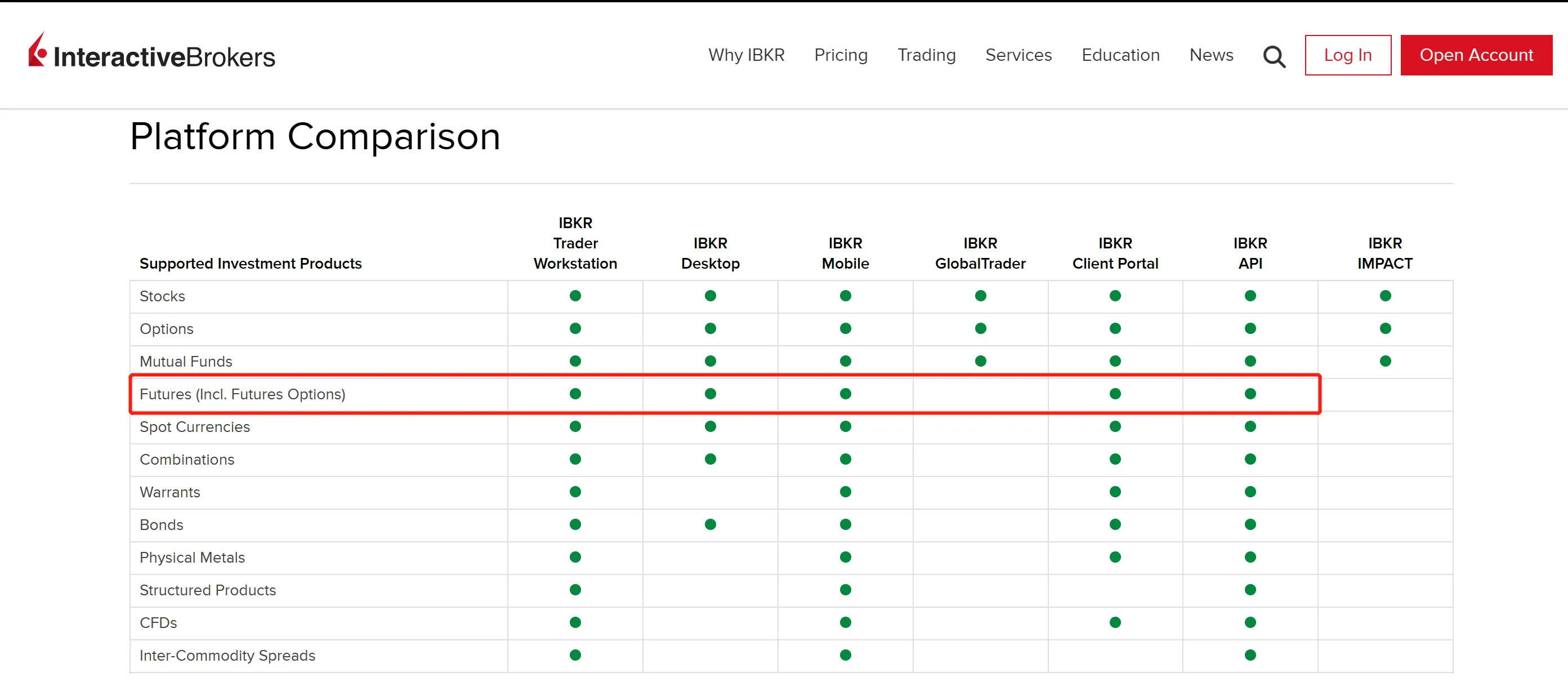
| Trading Platforms (Futures) | IBKR Trader Workstation (TWS), IBKR Desktop, IBKR Mobile, IBKR Client Portal, IBKR API |
| Commissions (US Futures and Futures Options) | $0.25-0.85/contract (Tiered) |
| $0.85/contract (Fixed) | |
| Inactivity Fee | $0 (IBKR Account) |
| ≥£3/month(ISA Account) | |
| Bonus | / |
| Why Do We Choose It? | Well-suited for seasoned Futures traders and newbies alike, IB takes the lead with its massive asset portfolio and advanced trading technology, making it the topnotch choice for diving into the complexity of futures trading. |
Renowned for its high-end trading technology, IB offers a range of platforms, including IBKR Trader Workstation (TWS), IBKR Desktop, IBKR Mobile, IBKR Client Portal, IBKR API—each intricately designed for effective futures trading. From beginner traders who prefer simple, understandable tools to professional traders seeking advanced charting and analysis tools—IB caters to all.
The star attribute of IB, however, is its competitive commission structure. With a fixed-rate pricing system, it charges only 0.85 per contract, with the option to reduce this to as low as 0.25 for clients who trade in larger volumes. A nominal inactivity fee does apply, but it can be avoided by maintaining a certain level of trade activity.
IB Commissions Overview
Note: Commission rates for futures vary depending on geographic location. For the scope of our discussion on IB, we focus on commission structures as they apply within the United States.
| Commissions (USA) | Tiered | Fixed |
| Futures and Futures Options | $0.25-0.85/contract | $0.85/contract |
| E-micro Futures and Futures Options | $0.10-0.25/contract | $0.25/contract |
| CME Cryptocurrency Futures and Futures Options | $0.10-5.00/contract | |
| E-mini FX Futures | $0.15-0.50/contract | $0.50/contract |
| E-Micro FX Futures (by Denomination) | $0.05-0.15/contract | $0.15/contract |
| Small Exchange Futures | / | $0.08/contract |
IB also provides a wealth of educational materials through the IBKR Campus. Here, you can delve into Traders' Insight articles, explore comprehensive financial courses, and tune into enlightening IBKR podcasts. There is also a trove of quant articles for those keen on quantitative analysis.
Additionally, they offer a schedule of upcoming webinars to keep traders abreast of the latest trends and insights. In essence, Interactive Brokers empowers traders with their expansive learning resources designed for continuous growth and development.

IB Pro & Cons
Pros
√ Robust Trading Technology: IB offers a high-end suite of trading platforms, featuring advanced charting and analysis tools.
√ Competitive Commissions: It provides a competitive cost structure, especially for those who trade in larger volumes.
√ Extensive Educational Resources: With the IBKR Campus, the broker provides a wealth of learning materials, from webinars to financial courses and insightful articles.
Cons
× Inactivity Fee: There is an inactivity fee, which can be avoided by maintaining certain trade activity levels.
× Complexity: IB's platforms, due to their advanced features, might initially seem daunting for novice traders.
② E Trade
Best for beginners and offers excellent futures education
 |
|
| ⭐⭐⭐⭐⭐ | |
| Account Minimum | $0 |
| Trading Platforms (Futures) | E TRADE Web, Power E TRADE, E TRADE app and Power E TRADE app |
| Commissions | $1.50/contract (futures and futures options) |
| $2.50/contract (cryptocurrency futures) | |
| Inactivity Fee | / |
| Bonus | / |
| Why Do We Choose It? | Ideal for those starting their journey or working towards mastering futures trading, E TRADE is undisputedly the leader. It offers an easily navigable web-based trading platform along with a comprehensive futures education to help users better understand market dynamics. |
E TRADE offers four main trading platforms, E TRADE Web, Power E TRADE, E TRADE app and Power E TRADE app. All platforms are finely equipped for futures trading, with comprehensive charting tools, futures spreads, and risk management features.


Yet, one of ETRADE's standout facets is its competitive futures trading commissions. Operating on a simple flat fee structure, ETRADE charges $1.50 per contract, per side for all futures trades—a, a structure that is particularly appealing to high volume traders for its cost-effectiveness.
Additionally, E TRADE boasts an extensive collection of educational resources through its online library. This resource hub is not exclusive to futures trading but also covers a rich spectrum of trading products. With its streamlined search feature, it's a breeze to locate and delve into the topics you're keen to learn about. Moreover, beginners will find the 'Getting Started' section highly beneficial as it provides clear, structured guidance to kick-start your trading journey.

E Trade Pro & Cons
Pros
√ Comprehensive Trading Platforms: E TRADE's superior trading platforms, notably E TRADE Web and Power E TRADE, as well as mobile apps, offer extensive features for futures trading.
√ Competitive Commissions: With a flat fee structure of $1.50 per contract, per side, E TRADE offers attractive pricing for futures trades.
√ Rich Educational Resources: E TRADE's online library provides wide-ranging educational materials, including a 'Getting Started' section for beginners.
Cons
× Suspicious Clone NFA License: The current regulatory status of E TRADE raises concerns. As of now, it does not possess any officially recognized authorizations. Instead, it holds what appears to be a dubious clone of a Common Financial Service License from the National Futures Association (NFA, No. 0320906) which puts into question its credibility and trustworthiness.

Source: WikiFX
③ tastytrade
Designed for casual futures traders focusing on options
 |
|
| ⭐⭐⭐⭐⭐ | |
| Account Minimum | $0 |
| Trading Platforms (Futures) | TastyWorks and the TastyTrade network |
| Commissions (Futures) | $1.25/contract (open/close) |
| Inactivity Fee | / |
| Bonus | $100-$5,000 based on funding amount (Account Opening) |
| Why Do We Choose It? | Perfect for those with a causal or serious bent towards futures trading, particularly those who are primarily options traders, Tastytrade makes trading seamless with its intuitive platform designed for ease. |
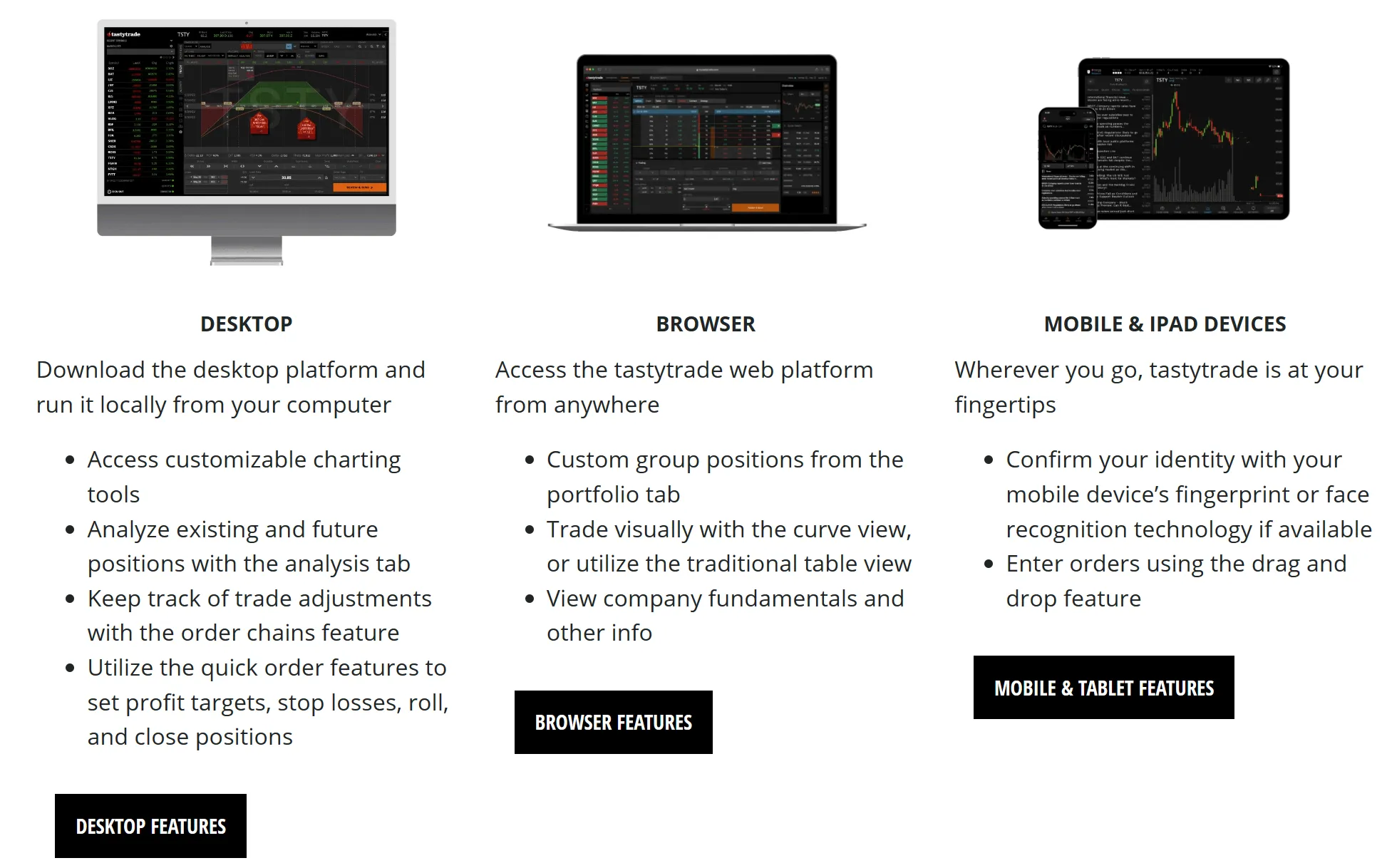
presents two pivotal trading platforms: TastyWorks and the TastyTrade network. Both platforms are well-equipped to handle the demands of futures trading, featuring deep-dive analytics, futures spreads, and intricate risk management systems.
With respect to commission structure, tastytrade adopts a competitive approach. The pricing is transparent and straightforward - traders pay $1.25 per contract, per side for all futures trades, including futures options—an appealing proposition that suits both high-volume and occasional traders.
Tastytrade also offers a tiered bonus structure based on the funding amount.
Depositors who fund with $5,000 to $24,999 receive a bonus of $100.
Depositors who fund with $25,000 to $99,999 receive a bonus of $500.
Depositors who fund with $100,000 to $249,999 receive a bonus of $2,000.
Depositors who fund with $250,000 to $499,999 receive a bonus of $3,000.
Depositors who fund with $500,000 to $999,999 receive a bonus of $4,000.
Depositors who fund $1,000,000 or more receive a bonus of $5,000.
Thus, the larger the initial deposit, the larger the resulting bonus from tastytrade.

tastytrade Pro & Cons
Pros
√ Powerful Trading Platforms: TastyWorks and the TastyTrade network are highly comprehensive and equipped to meet the demands of futures trading.
√ Clear Commission Structure: Tastytrade offers a straightforward and competitive pricing model, which stands at $1.25 per contract, per side for all futures trades.
√ Generous Bonus Structure: Depending on the deposit size, Tastytrade provides a bonus that ranges from $100 to $5,000.
Cons
× Lack of Regulatory Oversight: Tastytrade currently lacks valid and official regulation, a fact that could instill hesitance among possible traders and may raise questions about its reliability and compliance with international financial security regulations.
④ TD Ameritrade (Charles Schwab)
Versatile platform for mobile and advanced futures traders
 |
|
| ⭐⭐⭐⭐ | |
| Account Minimum | $0 |
| Trading Platforms (Futures) | thinkorswim desktop, thinkorswim web, thinkorswim mobile, Schwab.com and Schwab Mobile |
| Commissions (Futures) | $2.25/contract (Online Trades/Broker-Assisted Trades) |
| Inactivity Fee | / |
| Bonus | / |
| Why Do We Choose It? | Whether you're a mobile or desktop trader, TD Ameritrade offers a versatile futures trading experience with advanced research tools and an all-encompassing investment platform. This, alongside its acclaimed iPhone app, marks it as ideal for traders seeking flexibility. |
TD Ameritrade, now part of the Charles Schwab Corporation, provides two key trading systems: thinkorswim and Schwab platforms. Thinkorswim is a comprehensive platform, offering extensive trading tools, research capabilities, and even a learning center for beginners. However, thinkorswim is currently undergoing enhancements. Additionally, Schwab's trading platforms currently do not support futures trading.

TD Ameritrade offers an extensive selection of futures products for trading. The platform facilitates futures trading in a diverse array of categories including: financials, energies, metals and agriculture. This broad selection of futures products allows users to hedge against different types of economic exposure or express views on a wide range of economic outcomes.

As far as commission and fees are concerned, TD Ameritrade provides a clear and competitive structure. The futures trading fee is set at $2.25 per contract (plus exchange & regulatory fees).
What's more, TD Ameritrade provides a robust educational platform. Their education center offers webcasts, videos, and articles designed to help traders of all levels of experience learn about futures trading.

TD Ameritrade (Charles Schwab) Pro & Cons
Pros
√ Diverse Trading Platforms: TD Ameritrade offers two compelling trading platforms, thinkorswim and Schwab, catering to both experienced and less experienced traders.
√ Broad Range of Futures Products: The platform enables traders to choose from a wide variety of futures products across categories like stock indexes, currencies, interest rates, energies, metals, and agriculture.
√ Transparent Fee Structure: TD Ameritrade has a clear commission structure for futures trading at $2.25 per contract (plus exchange & regulatory fees).
√ Comprehensive Educational Resources: The platform provides an extensive set of learning tools through their education center to help traders of all levels.
Cons
× Lack of Futures Trading on Schwab's Platforms: Currently, Schwab's trading platforms do not support futures trading.
⑤ TradeStation
Standout platform with low commissions for tech-savvy traders
 |
|
| ⭐⭐⭐⭐ | |
| Account Minimum | $2,000 |
| Trading Platforms (Futures) | Desktop, Web, Mobile Apps |
| Commissions | $1.50 per contract, per side (Futures) |
| $0.50 per contract, per side (Micro E-Mini futures) | |
| Inactivity Fee | / |
| Bonus | / |
| Why Do We Choose It? | If you're a tech-enthusiast looking for an excellent desktop futures trading experience or a retail client in the US seeking a noteworthy futures broker, TradeStation is your ally. Celebrated for low commissions and its standout trading platform, it is a benchmark in the market. |
Known for offering a powerful trading platform, TradeStation supports direct-routing access and complex order routing, equipped with professional-grade tools that are ideal for active and experienced traders.
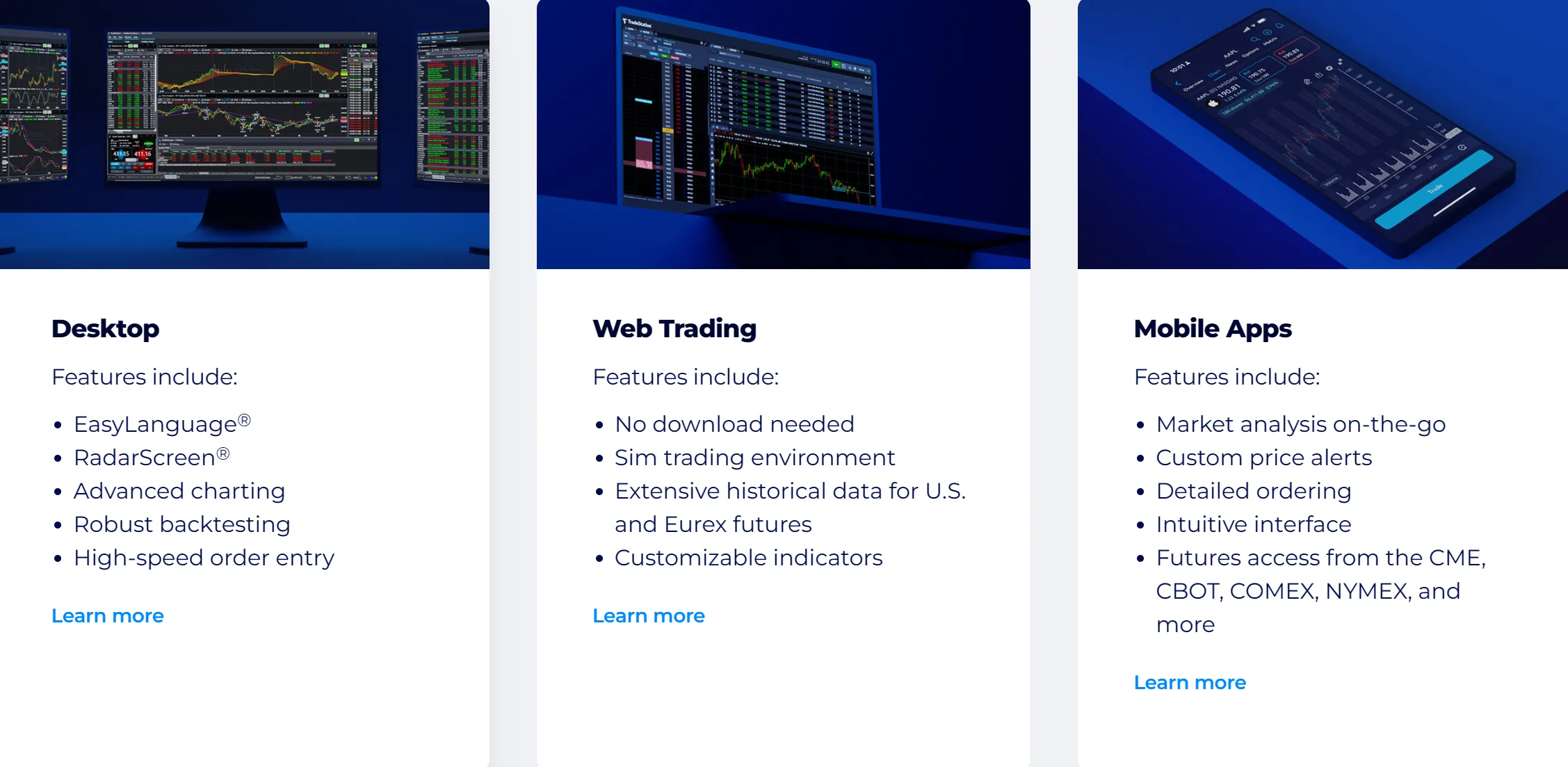
TradeStation offers a wide range of futures products, allowing trades on stock indexes, currencies, interest rates, energy commodities, metals, and agriculture. The platform is designed to support both advanced trading strategies and more straightforward trades, making it appealing to a variety of traders.
In terms of commission and fees, TradeStation has a competitive pricing structure for futures trading. They charge $1.50 per contract, per side for futures trades (other fees, including exchange fees, may also apply).
Additionally, the platform provides an extensive array of analytical tools and a sizable educational center to support traders in making informed decisions and improving their trading skills.
To sum it up, TradeStation is a strong competitor in the online brokerage community, due to its robust trading platform, diverse futures offerings, competitive pricing, and comprehensive educational resources.
TradeStation Pros & Cons
Pros
√ Diverse Futures Products: TradeStation provides a variety of futures products to trade in, including stock indexes, currencies, interest rates, energy commodities, metals, and agriculture.
√ Competitive Pricing Structure: TradeStation charges $1.50 per contract, per side for futures trades (additional fees, including exchange fees, may also apply).
√ Educational Resources: It has an extensive educational center, providing analytical tools and resources to help traders make informed decisions.
Cons
× Lack of Regulation: TradeStation currently has no valid regulation. This is a major drawback as it raises questions about the platform's credibility, safety, and adherence to global financial regulations.
× High Minimum Deposit: A minimal deposit of $2000 is required to open an account with TradeStation, which could be a significant barrier for some prospective traders with less funds available to start.
Futures Trading Platforms FAQs
What is futures trading?
Futures trading involves buying and selling futures contracts, which are agreements to buy or sell a specific commodity or financial instrument at a predetermined price at a specific time in the future. The primary purpose of futures trading is to mitigate financial risk by hedging against potential price movements or to profit from speculation on price movements in various markets.
How does futures trading work?
Futures trading works through the buying and selling of contracts on a futures exchange market.
Futures Contracts
These are legal agreements between two parties, typically a buyer and a seller. The agreement states that the seller will deliver a specific commodity or financial instrument to the buyer at a predetermined date in the future at a price that's agreed upon at the present (known as the futures price).
Standardization
Futures contracts are standardized in terms of the quality and quantity of the commodity, delivery time, and location. This makes the trading process easier as the traders only need to negotiate on the price.
Margin
Instead of paying the full value of the contract upfront, traders are required to deposit a small percentage of the total contract value, known as the margin.
Positions
If you believe the price of a commodity or financial instrument will increase, you “go long” or buy a futures contract. If you believe the price will decrease, you “go short” or sell a futures contract.
Profiting
If your speculation is correct and you've gone long, you'll profit if the price at the time of the future's expiry is higher than the price you agreed upon. If you've gone short, you'll profit if the price at the future's expiry is lower than the agreed price.
Fulfillment
Futures contracts can be fulfilled by physical delivery of the commodity or financial instrument, but most contracts are settled in cash which means the difference in price is exchanged, and the actual commodity or instrument never changes hands.
Can trading futures be profitable?
Yes, trading futures can be profitable, but it's important to note that there's also a high level of risk involved. Traders can make profits by accurately predicting future price movements of the underlying assets. Moreover, futures are highly leveraged investments, meaning investors can control a large amount of the asset for a relatively small amount of capital, which can amplify profits.
However, this leverage works both ways. If the market does not move in the direction anticipated by the trader, it can lead to significant losses, often greater than the initial investment. Therefore, while futures trading can be profitable, they are not suitable for everyone and require a good understanding of the markets and potential risks. It is also advisable to form a sound trading strategy and adequately manage risks.
What assets can I trade as futures?
There are several types of assets you can trade as futures. These include:
Agricultural Commodities
Such as wheat, corn, soybeans, coffee, sugar, and cotton.
Energies
Such as crude oil, natural gas, gasoline, and heating oil.
Metals
Such as gold, silver, platinum, and copper.
Financials
An array of financial instruments including interest rates, stock indexes, currencies, and even cryptocurrencies in some cases.
Livestock and Meats
Like lean hogs, live cattle, and feeder cattle.
How much do I need to trade futures?
The amount of money you need to trade futures can vary depending on several factors. These include the price of the futures contract itself, the initial margin requirements set by the exchange, and the broker's own requirements which may be higher than the exchange's.
For example, if the initial margin requirement for a certain futures contract is $1,000, you would need at least this amount in your account to take a position in this contract. But keep in mind, having just the minimum margin required is often not advisable as it leaves little room for any unfavorable market movements.
In this article, you'll find that most of the top 5 futures trading brokers we've handpicked place no minimum deposit requirement for account creation. Such flexibility facilitates traders with various budgets to commence their futures trading journey.
What hours can I trade futures?
Futures markets have different trading hours depending on the commodity or financial instrument. Many futures markets are open nearly 24 hours a day, five days a week. This includes an overnight electronic trading session which allows trades to be executed even when the traditional stock market is closed.
For example, in the CME Group's exchanges, one of the world's biggest futures exchanges, most commodity and financial futures are available for trading from Sunday evening to Friday afternoon, with a daily trading pause typically occurring between 4:00 p.m. and 5:00 p.m Central Time.
However, not all futures contracts trade around the clock, and there may be maintenance periods or other times when trading is unavailable. It's essential to check specific trading hours for the futures contract you are interested in, which can usually be found on the exchange's website.
Final Thoughts
Having taken a deep dive into the world of futures trading brokers, the journey now rests in your hands. Equipped with this robust list of the top five brokers designed to meet diverse trading needs, you are one step closer to initiating your futures trading endeavors. Remember, this is merely a stepping stone. Continuous learning and staying abreast with market trends will be key to your trading success.
On WikiFX, we've meticulously compiled a variety of ranking lists influenced by factors such as geographical location and trading conditions, among others. We wish you every success as you explore these platforms and discover which one is the perfect fit for your financial ambitions. Follow us for further insights and to deepen your understanding of forex trading.
Disclaimer
Trading futures and options involves substantial risk of loss and is not suitable for all investors. Past performance is not indicative of future results. The information and data in this article were obtained from sources considered reliable. Their accuracy or completeness is not guaranteed and the giving of the same is not to be deemed as an offer or solicitation on our part with respect to the sale or purchase of any securities or commodities. Any decision to purchase or sell as a result of the opinions expressed in this article will be the full responsibility of the person authorizing such transaction. Remember, always do your own research before making an investment, and consult a licensed investment professional before making any investment.
You Also Like
By Country

Best Stock Brokers in the US for 2026
When choosing an online broker, finding the platform that best fits your investment needs is crucial. With the rise in popularity of online trading, more brokers are offering free stock trading and commission-free transactions for various assets. It has become a challenge for users to select suitable brokers.

Best Forex Brokers in Portugal for 2026
Explore top 10 forex brokers in Portugal,elevating their trading pros and cons to give traders more useful guidance.
Best Forex Trading Time in India 2026
Optimize your Forex trading in India by understanding prime trading times and exploring broker options.

7 Best Platforms for Copy Trading in India 2026
India's leading copy trading platforms allows you to automatically copy the trades of top performers, enhancing profitbility.

















































View More
By Regulator

5 Best Offshore International Forex Brokers in 2026
Offshore regulation usually refers to financial companies or enterprises registered in certain regions, subject to the relatively relaxed local legal and regulatory environment, enjoy low tax burden, privacy protection and other benefits, but this practice also comes with possible legal risks and disputes, especially in terms of tax and transparency issues.

8 Best Forex Trustworthy Brokers in 2026
Stay informed and avoid forex scams with our list of 8 Top Trustworthy Brokers – trade with peace of mind and profitable potential.

Beware: 10 Fake Forex Brokers in the UK in 2026
With the need for caution in the UK's flourishing forex market, this article points out 10 fake brokers to avoid amidst numerous reputable entities.

Best CySEC Regulated Forex Brokers 2026
Delving into CySEC-regulated forex trading, this article presents a top 9 list of brokers, spotlighting the benefits of regulatory compliance.




View More
By Platform
8 Best Forex Trustworthy Brokers in 2026
Stay informed and avoid forex scams with our list of 8 Top Trustworthy Brokers – trade with peace of mind and profitable potential.
7 Best Platforms for Copy Trading in India 2026
India's leading copy trading platforms allows you to automatically copy the trades of top performers, enhancing profitbility.

Best Forex Brokers in Denmark for 2026
Discover top regulated forex brokers, trading platforms and broker reviews for reliable trading in Denmark.

Best Forex Brokers Ireland in 2026
Compare top forex brokers in Ireland with robust regulation, excellent platforms and broker reviews for secure trading.



View More
By Asset
Top 10 Most Volatile Currency Pairs in 2026
Discover lucrative opportunities in Forex Trading by exploring our comprehensive guide on the Top 10 Most Volatile Forex Pairs.
Best Binary Options Brokers in 2026

Best Bitcoin Brokers for 2026
The text discusses Bitcoin brokers' role and criteria for selecting the top providers, emphasizing their key functionalities.
7 Best Crypto Brokers in 2026
Examine the top 5 futures trading platforms , considering user experience, tradable assets, educational resources, commissions, and more.








View More
By Account Type

Best Forex Demo Accounts for Beginner Traders 2026
With so many forex brokers in the market, how do you choose the right one? Read this article and follow us to find the demo accounts and platforms of top forex brokers.
8 Best Forex Brokers With Segregated Accounts in 2026
Review the 8 Best Forex Brokers With Segregated Accounts. Analyze regulation, fund management practices, and compensation schemes for each.
4 Best $5 Minimum Deposit Forex Brokers in 2026
Explore forex trading with just $5 through the top four brokers, offering optimum services with minimal capital.
Best DMA Forex Brokers (Direct Market Access) for 2026
Delve into the world of DMA Forex Brokers with our guide. Discover top picks and know how DMA brokers operate, their pros and cons.






View More
By Trading Strategy

Best High-Frequency Trading Brokers 2026
Explore top HFT brokers, understand HFT's intricacies, strategies, legality, and its impact on global trading landscape.
How to Day Trade for a Living in 2026?
Transform your financial future: Master the art & science of day trading and turn it into a profitable living!
Best Forex Trading Strategies in 2026 (Top 8)
Unearth top Forex trading strategies for maximum profit and minimized risk in our comprehensive guide to global currency markets.
Best Forex Brokers with Trading APIs for 2026
Dive into top Forex Brokers with exceptional trading APIs, offering benefits, security, and a variety of platforms.












View More
Others

5 Best Forex Brokers with Welcome Bonuses 2026
This article highlights 5 globally licensed forex brokers, comparing their welcome bonus offerings, trading costs, leverage conditions, and key terms to help you quickly identify the most cost-effective choices.

Top 9 Best Forex Robot Traders 2026
Master Forex trading with world's top traders' secrets & unlock robot trading's potential!

A Beginners' Guide: How to Avoid Forex Scams in 2026?
Learn how to spot and avoid shady Forex scams with real-life examples, useful tools like WikiFX, and tips for finding reliable brokers.

7 Best Online Forex Trading Courses of 2026
Dive into Forex trading with top 7 online courses, providing powerful insights on strategies, risk management, and hands-on trading experience.





























































































View More