Global Broker Regulation Inquiry App
About WikiFX


Post-Brexit UK Still Seeks to Benefit from Europe's 'Made in Europe' Push in This Industry

WikiFX
|


Abstract:Britain is pushing to avoid exclusion from the European Union's proposed "Made in Europe" rules, which would favour locally produced goods in strategic industries. But while Germany is open to including partner countries, France insists the scheme should benefit EU members, leaving London facing a difficult choice over its post-Brexit trade policy.
Abstract
Britain is pushing to avoid exclusion from the European Union's proposed “Made in Europe” rules, which would favour locally produced goods in strategic industries. But while Germany is open to including partner countries, France insists the scheme should benefit EU members, leaving London facing a difficult choice over its post-Brexit trade policy.
UK Warns Against Being Left Out of Europe's Industrial Push
Britain fears becoming a casualty of the European Union's efforts to revive its struggling industrial sector, as Brussels debates plans to give preference to European-made products in strategic industries.
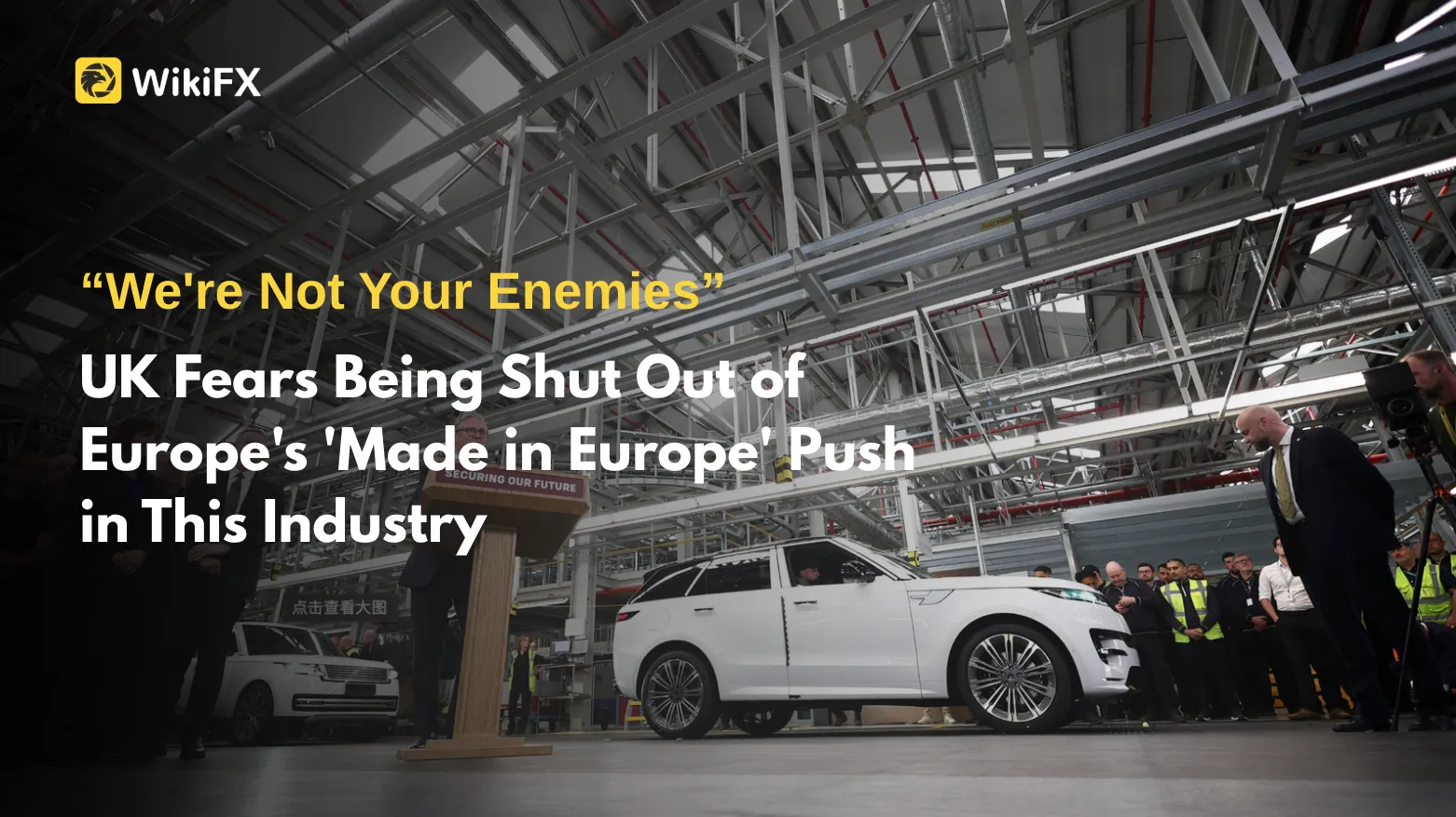
“We are not your enemies, we are not the problem,” British Prime Minister Andy Burnham said on Tuesday, as his government seeks to prevent UK companies from being disadvantaged by the proposed industrial acceleration legislation.
The plan would require companies in sectors such as automotive and low-carbon energy to source European-made goods in order to continue receiving public funding. Under a strict interpretation, British businesses would be excluded.
London has warned against turning the initiative into “counterproductive protectionism”. British Defence Secretary Wes Streeting made the case during a visit to Brussels, where he met EU foreign policy chief Kaja Kallas ahead of the November 20 UK-EU summit.
The UK's automotive industry is particularly concerned. Its exports to the EU reached 20 billion euros in 2024, according to the industry's trade body, the Society of Motor Manufacturers and Traders (SMMT).
Excluding Britain from the “Made in Europe” label would weaken competitiveness, reduce production volumes and limit consumer choice, SMMT chief executive Mike Hawes warned, pointing to the interdependence between the two markets.
France Holds Firm as Germany Pushes for a Wider Approach
EU member states remain divided over how broadly the new rules should apply.
France wants the scheme reserved strictly for EU member states. “European taxpayers' money must support European workers and factories,” French Industry Minister Sébastien Martin said, rejecting the idea of extending the benefits to Britain.
Paris has also previously pushed to keep the UK out of the EU's SAFE joint military procurement programme.
Germany, however, favours a broader “Made with Europe” approach that would include partner countries such as Britain and Canada. Belgium has taken a similar position, arguing for an open list of countries that comply with the rules, potentially including Switzerland and South Korea.
The debate is expected to continue among EU capitals and in the European Parliament until at least the end of the year.
EU Seeks Trade Policy Alignment, Customs Union Back in Focus
Even if Britain is eventually included, Brussels has warned that London would need to bring its trade policy closer to the EU's. That could include raising tariffs on Chinese electric vehicles, the Financial Times reported.
Some officials in Brussels see a return to the EU customs union as a possible solution. Such an arrangement could allow Britain to remain outside the bloc while participating in parts of its customs framework, as Turkey does for certain goods.
But the idea remains politically sensitive in Britain. Rejoining the customs union would mean accepting rules the UK would have little say in shaping, running against the original aim of Brexit to regain control over the country's affairs.
The Labour government's official position remains opposed to rejoining. For Burnham, the challenge is therefore to secure access to Europe's industrial initiative without giving up the trade autonomy Britain sought after leaving the bloc.
Disclaimer:
The views in this article only represent the author's personal views, and do not constitute investment advice on this platform. This platform does not guarantee the accuracy, completeness and timeliness of the information in the article, and will not be liable for any loss caused by the use of or reliance on the information in the article.
WikiFX Broker
Latest News
XTrend Speed Review: Unverified Regulatory Claims and User Complaints Demand Caution
WikiFXWeekly Market Preview: Oil Drop on Iran Talks, Gold Breakdown, PMI Strength & FX Outlook
WikiFXRBI Reopens Urban Cooperative Bank Licensing After 22 Years as New Audit Rules Take Shape
WikiFXWhy Your Overnight Swap Fee Looks Bigger Than Expected
WikiFXEASY TRADING ONLINE Broker Exposed: What Are Other Traders Saying About This Broker?
WikiFXEurope's Inflation Divide: Is December About to Bring Another ECB Rate Hike?
WikiFXAustralia hikes rates to 18-year high to fight inflation
WikiFXVITTAVERSE Review 2026: Traders Allege Profit Deletion as the Broker Cites Trading Abuse
WikiFXWhat I Am Watching Today – DAX, S&P 500, EUR/USD, and USD/JPY
WikiFXBinance Hack Sparks US$3.47 Million DeFi Arbitrage Windfall
WikiFX