

Global Broker Regulation Inquiry App
About WikiFX
English
简体中文
繁體中文
English
Pусский
日本語
ภาษาไทย
Tiếng Việt
Bahasa Indonesia
Español
हिन्दी
Filippiiniläinen
Français
Deutsch
Português
Türkçe
한국어
العربية
اردو


Oil Nears $100 as US-Iran Escalation Turns Kinetic; Equities Retreat


Abstract:Market Wrap: Oil Surge Pressures Stocks as Inflation Data LoomThe Middle East has decisively reclaimed the drivers seat. What had been a diplomatic standoff has now become an active exchange of strike

Market Wrap: Oil Surge Pressures Stocks as Inflation Data Loom
The Middle East has decisively reclaimed the driver's seat. What had been a diplomatic standoff has now become an active exchange of strikes: US officials reported that Iran attempted to attack US Navy vessels on 7 September following weekend reports of ballistic missiles targeting a US aircraft carrier, and the US responded by striking several Iranian oil tankers near Kharg Island — one of Iran's major crude export hubs. Iran-aligned forces in Yemen have separately attacked Saudi energy facilities, forcing the suspension of some operations.
The oil market's reaction has been swift and blunt. Brent is now within touching distance of $100 per barrel, up more than 8% so far this month; WTI has followed. Goldman Sachs lifted its December Brent and WTI forecasts and, more strikingly, said it now expects Middle East shipping disruptions to extend into 2027 — moving the geopolitical risk premium from a tactical overlay to something more structural.
US equities have been the natural counter-trade. The Dow led the retreat, falling more than 1%, with the S&P 500 and Nasdaq also lower. The move reflects a market beginning to price two related concerns at once: that higher oil feeds directly into the coming US inflation prints, and that those prints are due just ahead of next week's Federal Reserve meeting. A hot CPI in this backdrop would leave the Fed with almost no cover for the political pressure it is already under to cut.
DXY
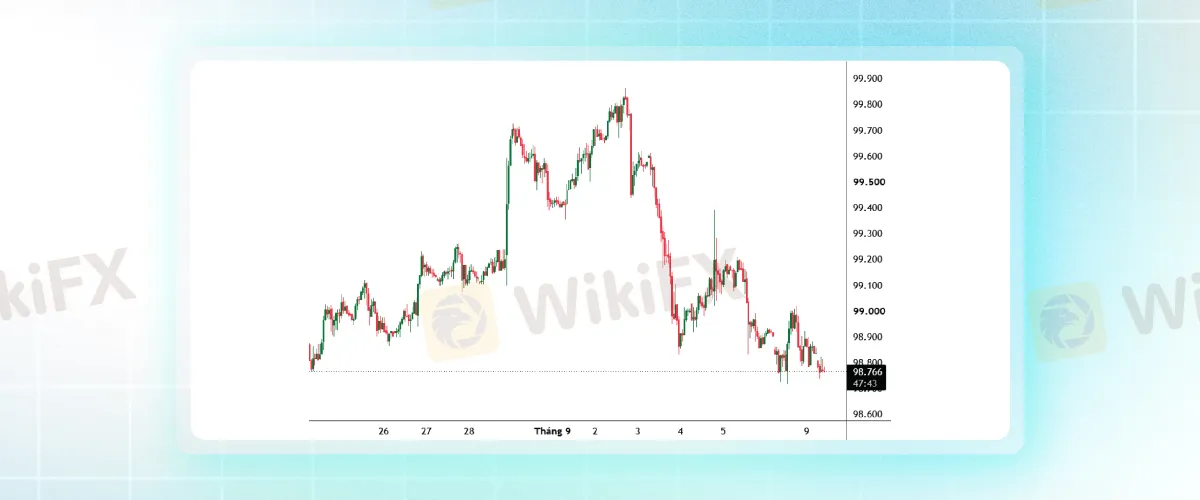
The dollar has been broadly flat, sitting near recent lows, with markets holding fire ahead of inflation. The near-term catalyst is straightforward: if this week's inflation data validates the oil-driven pass-through, the dollar's downtrend gets challenged; if it doesn't, the softer-data narrative regains control.
Gold
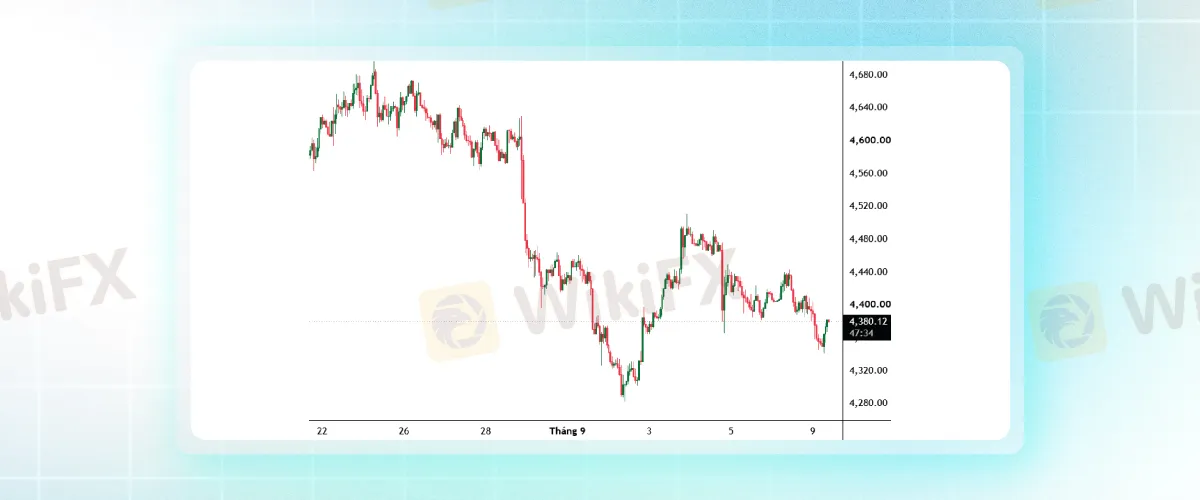
Gold has been unusually subdued given the backdrop, easing back after a brief intraday push higher. It's a slightly counterintuitive move — kinetic escalation between two military powers over oil should be textbook gold. The muted response suggests positioning is already stretched and that dollar dynamics are doing more of the near-term work than the geopolitical bid.
Oil
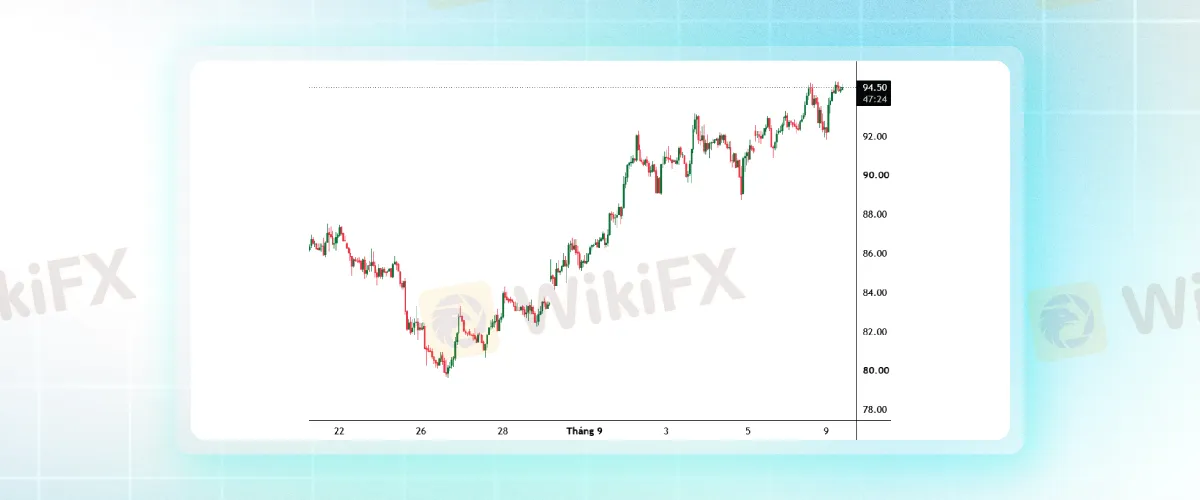
Oil is doing the heavy lifting for the entire risk complex. Escalation, an explicit US strike on Iranian export infrastructure, Yemen-based attacks on Saudi facilities, and Goldman's forecast for disruption into 2027 all point the same way. Until there is a de-escalation catalyst, oil is likely to remain the dominant macro variable, and traders should expect volatility in both directions on incremental headlines.
USD/CAD
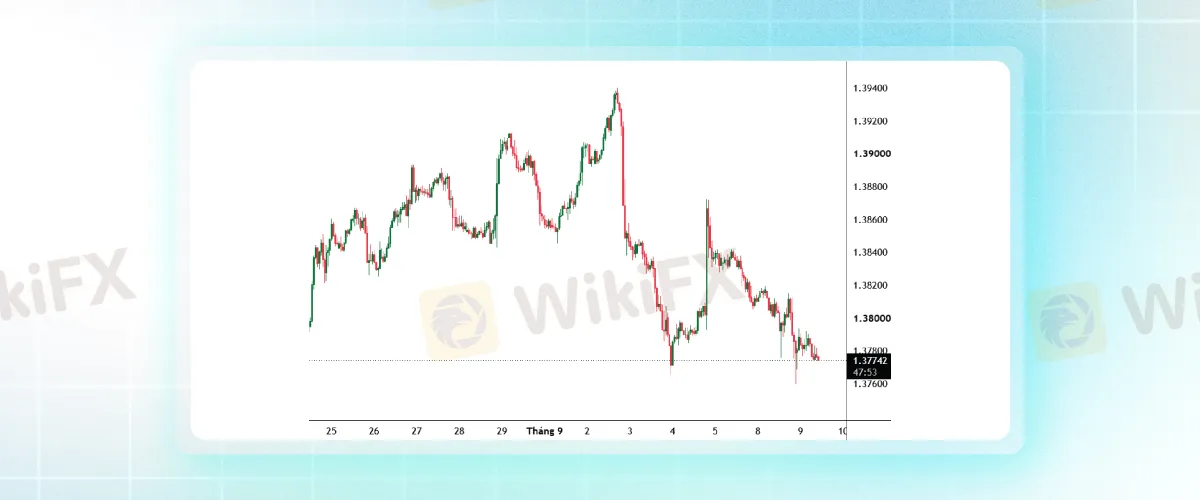
The Canadian dollar has firmed on higher oil, though the broader picture is muddier: Canadian tariffs on roughly $20 billion of US goods officially took effect on 8 September, adding a fresh layer of trade-policy uncertainty to the CAD outlook. For now, energy is winning the tug-of-war, but tariff dynamics warrant closer monitoring as they filter through cross-border flows.
Yen
The yen continues to strengthen ahead of the Bank of Japan meeting, with markets increasingly pricing continued rate hikes. That has revived attention on the potential unwinding of yen carry trades — a systemic-risk theme worth flagging given the size of positioning that has built up through the summer. A disorderly unwind would ripple far beyond FX.
Focus: Inflation, ECB, and the Fed Ahead
The immediate calendar is compact but heavy. ADP weekly employment (delayed by a day) provides a fresh read on hiring. Christine Lagarde speaks ahead of Thursday's ECB decision, where a 25bp hike is broadly expected. But the real event is US inflation later this week — and behind that, the Federal Reserve's meeting next week, which will be read against the freshly hawkish oil backdrop and the ongoing internal political tension around rate direction.
The Takeaway
Two months of steady escalation have quietly repositioned oil from a supply-side risk factor into the single most important macro variable heading into a Fed meeting. That's a fragile setup. A hot inflation print into a rising oil complex forces the Fed's hand; a soft print offers only temporary relief. Position for range volatility, not directional conviction, and expect the market's mood to reset with each new Middle East headline.
Disclaimer:
The views in this article only represent the author's personal views, and do not constitute investment advice on this platform. This platform does not guarantee the accuracy, completeness and timeliness of the information in the article, and will not be liable for any loss caused by the use of or reliance on the information in the article.
WikiFX Broker
Latest News
XMR Markets Review 2026: Allegations of Failed Withdrawals & Bonuses
 WikiFX
Swiss Franc steadies as Fed hike expectations offset safe-haven flows
WikiFXNSE Action Parker Derivatives 8 September 2026 and Seven Checks Before Funding
WikiFXAustralian Dollar posts fresh three-month high amid hawkish RBA prospects
WikiFXVietnam: Inflation and trade trends shape VND – Commerzbank
WikiFXFNmarkets Review India 2026: Mauritius Licence and RBI Checks
WikiFXUnited States Dollar Index trades under pressure as Yen buying accelerates
WikiFXCouple Faced Over RM1.5 Million Loss After Stock Tip Scheme
WikiFXSwiss Franc weakens as US Dollar strengthens on Fed rate hike bets
WikiFXSilver Price Forecast: XAG/USD rises to near $66.40 as US Dollar declines, US CPI in focus
WikiFX