

Global Broker Regulation Inquiry App
About WikiFX
English
简体中文
繁體中文
English
Pусский
日本語
ภาษาไทย
Tiếng Việt
Bahasa Indonesia
Español
हिन्दी
Filippiiniläinen
Français
Deutsch
Português
Türkçe
한국어
العربية
اردو


HTFX Shuts Down After Losing CySEC and FCA Licences

WikiFX
|


Abstract:Attention HTFX users: your broker has ceased operations after losing its licences!
HTFX, a retail foreign exchange and contracts for differences broker with a focus on the Far East market, has ceased operations across all regions, according to industry sources. The group's primary website, htfx.com, has been taken offline and is currently parked with domain registrar GoDaddy, a digital signal that typically indicates a business has wound down or is being held in limbo.
Founded in 2018 and controlled by Chinese entrepreneur Lijun Li, HTFX operated through three distinct entities at its peak. In the United Kingdom, the firm ran HTFX Limited under a license from the Financial Conduct Authority, targeting professional and institutional clients. Its European retail operations were managed through HTFX (EU) Ltd, a Cyprus Investment Firm authorized by the Cyprus Securities and Exchange Commission. A separate offshore entity based in Vanuatu served retail clients across the broader Asia Pacific region.
The unravelling began earlier in 2026 when HTFX voluntarily surrendered its CySEC authorization, a move that effectively shut the door on its access to European markets. The UK operation followed, with its FCA license lapsing as of 10 April 2026. The Vanuatu business, which served as the group's retail anchor for Far East clients, has since gone offline as well.
The UK arm of HTFX was managed for six years by Levy Benarroch, formerly the chief operating officer of GCM Prime, and Stephen Williams. Their departure signals the effective conclusion of the group's regulated presence in any major financial center.
The broader context within which HTFX collapsed reflects an industry that is consolidating rapidly under the pressure of stricter global oversight. Regulators in Cyprus and the United Kingdom have been systematically reviewing broker conduct, and firms unable or unwilling to meet the compliance burden have been exiting. The loss of both a CySEC and an FCA license within the same operating period is an outcome that typically reflects sustained regulatory difficulty rather than voluntary commercial restructuring.
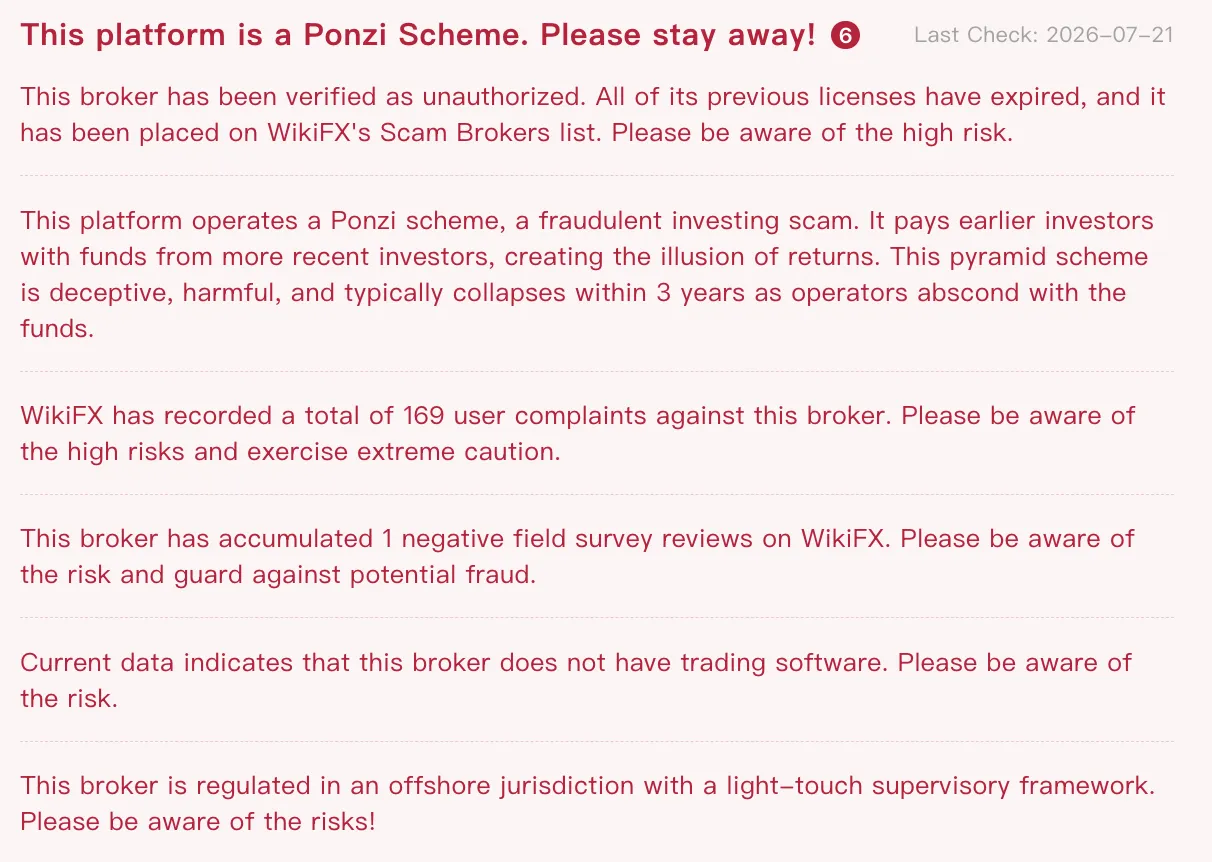
For traders who held accounts with any of HTFX's entities, the absence of a live website or official communication from the group raises legitimate concerns about fund accessibility and the status of outstanding positions. In instances involving offshore brokers operating out of Vanuatu or similar jurisdictions, investor protection frameworks are often far weaker than those available to clients of European or Australian regulated entities.
Malaysian traders remain particularly exposed to these risks. Brokers regulated only in offshore jurisdictions offer little to no recourse in the event of insolvency or sudden cessation of operations. The Securities Commission Malaysia maintains an investor alert list of unlicensed entities, and regulators have urged the public to exercise heightened caution before depositing funds with any platform that lacks a clear and verifiable local or major international license. The HTFX case is a strong reminder of how quickly a seemingly operational multi-jurisdictional broker can dissolve, often with little warning to its client base.
Disclaimer:
The views in this article only represent the author's personal views, and do not constitute investment advice on this platform. This platform does not guarantee the accuracy, completeness and timeliness of the information in the article, and will not be liable for any loss caused by the use of or reliance on the information in the article.
WikiFX Broker
Latest News
RBI Tightens Rupee Derivative Rules as Currency Hovers Near Record Low
WikiFXInside WeTrade’s Exclusive Houston Rockets VIP Experience in Macao
WikiFXFirst Light News: Chip Bounce Fails to Inspire Asia & France Weighs on Europe
WikiFXNigeria's Weekly Dollar Trading Falls 22% to $2.62 Billion as Forward Deals Plunge
WikiFXXTrend Speed Broker Exposed: What Are Other Traders Saying About This Broker?
WikiFXOtetMarkets Review 2026: Reported Account Block, Bonus Abuse & Withdrawal Delay Claims
WikiFXCFI Puts a Trading Behaviour Score and AI Assistant Inside Its App
WikiFXLeading the Transparency Movement, The Trust Dialogue with Vatee
WikiFXNigeria's Weekly Dollar Trading Falls 22% to $2.62 Billion as Forward Deals Plunge
WikiFXUS Dollar Price Forecast: UK CPI Hits 3.5%, DXY Eyes 102.01 as EUR/USD, GBP/USD Split
WikiFX