

Global Broker Regulation Inquiry App
About WikiFX


Leading the Transparency Movement, The Trust Dialogue with Vatee

WikiFX
|


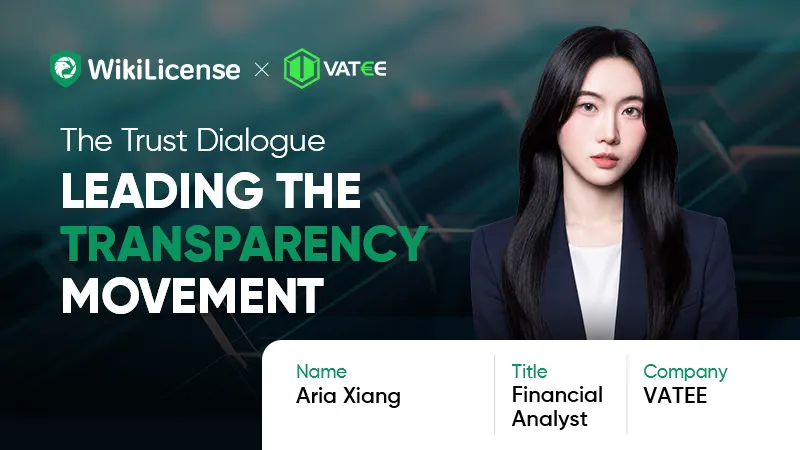
Abstract:In this edition of WikiLicense’s corporate interview series, we speak with Aria Xiang, Financial Analyst from Vatee, one of the early adopters of the WikiLicense dynamic certification badge, to discuss the meaning of “let trust be seen” in daily operations and long-term strategy, the strategic reasons behind adopting the WikiLicense dynamic certification badge, and the practical steps the industry should take to strengthen verification and protection.
Trust in financial markets is built on transparency, verification, and accountability. To address the growing need for reliable license information and greater industry visibility, WikiLicense provides a dynamic certification solution that enables brokers to showcase verified licensing details and allows investors to access clearer, more trustworthy information.
In this edition of WikiLicenses corporate interview series, we speak with Aria Xiang, Financial Analyst from Vatee, one of the early adopters of the WikiLicense dynamic certification badge, to discuss the meaning of “let trust be seen” in daily operations and long-term strategy, the strategic reasons behind adopting the WikiLicense dynamic certification badge, and the practical steps the industry should take to strengthen verification and protection.
Q1: In an industry as fast-paced and complex as forex trading, what does “let trust be seen” mean for your daily operations and long-term strategy?
Aria Xiang: For us at Vatee Markets, it means a client should be able to check the facts behind what we say. “Trust us” is easy to put on a website. The more useful question is: what can someone actually verify?
In daily operations, that comes down to practical details. Can people identify the company providing the service? Are product explanations clear? If someone asks a difficult question about costs or execution, can they get a direct, understandable answer?
Take spreads, for example. A headline figure tells only part of the story. A useful explanation also describes the conditions behind that figure and how spreads may behave differently during volatile markets. That gives people a more realistic basis for their expectations.
Our long-term approach is to build relationships that can withstand scrutiny, including when markets are difficult. A good test is whether the explanation a client receives during a problem is consistent with what they were told beforehand. That consistency is where trust becomes visible.
Q2: You recently became one of the key players to adopt WikiLicense and display its dynamic certification badge on your own website. What was the primary strategic driver behind this decision?
Aria Xiang: The main driver was to make verification easier for people visiting our website.
Someone may discover a broker through an article, an event or a recommendation. Their next question is often very practical: “Who is behind this brand, and where can I check the information?” We want that question to be easy to investigate.
Displaying the WikiLicense badge gives visitors a visible starting point for exploring the relevant information. Our reason for adopting it is to make that step more accessible and encourage people to look beyond the brand name.
There is an important distinction here: a verification tool should support someones checks. It should not be presented as a guarantee of investment performance or a replacement for official regulatory records.
For us, the strategic value is straightforward. We would like the relationship to begin with informed questions and facts that can be checked. Making those facts easier to find helps set the right tone from the beginning.
Q3: In recent years, the market has seen cases of cloned licences, impersonated identities and misleading information. What impact do these issues have on investors and legitimate brokers?
Aria Xiang: One particularly misleading feature of impersonation is that some of the information can be genuine.
Imagine a website displaying the name and licence number of a real financial services company, but using an unrelated domain and different contact details. Someone searches the licence number, finds a genuine record and feels reassured. Yet the crucial question remains unanswered: does that record belong to the people operating this website?
For investors, that confusion can mean dealing with a different party from the one they intended. If something goes wrong, they may discover that their assumptions about accountability and available support were mistaken.
For legitimate brokers, the damage can extend to reputation. A complaint may be attached to the genuine companys name even though it had no involvement. Teams then have to help clarify the situation and distinguish authentic communications from impersonation.
These practices also make everyone more suspicious, including of legitimate businesses. That is why verification needs to connect the licence, the legal entity and the identity being presented to the client.
Q4: How important is transparency of financial licence information in building user trust and promoting the healthy development of the industry?
Aria Xiang: It gives people a factual basis for comparing providers. Without it, a polished website or confident sales message can carry more weight than the underlying information deserves.
However, displaying a licence number is only the beginning. People also need to understand which entity holds it and what activities the authorisation covers.
For example, a financial group might operate through several legal entities. A visitor recognises the groups brand and sees a licence mentioned on its website. The useful question is: “Which entity would provide this particular service, and does the information I am reading apply to that entity?”
Making that relationship clear helps people ask better questions. It also gives legitimate businesses a fairer basis on which to compete through their service, expertise and operating standards.
A licence does not tell someone whether a product suits their needs or whether a trade will be profitable. Its transparency helps establish who is responsible and what they are authorised to do. Those are essential facts on which a more informed relationship can be built.
Q5: In your opinion, what areas should the financial industry continue to improve to enhance transparency and investor protection in the future?
Aria Xiang: I would focus on three areas where the industry can make information more useful.
First, explain trading conditions with examples. Terms such as “slippage” are familiar to professionals, but a definition alone may not help someone understand the experience. A short example showing how an execution price can differ from the requested price would make the concept much clearer.
Second, make changes visible. If company details, service terms or regulatory information change, people should be able to see what changed and when. Information can be accurate when published and still become misleading if it is left out of date.
Third, make problem resolution easier to understand. If a client reports an execution concern, what information should they provide? Who reviews it? How will the outcome be explained? A clear process reduces uncertainty for both sides.
I would also like to see more practical education on impersonation: checking website addresses, independently verifying contact details and recognising inconsistencies between a brand and a legal entity.
The useful test is whether the information helps someone understand a situation or take the next step. Publishing more pages does not automatically achieve that.
Q6: How do you see the importance of a more transparent licence verification mechanism for the financial industry today?
Aria Xiang: The industry needs verification that fits the way people now encounter financial services: through websites, social media, messaging platforms and cross-border brands.
A person may see the same company name in several places, but that consistency of appearance does not establish authenticity. Logos, certificate images and written claims can all be copied.
A useful comparison is a photograph of an identity card. The photograph may show a real document, but you still need to establish that it belongs to the person presenting it. Licence verification faces a similar challenge.
A stronger mechanism should help connect the legal entity, its authorisation and the website or service being represented. It should also make the source and date of the information visible, with a clear route to official records and a way to flag discrepancies.
That would help investors investigate inconsistencies and help legitimate firms demonstrate their identity. For tools such as WikiLicense, the opportunity is to make these checks easier to navigate while keeping the evidence behind them visible. Success means people can reach a better-supported conclusion with less guesswork.

A More Transparent Future Starts with Verification
As the financial industry continues to evolve, transparency and independent verification will play an increasingly important role in building lasting trust. WikiLicense is committed to helping financial institutions make their regulatory credentials more visible while giving investors easier access to verified license information.
Financial institutions are invited to verify and showcase their licenses through WikiLicense, helping clients see trust for themselves.
The WikiLicense corporate interview series is ongoing. We will continue speaking with industry leaders and financial institutions to explore how transparency, verification, and accountability are shaping a more trustworthy and sustainable financial industry.
Disclaimer:
The views in this article only represent the author's personal views, and do not constitute investment advice on this platform. This platform does not guarantee the accuracy, completeness and timeliness of the information in the article, and will not be liable for any loss caused by the use of or reliance on the information in the article.
WikiFX Broker
Latest News
Global Markets Forecast: French Bond Yields Surge as Oil Retreats
WikiFXUS Dollar Price Forecast: Fed Hike Bets Fade, DXY Tests 102.18 as EUR/USD, GBP/USD Slip
WikiFXIndias Finance Minister says easy exits and excess liquidity fuel equity market's underperformance
WikiFXLeading the Transparency Movement, The Trust Dialogue with Vatee
WikiFXMeloni calls emergency meeting after violent clashes in Milan
WikiFXIndias finance minister says market liquidity makes it easier for investors to exit
WikiFXWikiFX Invite & Earn Event Goes Live on Oct 21, Choose Between 100 Telegram Stars or 6-Month Premium
WikiFXRBI Sells Dollars to Slow Rupee Slide as Reserves Drop $60 Billion in Six Weeks
WikiFXTrump's 60-day waiver lands. India's Textile Exporters Say They Already Moved on
WikiFXBOJ Interest Rate Forecast: December Hike in Focus Ahead of Japan CPI
WikiFX