

Global Broker Regulation Inquiry App
About WikiFX
English
简体中文
繁體中文
English
Pусский
日本語
ภาษาไทย
Tiếng Việt
Bahasa Indonesia
Español
हिन्दी
Filippiiniläinen
Français
Deutsch
Português
Türkçe
한국어
العربية
اردو


SEC Alleges $16 Million Ponzi Scheme Targeted 200 Investors

WikiFX
|


Abstract:The US Securities and Exchange Commission has accused New Jersey businessman Ernest Ossei Boateng and two companies he controlled of running an alleged $16 million Ponzi scheme that targeted more than 200 investors, including retirees, students, healthcare workers and religious organisations.
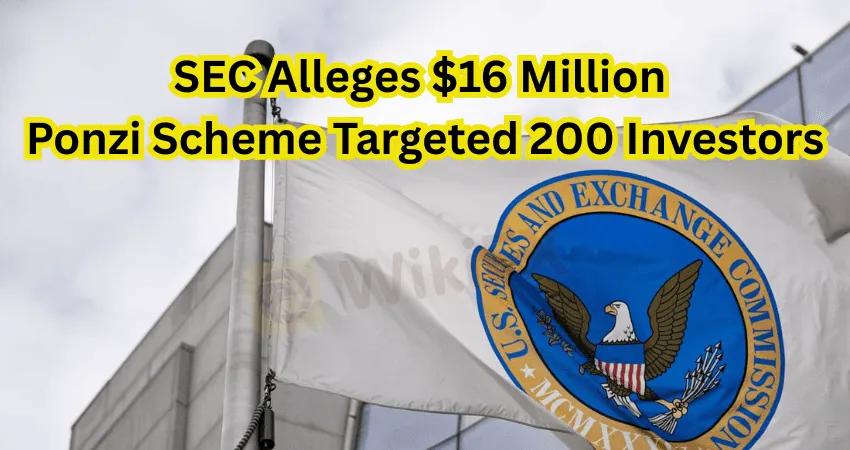
The US Securities and Exchange Commission has accused New Jersey businessman Ernest Ossei Boateng and two companies he controlled of running an alleged $16 million Ponzi scheme that targeted more than 200 investors, including retirees, students, healthcare workers and religious organisations.
The regulator filed its complaint in federal court in New York, alleging that Boateng operated the scheme through Intercontinental Wealth Network LLC and I Wealth Network LP from at least January 2020 through March 2026. According to the SEC, the defendants attracted investors by presenting the investment opportunity as a relatively safe strategy capable of producing fixed and guaranteed returns.
The allegations become more serious when compared with what the SEC says actually happened to the money. Rather than being deployed according to the investment strategy described to clients, more than $5.8 million was allegedly diverted for Boateng's personal expenses, including spending connected to the purchase, renovation and furnishing of his home.
Another approximately $6.6 million was allegedly used to make payments to earlier investors, a pattern that regulators described as consistent with a Ponzi scheme. The SEC also alleges that whatever portion of investor funds was actually traded was not placed into the low risk investments promised to clients. Instead, Boateng allegedly engaged in speculative day trading that generated losses exceeding $750,000.
According to the regulator, the alleged victims included people with little or no previous investment experience, alongside retirees, taxi drivers, home healthcare providers, students and an ailing widow with young children. At least two churches and a prayer group were also allegedly among those who invested.
The SEC said the investment campaign particularly targeted Christians of Ghanaian heritage in New York and New Jersey, relying on a sales pitch that allegedly emphasised security rather than risk. Regulators said some investors were told their money was protected by what was described as financial or investment insurance, a claim the SEC characterised as a major warning sign.

Disclaimer:
The views in this article only represent the author's personal views, and do not constitute investment advice on this platform. This platform does not guarantee the accuracy, completeness and timeliness of the information in the article, and will not be liable for any loss caused by the use of or reliance on the information in the article.
WikiFX Broker
Latest News
EUR/USD: Bearish Structure Shift
WikiFXKudotrade Review 2026: Reported Slippage & Trade Execution Issues You Should Know
WikiFXEURUSD | Demand Zone Holding, Bulls Eyeing Higher Resistance
WikiFXFxPro Opens Five CFDs To Weekend Trading
WikiFXSEC Alleges $16 Million Ponzi Scheme Targeted 200 Investors
WikiFXValutrades Rejects Exit Rumors Amid Client Review
WikiFXMalaysia To Host Asia Fintech Regulatory Summit
WikiFXIG Faces Hundreds Of Job Cuts In Global Restructure
WikiFX1MDB Recovery Still Leaves RM20 Billion Burden
WikiFXWhy Are Retail CFD Brokers Searching Beyond Traditional FX Trading?
WikiFX