

Global Broker Regulation Inquiry App
About WikiFX
English
简体中文
繁體中文
English
Pусский
日本語
ภาษาไทย
Tiếng Việt
Bahasa Indonesia
Español
हिन्दी
Filippiiniläinen
Français
Deutsch
Português
Türkçe
한국어
العربية
اردو



QR Scams Drain RM28.67 Million From Malaysians in Just 6 Months

WikiFX
|


Abstract:Malaysian authorities recorded 5,134 QR related scam cases between January and June 2026.
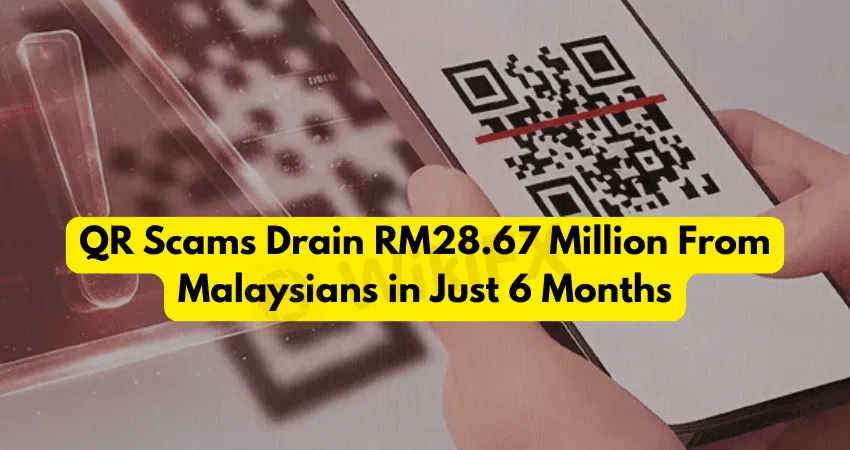
Malaysias rapid shift toward cashless payments is creating a lucrative opening for fraud syndicates, with QR code scams emerging as a fast growing threat that has already cost victims RM28.67 million in the first six months of 2026.
Authorities recorded 5,134 QR related scam cases between January and June, according to figures cited by police.
The fraud technique, commonly known as quishing, combines QR codes with traditional phishing tactics. Instead of relying solely on suspicious messages or links, criminals use QR codes to direct victims toward fake websites, fraudulent payment gateways or malicious applications. The objective can range from stealing banking information to persuading users to approve transactions without fully understanding where their money is going.
The numbers show how quickly the threat has expanded. Malaysia recorded 223 QR code scam cases involving RM4.59 million in losses in 2023. A year later, cases increased to 655 while losses climbed to RM6.76 million.
The real acceleration came in 2025, when reported cases surged to 5,907 and losses reached RM40.85 million. By the end of June this year, the country had already recorded more than 5,000 cases, putting the pace of reported incidents on track to remain elevated. Since 2023, authorities have recorded 11,919 QR code scam cases with combined losses of RM80.86 million.
The concentration of cases also mirrors Malaysias digital economy. Selangor recorded the largest number of incidents, followed by Johor and Kuala Lumpur, areas where e commerce, digital banking and cashless payments have become deeply embedded in everyday transactions.
Police say the problem is broader than individual criminals creating fraudulent QR codes. Investigators are examining the full chain behind the scams, including recipient accounts, mule accounts, websites, telephone numbers, devices and social media accounts. Financial institutions, telecommunications companies and other agencies are also involved in tracing the movement of stolen funds.
Mule accounts remain a crucial component of many operations because they provide syndicates with channels through which illicit proceeds can be received and moved. Authorities have warned that people who knowingly rent, sell or surrender their accounts for criminal purposes can themselves face investigation, depending on the evidence and their involvement.

Disclaimer:
The views in this article only represent the author's personal views, and do not constitute investment advice on this platform. This platform does not guarantee the accuracy, completeness and timeliness of the information in the article, and will not be liable for any loss caused by the use of or reliance on the information in the article.
WikiFX Broker
Latest News
Australian Dollar drifts higher above 0.7200 despite as strong US NFP
WikiFXUnited States Dollar Index trades under pressure as Yen buying accelerates
WikiFXThai Baht: Recent THB gains face headwinds – OCBC
WikiFXOANDA Is Shutting Down MT4 Trading by 25 September 2026
WikiFXBritish Pound climbs as USD fades, Hormuz risk keeps Fed in play
WikiFXVietnam: Inflation and trade trends shape VND – Commerzbank
WikiFXDo You Know Your Cost of Swinging Gold? Gold CFD Costs Shift From Spreads To Overnight Fees
WikiFXBlackwell Global UK Loss Widens as Revenue Falls 37%
WikiFXMT4 Phase-Out Accelerates as More Forex Brokers Move to MT5
WikiFXXMR Markets Review 2026: Allegations of Failed Withdrawals & Bonuses
WikiFX