

Global Broker Regulation Inquiry App
About WikiFX
English
简体中文
繁體中文
English
Pусский
日本語
ภาษาไทย
Tiếng Việt
Bahasa Indonesia
Español
हिन्दी
Filippiiniläinen
Français
Deutsch
Português
Türkçe
한국어
العربية
اردو


Central Banks Flag Dollar Risks as Oil Slides

WikiFX
|


Abstract:Global central banks and sovereign wealth funds raise long-term concerns regarding the U.S. dollar's reserve status, while WTI crude oil prices slide 3.6% on supply flow optimism.
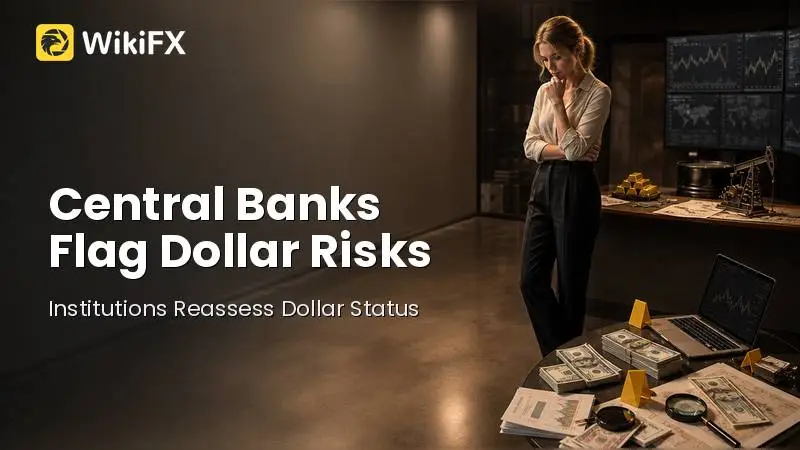
Central banks and sovereign wealth funds are raising concerns over the long-term outlook for the U.S. dollar, citing escalating U.S. debt and geopolitical tensions. Concurrently, crude oil prices dropped sharply on signs of resumed energy flows from the Arab region. For Indian traders, this institutional reassessment of the dollar and shifting energy costs detail the current macro trading environment.
 Contents
Institutions Reassess Dollar Reserve Status
According to an Invesco survey of institutions managing $29 trillion in assets, a growing number of sovereign wealth funds and central banks are expressing widespread concern about the U.S. dollar. The survey indicates that 61% of polled central banks believe U.S. debt levels are negatively impacting the dollars long-term position as a reserve asset, a sharp increase from 20% in 2024.
Although the U.S.-Israeli war with Iran has helped lift the greenback by 3% this year, 29% of survey respondents project the currencys reserve status will be weaker in five years. Reacting to geopolitical fragmentation, several institutions reported reviewing their reliance on U.S.-based clearing infrastructure. One European central bank has already replaced its U.S. custodian, and a Latin American central bank is establishing new non-U.S. custodial relationships to prepare for worst-case scenarios.
Crude Oil Retreats on Supply Optimism
In energy markets, West Texas Intermediate (WTI) crude for August delivery tumbled 3.62%, shedding $2.60 to settle at $69.32 per barrel. The downward pressure on prices emerged alongside increasing optimism regarding the resumption of oil flows from the Arab region.
This supply-driven decline in crude prices provided early bounce momentum for broader indices, though it occurred alongside ongoing ambiguity surrounding the peace process in the U.S.-Iran conflict, which ultimately pressured Wall Street equities into a weak close.
U.S. Sentiment and Japanese Data Expectations
On the economic data front, revised figures from the University of Michigan showed U.S. consumer sentiment experienced a mild rebound in June. The consumer sentiment index was upwardly revised to 49.5 from the previously reported 48.9.
In Asia, market participants are positioning for Japan's May retail sales data, which is expected to show an annual rise of 3.1%, accelerating from a 2.1% increase in April. Secondary figures for Japanese construction orders and housing starts will also accompany the release, acting as intermediate macro inputs for evaluating yen fundamentals.
The structural institutional shift regarding U.S. dollar dependency and the easing of crude oil prices reflect a steadily adjusting international market. Forex and cross-asset traders continue to weigh long-term reserve diversification trends against the immediate liquidity shifts tied to energy supply patterns and regional data releases.
Disclaimer:
The views in this article only represent the author's personal views, and do not constitute investment advice on this platform. This platform does not guarantee the accuracy, completeness and timeliness of the information in the article, and will not be liable for any loss caused by the use of or reliance on the information in the article.
WikiFX Broker
Latest News
Rupee Fell to ₹97, Clawed Back to ₹94.5 — The $15.4 billion Oil Bill is Still There
WikiFXMan Sells His House to Invest, Only to Lose RM132,590 in Forex Scam
WikiFXU.S. Dollar Moves Away From Session Highs As Treasury Yields Drop: Analysis For EUR/USD, GBP/USD, USD/CAD, USD/JPY
WikiFX92 Claims, No Sources: The Trump Scorecard Line That Touches India
WikiFXSterling Up After Higher Inflation
WikiFXFinsure Turns Away 13 Brokers as AI Tool Flags Hidden Links
WikiFXUganda Central Bank Starts Selling Dollars After Rate Hike Fails to Lift Shilling
WikiFXWoman Pawns Her Jewellery to Invest, Only to Lose RM87,975 in Scam
WikiFXZelensky Signals Openness to Ceasefire, Raising Hopes for Europe’s Economic Recovery
WikiFXTrading Psychology: Why Small Wins Get Banked Too Fast
WikiFX