Abstract:This article delves into the definitions of inflation and deflation, their causes, effects, and implications for the trading environment.
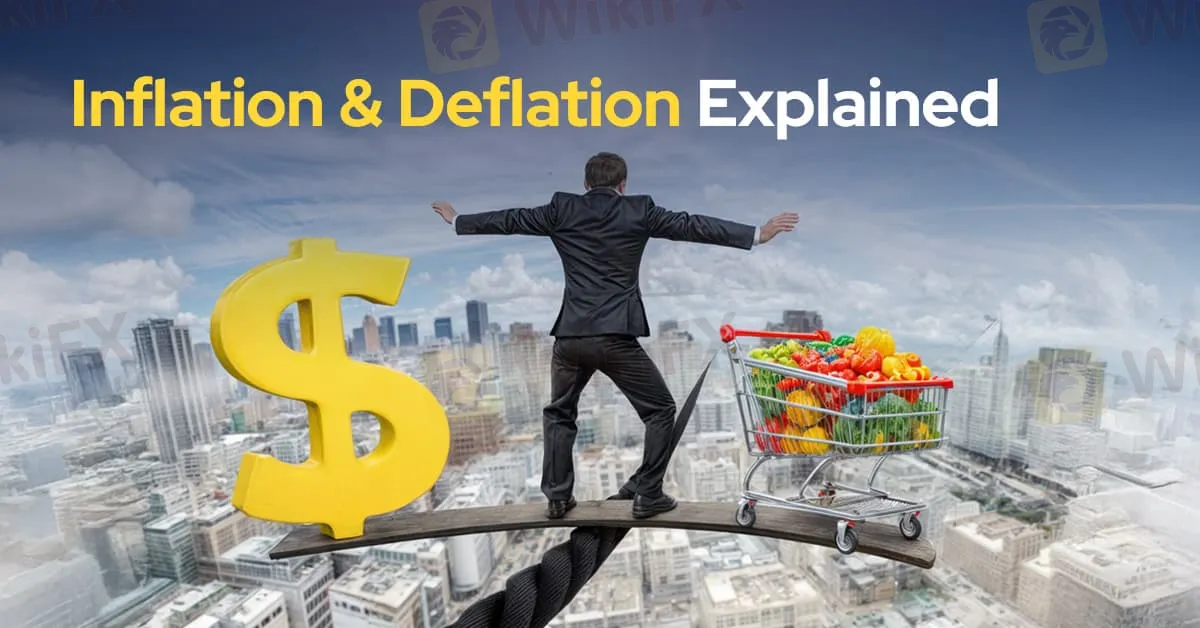
Inflation and deflation are fundamental economic concepts that play a crucial role in shaping markets, purchasing power, and overall economic stability. These terms are essential for anyone involved in trading, investing, or understanding the financial landscape. This article aims to explain the definitions of inflation and deflation, explore their causes and effects, and discuss their implications for traders and the broader economy.

Inflation refers to the general rise in the prices of goods and services over time, which leads to a decline in the purchasing power of money. In simpler terms, inflation means that each unit of currency buys fewer goods and services than it did previously. Inflation is usually measured using indices such as the Consumer Price Index (CPI) or the Producer Price Index (PPI), both of which track price changes in a basket of consumer goods and services.
Inflation can result from several factors. One common cause is demand-pull inflation, which occurs when the demand for goods and services exceeds supply. For instance, during an economic boom, increased consumer spending can push prices higher as businesses struggle to meet demand. Another cause is cost-push inflation, which arises when production costs, such as wages and raw materials, increase. Companies may then pass these higher costs onto consumers by raising prices. Finally, there is built-in inflation, which is tied to adaptive expectations. As workers demand higher wages to cope with rising living costs, businesses respond by increasing prices, creating a cycle that sustains inflation.
The effects of inflation can be both positive and negative. On the positive side, moderate inflation is often viewed as a sign of a growing economy. It encourages spending and investment, as consumers are incentivized to make purchases before prices rise further. However, on the negative side, high inflation erodes purchasing power, which can reduce consumer confidence and spending. In extreme cases, hyperinflation—characterized by rapid and out-of-control price increases—can lead to economic collapse, as seen in historical examples like Zimbabwe and Weimar Germany.

In contrast, deflation is the opposite of inflation and involves a general decrease in the prices of goods and services. During deflation, the purchasing power of money increases, meaning that consumers can buy more with the same amount of currency. Although this might sound beneficial, deflation can signal underlying economic problems.
Several factors can cause deflation. A key cause is a decrease in aggregate demand, which happens when consumer and business spending falls significantly. This could result from economic recessions, high unemployment, or declining consumer confidence. Another factor is technological advances, which can lower production costs and thus reduce prices. While beneficial to consumers, this can lead to deflationary pressures if price drops are significant. Additionally, tight monetary policy—where central banks reduce the money supply to combat inflation—can sometimes overshoot and trigger deflation.
The effects of deflation present challenges to the economy. One significant issue is decreased consumer spending. When people expect prices to continue falling, they may delay purchases, which reduces demand and can lead to further price declines. Deflation also increases the burden of debt. As prices fall, the real value of debt rises, making it harder for borrowers to repay loans, which can lead to higher default rates and financial instability. Prolonged deflation can result in stagnation, with businesses struggling to stay profitable, leading to high unemployment, reduced production, and declining wages.
Both inflation and deflation have profound implications for traders and investors. For instance, interest rates are often adjusted by central banks in response to these economic conditions. Central banks may raise interest rates to combat rising inflation or lower them during deflation to stimulate spending. Additionally, inflation can erode the value of fixed-income investments like bonds, making equities and commodities more attractive, while deflation may increase demand for safe-haven assets like gold. Both inflation and deflation can also lead to market volatility, as uncertainty about the economic environment can make markets more unpredictable. Traders need to stay informed about key economic indicators and central bank policies to make sound decisions.
In conclusion, understanding inflation and deflation is vital for navigating the complex world of finance. Inflation, when moderate, often signals economic growth, but unchecked inflation can harm purchasing power and market stability. Deflation, while it may offer short-term benefits, carries significant long-term risks, such as economic stagnation. For traders and investors, keeping a close watch on these trends is essential for making informed decisions and positioning themselves effectively in the ever-evolving financial markets.