


Global Broker Regulation Inquiry App
About WikiFX
English
简体中文
繁體中文
English
Pусский
日本語
ภาษาไทย
Tiếng Việt
Bahasa Indonesia
Español
हिन्दी
Filippiiniläinen
Français
Deutsch
Português
Türkçe
한국어
العربية
اردو
Harmovest Capital | Key Insights: Are Inflation Risks Keeping Rates on Hold?
Abstract:01 May 2026 | Key Highlights• Bank of England holds rates at 3.75%• European Central Bank keeps all key rates unchanged• US economy remains resilient with ongoing growth momentum• Gold supported by un
01 May 2026 | Key Highlights
• Bank of England holds rates at 3.75%
• European Central Bank keeps all key rates unchanged
• US economy remains resilient with ongoing growth momentum
• Gold supported by uncertainty but facing short-term pressure
Macro Review
In the current global macro environment, inflationary pressures and geopolitical risks remain the key drivers of market movements. The Bank of England voted 8–1 to keep its benchmark rate unchanged at 3.75%, in line with expectations. This decision reflects a cautious stance as policymakers assess the impact of escalating Middle East tensions and volatile energy prices. UK inflation has shown signs of re-acceleration, with CPI rising to 3.3% in March, largely driven by higher energy costs. The BoE expects inflation to rise further as energy prices feed through the economy and remains highly alert to potential second-round effects, particularly wage-price dynamics. Overall, the BoE is balancing between controlling inflation and avoiding excessive economic slowdown, with future policy direction highly data-dependent.
In Europe, the European Central Bank also kept its key rates unchanged (Deposit: 2.00%, Main Refinancing: 2.15%, Marginal Lending: 2.40%). While incoming data remains broadly in line with previous inflation assessments, the ECB highlighted rising upside risks to inflation alongside increasing downside risks to growth. Elevated energy prices, driven by geopolitical tensions, are placing pressure on both corporate costs and consumer confidence. Nevertheless, long-term inflation expectations remain well anchored, reinforcing confidence in the ECBs policy credibility. Going forward, the ECB will continue to adopt a data-dependent, meeting-by-meeting approach, maintaining flexibility amid uncertainty.
In the United States, economic fundamentals remain solid. March personal spending rose 0.9%, while income increased 0.6%, indicating continued resilience in consumer demand. Despite a pickup in inflation (PCE at 3.5% YoY, core PCE at 3.2%), real consumption remains positive, suggesting demand has not materially weakened. On a structural level, goods consumption remains strong—partly reflecting front-loaded spending amid rising inflation expectations—while services consumption is relatively subdued. Meanwhile, the savings rate declined to 3.6%, indicating that households are increasingly relying on savings to sustain spending, which may pose risks to future consumption.
On the growth front, Q1 GDP came in at 2.0%, slightly below expectations but still reflecting ongoing expansion. Net exports were a drag on growth, while business investment stood out as a key strength. In particular, continued momentum in artificial intelligence-related investment has driven strong gains in equipment and intellectual property spending, providing solid support to the economy. Overall, the US economy continues to exhibit a combination of resilient growth and persistent inflation.
Market Outlook
Overall, major central banks remain in a wait-and-see mode amid ongoing inflation uncertainty and geopolitical risks. Policy flexibility is constrained, and markets widely expect the Federal Reserve to maintain its current stance in the near term, providing support to the US dollar. Going forward, energy price dynamics and inflation trends will remain the key drivers of market direction.
Todays Focus
• US ISM Manufacturing PMI
Market Impact
USD | Gold | US Equities
Strategy
Maintain a short-term bullish bias on precious metals
Market Sentiment
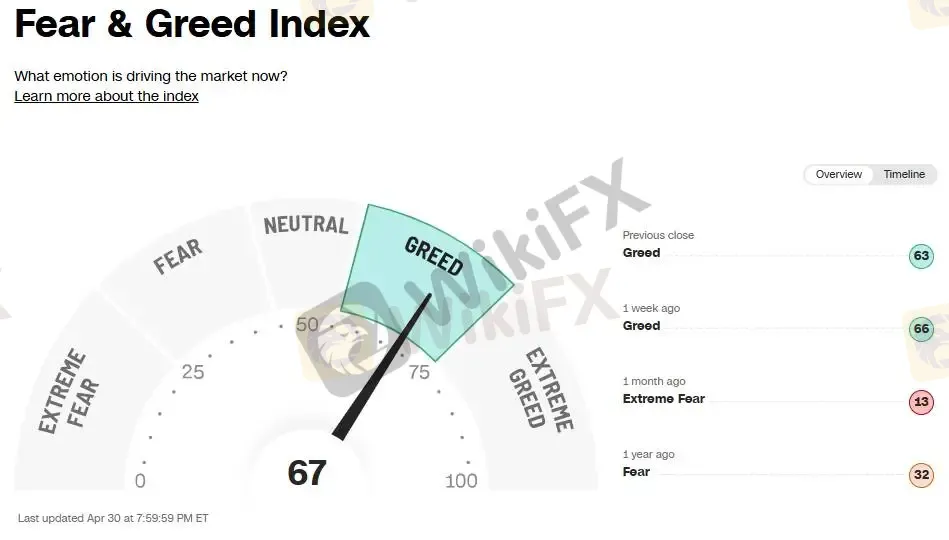
The Fear & Greed Index has risen to 67, indicating improving risk appetite and easing safe-haven demand. As markets gradually digest geopolitical risks, capital is rotating back into risk assets.
Technical Analysis (XAUUSD)
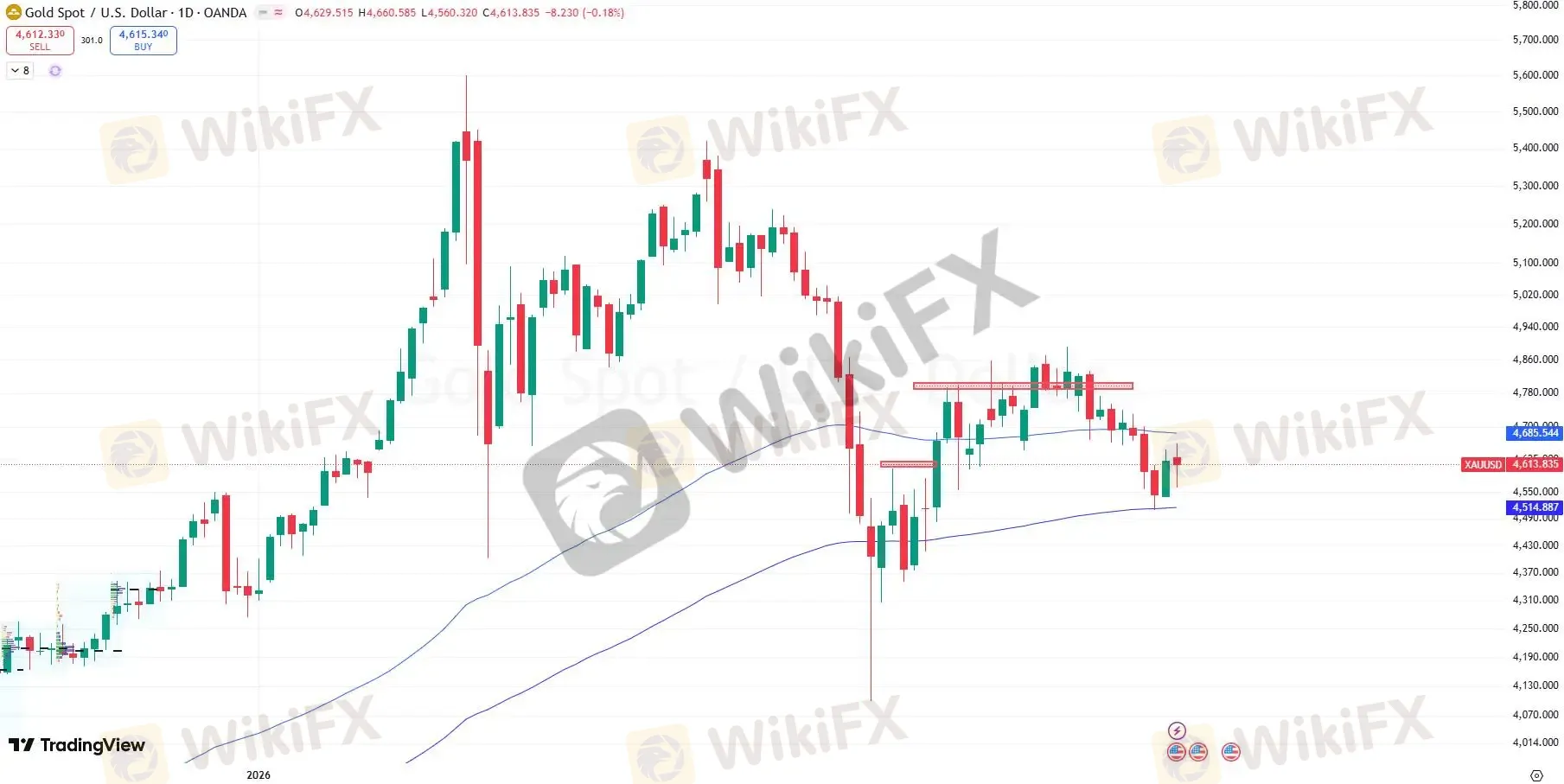
From a technical perspective, gold has entered a corrective phase after breaking below the key 4660 support level. The short-term structure remains weak, with downside risk toward the 4600 area.
Disclaimer:
The views in this article only represent the author's personal views, and do not constitute investment advice on this platform. This platform does not guarantee the accuracy, completeness and timeliness of the information in the article, and will not be liable for any loss caused by the use of or reliance on the information in the article.
WikiFX Broker
Latest News
Over 100 Malaysian Retirees Gather to Expose How Investment Scams Wiped Out Their Life Savings
 WikiFX
SquaredFinancial Review 2026: Heavy Complaints, Withdrawal Delays, and Profit Deletions
WikiFXUbuntu Invest Review 2026: Is This Forex Broker Safe?
WikiFXMaking Sense of Central Bank News: How Revaluation, Interest Rates, and Reserves Move Currencies
WikiFXFive Chinese Fined RM4,000 Each for Promoting Cryptocurrency Investment Scheme in Malaysia
WikiFXFBS Review 2026: Is This Forex Broker Safe?
WikiFXWhy Employment Data Releases Destroy Short-Term Forex Trades
WikiFXRoboForex Review 2026: Are Traders Losing Sleep Over Missing Funds? Details Inside!
WikiFXIndian Stocks Rally, but the Rupee Breaks a Six-Day Winning Streak—What's Behind the Sudden Reversal
WikiFXVonway Forex Review 2026: Withdrawal Complaints, Regulation Warnings, and Account Risks
WikiFXCurrency Calculator
USD

CNY
Current Rate:0
Enter amount
USD
Redeemable Amount
CNY
Calculate 