

Global Broker Regulation Inquiry App
About WikiFX
English
简体中文
繁體中文
English
Pусский
日本語
ภาษาไทย
Tiếng Việt
Bahasa Indonesia
Español
हिन्दी
Filippiiniläinen
Français
Deutsch
Português
Türkçe
한국어
العربية
اردو



Paper Contracts Detach from Physics: Crude Futures Pricing a Market That No Longer Exists

WikiFX
|


Abstract:Major institutional forecasts point to durably higher crude oil prices driven by severe shipping bottlenecks and physical supply constraints. The dislocation in the physical energy market poses a substantial secondary inflation risk that could delay global central bank easing cycles.
The Anomaly
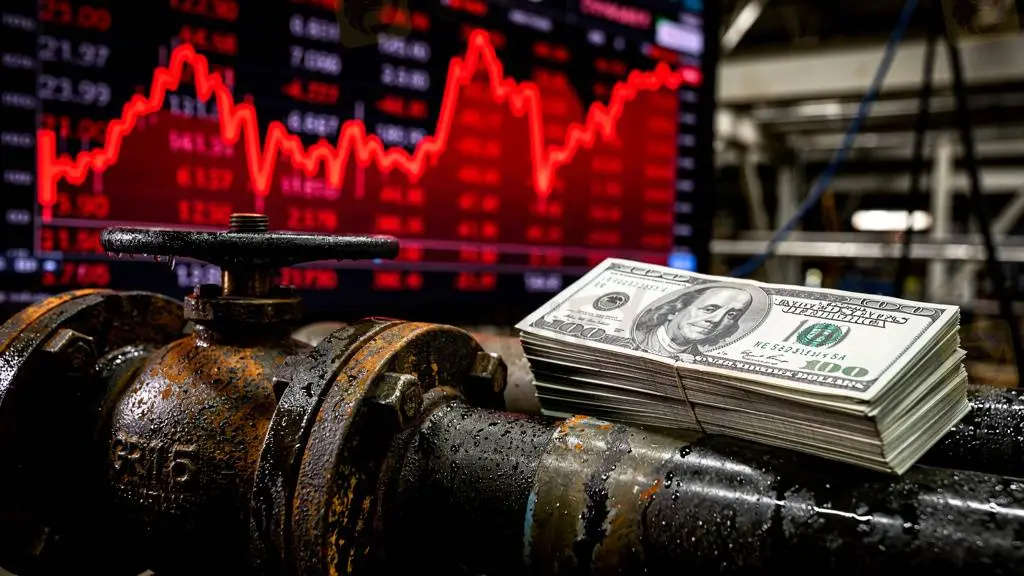
Standard futures theory holds that the front-month contract is the cleanest real-time signal of physical supply and demand. That mechanism has broken down. Brent front-month futures briefly tested $120/bbl—a figure already extreme by post-2022 standards—yet that number understates the actual stress embedded in physical delivery markets. Dubai crude spot assessments have reportedly printed between $150 and $166/bbl, a premium spread of $30–$46 over the paper benchmark. In a functioning market, arbitrage mechanisms close that gap within hours. They are not closing it. This is not a pricing anomaly. It is a structural indictment of the assumption that financial derivatives and physical energy markets share the same underlying reality.
The textbook expects convergence. The physical market is delivering divergence. Rabobank's revised forecast—Brent averaging $107/bbl in Q2 2026, followed by $96 in Q3 and $90 by year-end, with WTI tracking at $98 and $88 respectively—represents not a bull call on geopolitics but a mechanical acknowledgment that the physical delivery apparatus is impaired. These are not price predictions. They are reflections of an infrastructure that cannot clear volume at prior equilibrium prices.
The Structural Mechanics
Liquidity & Flows: The Phantom Barrel Problem
The paper oil market prices barrels that, in theory, can be rerouted, reloaded, and redelivered across global terminals within days. That assumption requires functioning ocean shipping routes. Rabobank estimates bulk shipping capacity will recover to only ~80% of baseline by late August—meaning approximately one-fifth of normal global logistics throughput remains offline during the forecast window. Institutional traders long physical crude through swap dealers and commodity trading advisors (CTAs) are discovering that their hedge ratios, calibrated on historical shipping elasticity, are functionally incorrect. The basis—the spread between physical cargo price and the nearest futures contract—has become non-stationary. Systematic funds that short basis volatility are now holding positions against a market in which the underlying physical good cannot be delivered on the schedule their models assumed.
Derivatives & Hedging: Gamma Pinning Against a Moving Physical
Options market structure is compounding the dislocation. When physical spot prices detach violently from futures, dealers who have written call options at strikes near the paper contract price face a gamma exposure problem: as spot pushes higher, they are forced to buy futures to delta-hedge, mechanically accelerating the futures price toward—but never fully reaching—the physical reality. This creates a self-reinforcing wedge. The $120/bbl futures print did not represent genuine price discovery; it represented the mechanical consequence of dealer hedging activity in a market where the physical anchor had already moved $30–$46 higher. The derivatives tail is wagging the physical dog, and the physical dog is not cooperating.
Policy Divergence: Central Banks Priced for a Disinflation That Shipping Lanes Cancelled
The Federal Reserve, ECB, and Bank of England each entered 2025 with easing biases calibrated on an energy complex that was assumed to be normalizing. That assumption embedded a disinflation trajectory into forward rate curves. The current physical supply shock constitutes an exogenous cost-push event that monetary policy instruments are structurally ill-equipped to address—rate hikes cannot build tankers or reopen shipping lanes. Yet central banks cannot publicly ignore second-round inflation transmission through transport and industrial input costs. Energy price levels of this magnitude filter into core CPI within two to three quarters through logistics, petrochemicals, and manufacturing input chains. The policy impasse is geometric: easing accelerates demand-side inflation pressure; holding rates suppresses economic activity without resolving the supply-side constraint. Neither tool addresses the actual problem.
The Historical Contrast
The 2004–2008 commodity supercycle offers the closest structural analogue—a period when physical demand from Chinese industrialization systematically overwhelmed the logistics and extraction capacity priced into paper markets. During that era, however, the dislocation unfolded over years, allowing institutional traders to adjust hedge ratios incrementally and central banks to absorb inflationary pressure through measured tightening cycles. Today's institutional plumbing is categorically different. Algorithmic trading now constitutes the dominant share of futures volume. CTA trend-following strategies amplify directional moves within days rather than quarters. Passive commodity index funds hold synthetic exposure through rolled futures, meaning their “physical” position is entirely notional. When the physical market detaches, these structures offer no stabilizing arbitrage function—they accelerate the divergence. The 2008 crude spike to $147/bbl eventually collapsed under demand destruction and deleveraging. The current dislocation is not demand-driven. It is supply-logistic. Demand destruction, if it materializes, will not restore shipping capacity.
The Current Paradigm
The energy market is currently operating as two separate systems occupying the same ticker symbols. The paper market—futures, swaps, options—prices a theoretically fungible global commodity. The physical market prices a commodity that cannot, at present, be moved in sufficient volume to satisfy immediate delivery obligations at prior equilibrium rates. The spread between these two systems—$30 to $46/bbl at last assessment—is the market's current confession that the arbitrage mechanisms assumed by financial theory are impaired. For sovereign bond markets, this translates into a rate-path recalibration that was not priced into Q1 consensus: if energy's second-round transmission into core inflation metrics materializes on Rabobank's timeline, the “higher-for-longer” rate regime extends not by choice but by arithmetic. The stalemate is this—central banks cannot ease into a supply shock, and supply cannot respond to rate signals. The market is currently pricing the negotiation between those two inert forces.


Disclaimer:
The views in this article only represent the author's personal views, and do not constitute investment advice on this platform. This platform does not guarantee the accuracy, completeness and timeliness of the information in the article, and will not be liable for any loss caused by the use of or reliance on the information in the article.
WikiFX Broker
Latest News
EURUSD | Demand Zone Holding, Bulls Eyeing Higher Resistance
WikiFXEUR/USD: Bearish Structure Shift
WikiFXKudotrade Review 2026: Reported Slippage & Trade Execution Issues You Should Know
WikiFXOROKU EDGE Review 2026: What Traders Should Know About Withdrawal & Slippage Reports
WikiFXFxPro Opens Five CFDs To Weekend Trading
WikiFXSEC Alleges $16 Million Ponzi Scheme Targeted 200 Investors
WikiFXIG Faces Hundreds Of Job Cuts In Global Restructure
WikiFXMalaysia To Host Asia Fintech Regulatory Summit
WikiFXValutrades Rejects Exit Rumors Amid Client Review
WikiFXWeekend CFD Trading Moves Beyond Gold as Brokers Add Oil, Silver and Indices
WikiFX