FCA-Regulated Forex Brokers Are Declining — 31 Platforms to Avoid
As of December 1, 2025, a total of 105 companies in the United Kingdom held CFD licences.
简体中文
繁體中文
English
Pусский
日本語
ภาษาไทย
Tiếng Việt
Bahasa Indonesia
Español
हिन्दी
Filippiiniläinen
Français
Deutsch
Português
Türkçe
한국어
العربية
Abstract:The global trade war is intensifying as countries continue to raise tariffs, aiming to protect their own economies while creating greater market uncertainty. In this tit-for-tat game, who is truly bearing the brunt?
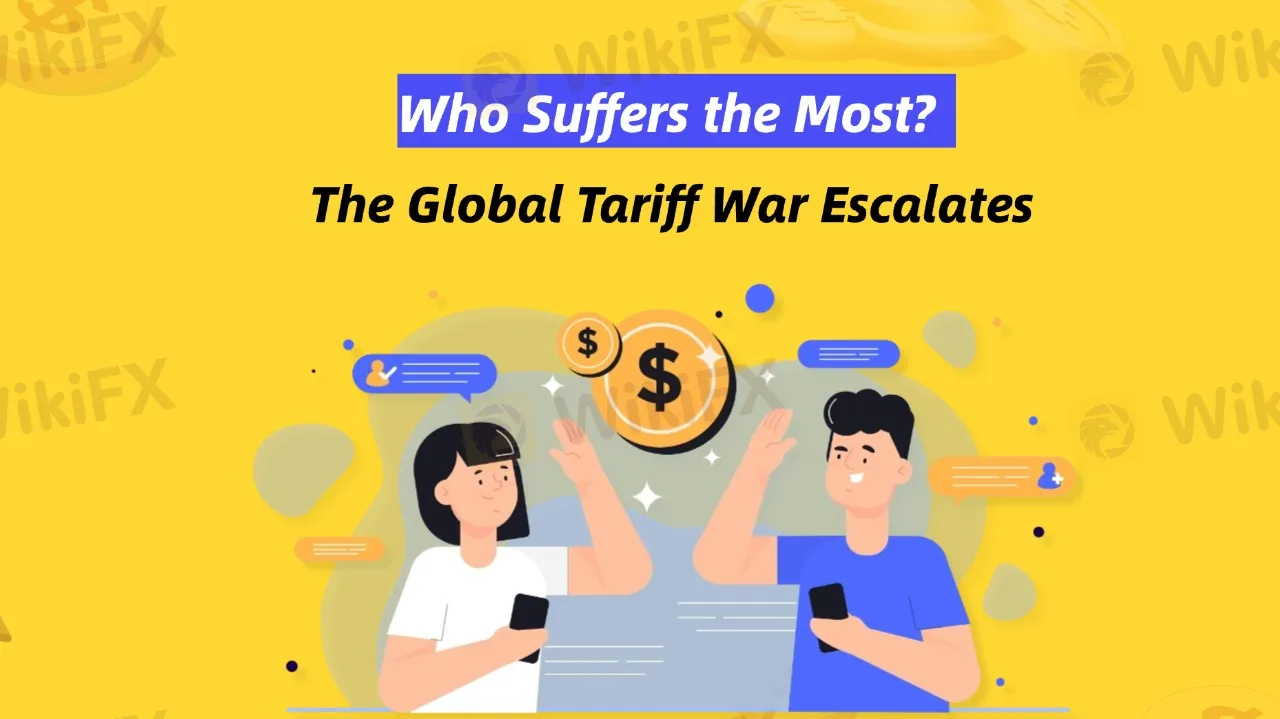
The U.S. government has once again wielded the tariff weapon, imposing a 25% tariff on imported steel and aluminum products starting March 12, affecting $151 billion in global trade. In response, the European Union swiftly announced retaliatory tariffs on $26 billion worth of American goods, while Canada imposed tariffs on $29.8 billion of U.S. imports.
These tariffs cover a wide range of products, from food and machinery to everyday consumer goods. Meanwhile, China has also escalated its countermeasures, imposing tariffs of 10% to 15% on 740 types of U.S. imports, including wheat, corn, and liquefied natural gas. As countries continue to take action, global trade tensions are mounting, fueling uncertainty across financial markets.
Although no country wants a full-scale confrontation with the U.S., they have little choice but to respond to the Trump administrations aggressive trade policies. The latest U.S. tariff hikes not only contradict its own goal of curbing inflation but also severely impact domestic businesses, with major automakers expected to see a 4% decline in profits. In retaliation, the EU and Canada have strategically targeted industries where the U.S. is most vulnerable, aiming to minimize costs for their own consumers while maximizing economic pressure on the U.S.
Furthermore, the evolving global trade landscape has forced governments to strike a delicate balance between protecting national interests and maintaining trade stability, leaving them no option but to continuously adjust their strategies to stay competitive.
In the midst of this tariff war, global investors are facing unprecedented uncertainty. Markets are concerned that continued retaliatory measures could slow economic growth, heighten stock market volatility, and lower corporate earnings expectations. U.S. businesses are grappling with rising production costs and declining international demand, while companies in Europe, Canada, and China are also feeling the strain.
Additionally, the instability of global supply chains is further exacerbating the situation. Many analysts believe that if trade tensions continue to escalate, central banks may be forced to intervene with new policies, adding yet another layer of unpredictability. Investors must closely monitor trade developments and adjust their portfolios accordingly to mitigate potential risks.


Disclaimer:
The views in this article only represent the author's personal views, and do not constitute investment advice on this platform. This platform does not guarantee the accuracy, completeness and timeliness of the information in the article, and will not be liable for any loss caused by the use of or reliance on the information in the article.

As of December 1, 2025, a total of 105 companies in the United Kingdom held CFD licences.

Failed to withdraw your funds successfully from the TDFX platform? Did the Australia-based brokerage firm illegitimately take away your trading profits? Have you witnessed losses on the broker’s trading platform due to heavy slippage? Did you also struggle transferring your funds from the TDFX trading account? You are not alone! These allegations have somewhat degraded the rating of the forex broker. Through this TDFX review article, we aim to investigate user complaints so that you can decide whether this trading enterprise is right for you. Keep reading to find our analysis.

With the rapid growth of the global multi-asset investment market, the disparities in the forex industry across different regions have become increasingly evident. As a forex broker information service platform operating in over 200 countries and regions, WikiFX is committed to helping investors in each region identify reliable brokers. Therefore, WikiFX launched a series content — Close Up with WikiFX, which offers in-depth interviews with local brokers. Leveraging WikiFXs robust big data system and industry insights, the series aims to help investors gain a deeper understanding of high-quality brokers. In this exclusive interview, we had the opportunity to speak with Konstantinos Theodorou, CEO of InterStellar Group-Cyprus, to explore the company’s operations and market insights.

BotBro is a Dubai-based forex broker that has continued to grab headlines for years, with its name being involved in one scam after another. In the latest episode, its name was found in the alleged INR 800 crore forex and crypto trading scam in Goa. Top-level agencies, including the Enforcement Directorate (ED), are investigating the case. They have labeled the platform as a Ponzi scheme. The platform is disguised as an AI-powered forex trading app. In connection with this case, the Goa Police Economic Offences Cell (EOC) filed a First Information Report (FIR) against 10 individuals, including the company owner, Lavish Chaudhary Alias Nawab Ali, for fund misappropriation worth over INR 7.3 crore. Read on as we share the BotBro review in this article.