


IG Review for India 2026: RBI Alert List, Regulation, Login, and Forex Risk
IG review for India in 2026: see the RBI Alert List entry, overseas regulation, login checks, forex limits, and a clear broker safety checklist.
Original

简体中文
繁體中文
English
Pусский
日本語
ภาษาไทย
Tiếng Việt
Bahasa Indonesia
Español
हिन्दी
Filippiiniläinen
Français
Deutsch
Português
Türkçe
한국어
العربية
اردو




Abstract:DeFi leaders Opyn, ZeroEx, and Deridex face CFTC enforcement actions for various violations, highlighting regulatory scrutiny in the decentralized finance realm. Stay informed with the latest in forex through the WikiFX App.
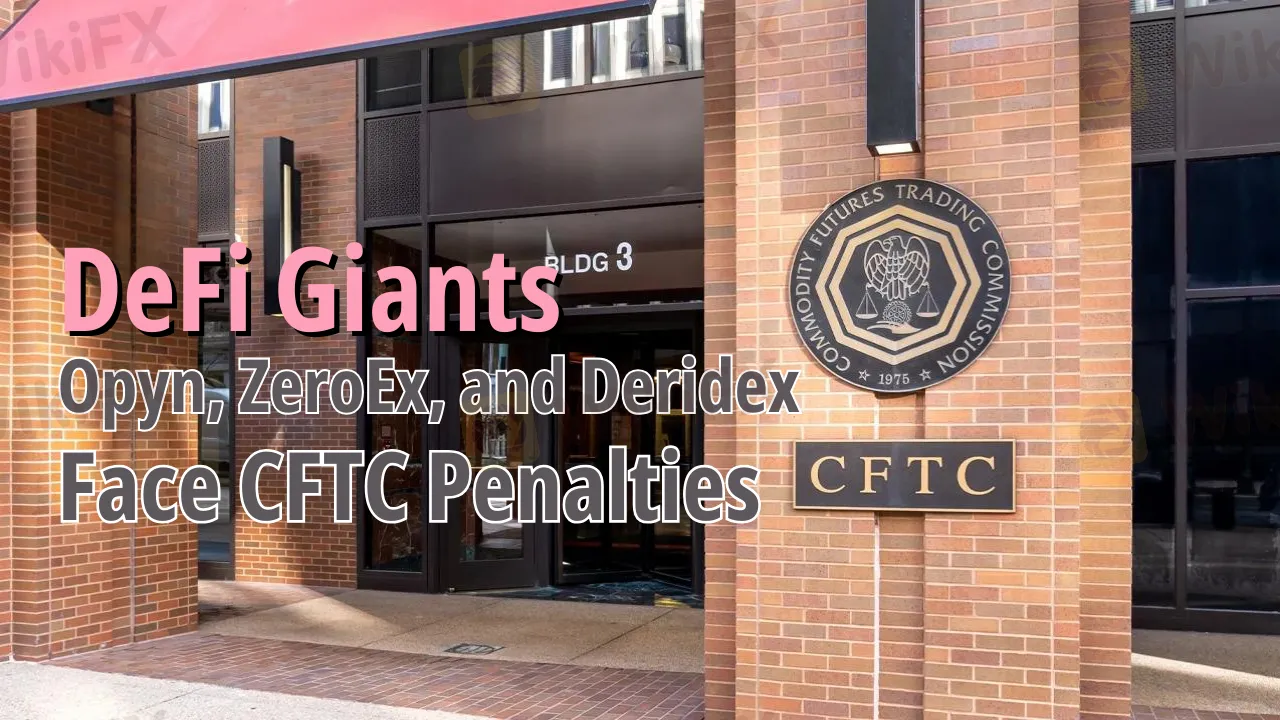
In the ever-evolving world of decentralized finance (DeFi), three major players - Opyn, ZeroEx, and Deridex - have recently been handed enforcement actions by the Commodity Futures Trading Commission (CFTC). These companies have been charged with several violations, emphasizing the CFTC's continuous scrutiny of the DeFi landscape.
 Contents
Both Deridex and Opyn are facing penalties for failing to register as a swap execution facility (SEF) or designated contract market (DCM). Furthermore, they were charged for not adopting a customer identification program, which is part of the Bank Secrecy Act compliance program for futures commission merchants (FCMs). ZeroEx, alongside the other two, also faces charges for unlawfully offering leveraged and margined retail commodity transactions in digital assets.

As a consequence, the three firms have been mandated to pay civil monetary penalties. Opyn is set to pay $250,000, ZeroEx will pay $200,000, and Deridex owes $100,000. They are also mandated to halt any violations of the Commodity Exchange Act (CEA) and CFTC regulations.
Opyn, Inc. had launched the Opyn Protocol which facilitated the trading of a digital asset derivative token called oSQTH. This token's value was pegged to an index (Squeeth) that tracked the square of ether's price relative to the USDC stablecoin. The issue arose when it was determined that these tokens acted as swaps and leveraged retail commodity transactions. The CFTC stated that such transactions can only be presented to retail users through a registered exchange. Opyn also did not sufficiently block U.S. users from accessing its protocol.

Deridex, Inc. operated a blockchain-based protocol offering “perpetual contracts.” These contracts can be termed as swaps and, similar to Opyn's issue, must only be offered on a registered exchange. Deridex also took no precautions to exclude U.S. citizens from accessing its protocol.

ZeroEx Inc. on the other hand, introduced a protocol and a front-end application (Matcha) that allowed users to trade digital assets on multiple blockchains. Some of these digital assets provided traders with approximately 2:1 leveraged exposure to renowned digital assets like ether and bitcoin. This was in direct violation of CFTC regulations.

Despite the hefty penalties, the CFTC acknowledged the cooperation extended by all three companies during the Division of Enforcement's investigation. This proactive stance from the firms resulted in a reduction of their respective civil monetary penalties.
For those keen on staying updated with the latest happenings in the forex market, consider installing the WikiFX App. With the DeFi landscape continuously evolving, it's essential to remain informed, ensuring that both investments and operations align with regulatory requirements.
Download the App here: https://www.wikifx.com/en/download.html

Disclaimer:
The views in this article only represent the author's personal views, and do not constitute investment advice on this platform. This platform does not guarantee the accuracy, completeness and timeliness of the information in the article, and will not be liable for any loss caused by the use of or reliance on the information in the article.

IG review for India in 2026: see the RBI Alert List entry, overseas regulation, login checks, forex limits, and a clear broker safety checklist.
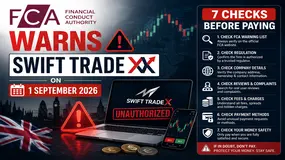
FCA warns Swift TradeX in a notice first published and updated on 1 September 2026. The UK Financial Conduct Authority says the firm may be providing or promoting financial services without permission, is not authorised, and may be targeting people in the UK. The notice names the website swifttradexai.com, a Worcester address and a UK telephone number, but also cautions that unauthorised businesses may use incorrect or borrowed contact details. The confirmed issue is authorisation status—not a court finding about every transaction. Anyone considering a payment should stop, verify the firm independently, and avoid using contact information supplied by the platform itself.

ThinkMarkets review for India: check the RBI Alert List, overseas entities, regulation, login security, forex rules, costs, withdrawals, and leverage risk.

Did mirrox, a brokerage firm, ask you to keep your margin level above 250%-300% and make you add funds immediately if it dropped below it? Did the broker prevent you from opening a trade despite having a healthy equity balance? Did it close your trading account upon a withdrawal request? Many traders have raised these concerns online while sharing their respective mirrox reviews. This article aims to examine these user allegations while answering the popular question: Is mirrox legit or a scam?
WikiFXWikiFXWikiFXWikiFXWikiFXWikiFXWikiFXWikiFXWikiFXWikiFX