Live from Wealth Expo Colombia 2026: WikiFX Strengthens Growing Partnerships Across LATAM
Live from Wealth Expo Colombia 2026: WikiFX Strengthens Growing Partnerships Across LATAM
Original

简体中文
繁體中文
English
Pусский
日本語
ภาษาไทย
Tiếng Việt
Bahasa Indonesia
Español
हिन्दी
Filippiiniläinen
Français
Deutsch
Português
Türkçe
한국어
العربية
اردو

Abstract:Charles Schwab’s merger with TD Ameritrade has created a behemoth that makes billions of dollars selling share orders to financial firms, leaving its customers paying more for stock transactions, according to a federal antitrust class action filed by three retail investors.
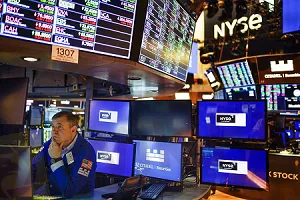
Charles Schwabs merger with TD Ameritrade has created a behemoth that makes billions of dollars selling share orders to financial firms, leaving its customers paying more for stock transactions, according to a federal antitrust class action filed by three retail investors.
Charles Schwab closed on its $22 billion purchase of fellow retail stock brokerage TD Ameritrade in October 2020.
Both companies used to make money by charging retail investors commissions for stock transactions. But they stopped doing so in 2019 and focused instead on earning revenue by selling individual investors stock trade orders, known as “retail order flow,” to market makers.
With TD Ameritrade, Charles Schwab now serves more than 24 million brokerage accounts with $5 trillion in client assets.
The companies received 51% of all order flow payments made by market makers to retail brokerages in 2020 and that dominance continued, according to the complaint.
“The companies together maintained approximately half of the order flow in 2021 as well, with TD Ameritrade at about 39% of the $3.6 billion in order flow paid in 2021 and Schwab at 9%. While order flow payments grew approximately 32% from 2020 to 2021, the combined companies maintained their combined share of approximately half of those payments,” the lawsuit states.
With the money they make from selling retail order flow, brokerage firms give their clients rebates or “price improvements” compared to the “National Best Bid and Offer,” a Securities and Exchange Commission regulation that requires brokers to buy shares at the lowest available price and sell them at the highest available price across the different U.S. stock exchanges, the biggest of which are the New York Stock Exchange and the Nasdaq.
But the plaintiffs claim the merger has led to them paying higher stock transaction costs and being underpaid for their securities sales.
“The merger resulted in a significantly higher market concentration in the ROFM [retail order flow market], which in turn reduced the competition among retail broker-dealers to remit higher amounts of payment for order flow to clients through rebates and/or price improvements,” the complaint states.
In addition, the plaintiffs claim that due to the large amount of stock orders Charles Schwab and TD Ameritrade are selling to market makers — which buy and sell stock at the publicly quoted price, garnering profits by flipping shares and pocketing the difference between the buy and sale price — rather than buying and selling shares on the open market, the National Best Bid and Offer is stale and seldom reflects the actual best price.
“In fact, the NBBO price is often extremely out of sync with the actual best bids and offers available to sophisticated investors. As one 2014 report by a data aggregator found, the prevailing NBBO price was in some instances several minutes stale. This has become extremely problematic as trading times are increasingly on the order of fractions of a second,” according to the filing.
The large number of transactions flowing to market makers from Charles Schwab, gives such wholesalers a “critical mass of investor data” which they feed into their artificial intelligence algorithms, allowing them to exploit patterns in the market and make well-informed predictions on stock price movements to the detriment of individual traders.
“Plaintiffs and the class members are entitled to damages in the form of the amount of retail order flow payments received by their brokers that would have been remitted to clients as rebates, price improvement, or some combination of both, but for the anticompetitive merger,” argue the plaintiffs and putative class members, Jonathan Corrente, Charles Shaw and Leo Williams, in their 106-page lawsuit.
They seek class certification, punitive and treble damages and restitution. They also want the court to order Charles Schwab to disgorge its ill-gotten gains.
They are represented by Brian Dunne, Yavar Bathaee and Edward Grauman, all with the firm Bathaee Dunne.
Charles Schwab called the lawsuit baseless in a lengthy statement.
“The allegations in this complaint, while salacious, are meritless and we look forward to demonstrating the value and appropriateness of our approach in court,” it said. “Any suggestion that the combination of these two client-centric firms has led to less favorable outcomes is simply untrue and ignores facts. The descriptions about payment for order flow are false and appear to be nothing more than an obvious effort to garner media attention.”
It continued, Payment for order flow is a legal practice governed by SEC and FINRA [Financial Industry Regulatory Authority Inc.] rules to promote both best execution and proper disclosure. The value Schwab clients receive in order execution is on par with or exceeds industry averages.
Schwabs approach to order execution actually disconnects revenue and execution quality and we require that third parties compete for our order flow based on execution quality, not dollars.
“As a result of our approach, Schwab clients receive billions of dollars annually in price improvement on their orders, well in excess of any financial benefit to the firm. For every dollar in revenue we received from third parties in 2021, our clients received $6.50 in price improvement.”
Disclaimer:
The views in this article only represent the author's personal views, and do not constitute investment advice on this platform. This platform does not guarantee the accuracy, completeness and timeliness of the information in the article, and will not be liable for any loss caused by the use of or reliance on the information in the article.

Live from Wealth Expo Colombia 2026: WikiFX Strengthens Growing Partnerships Across LATAM

Live from Wealth Expo Colombia 2026: WikiFX Strengthens Growing Partnerships Across LATAM
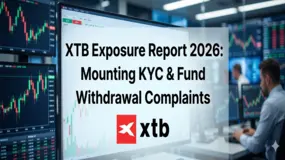
XTB, a veteran with over 15 years of experience in the competitive brokerage industry, has reportedly been facing severe user allegations concerning a tedious KYC verification process and blocked withdrawals despite numerous requests by traders globally. Traders worldwide, including those from the United States and the United Kingdom, have objected to the broker’s operational methodology in 2026. If you are one of them, this XTB review is worth reading! In this article, we have examined several user allegations to understand their concerns. Additionally, we have shared our analysis on the XTB regulation status. The holistic approach adopted by us will likely help you make an informed brokerage decision.

Globinok, a Comoros-based new-age trading enterprise, is receiving bad reviews from users across India, in particular. These users have accused the brokerage firm of failing to deliver on their trading promise. This included failing to ensure the AI-based trading experience promised by them. The sudden disappearance of the account manager has been another key complaint highlighted by users. In this Globinok review article, we have shared user reviews and a regulatory overview of the broker.
 WikiFXWikiFXWikiFXWikiFXWikiFXWikiFXWikiFXWikiFXWikiFXWikiFX
