

Global Broker Regulation Inquiry App
About WikiFX


UK Opens Crypto Gateway Ahead of Regulatory Overhaul

WikiFX
|


Abstract:The United Kingdom has opened the door to a sweeping new era of cryptocurrency regulation, with the Financial Conduct Authority now accepting applications from crypto companies seeking permission to operate under a framework that will bring the sector deeper into mainstream financial supervision.
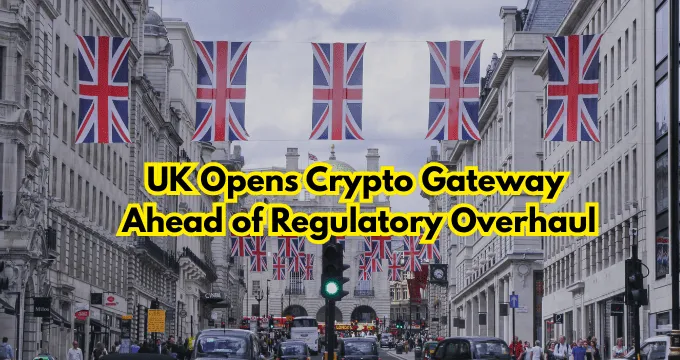
Britain has opened the door to a sweeping new era of cryptocurrency regulation, with the Financial Conduct Authority now accepting applications from crypto companies seeking permission to operate under a framework that will bring the sector deeper into mainstream financial supervision.
The application gateway opened on September 30, marking a significant shift for an industry that has spent years operating under a more limited regulatory structure. Companies intending to continue conducting regulated crypto activities in the United Kingdom are being urged to submit their applications by February 28, 2027, before the new regime takes effect on October 25, 2027.
The FCA has also made clear that submitting paperwork does not guarantee entry. Companies must demonstrate that they meet the regulator's requirements, and businesses unable to satisfy those standards will not receive authorisation to operate regulated activities in the British market.
For crypto companies accustomed to competing primarily through technology, fees and product innovation, regulatory credibility is becoming another critical battleground.
The changes also affect companies already registered under Britain's existing money laundering rules. FCA registration under the current framework does not automatically translate into authorisation under the new regime. Firms conducting activities captured by the incoming rules will have to pass through the new authorisation process.
The framework covers areas including qualifying stablecoins, crypto trading platforms, dealing and arranging transactions, safeguarding cryptoassets and certain staking related activities. The FCA has issued guidance intended to help companies determine which parts of their businesses fall inside the regulatory perimeter.
For investors, the broader message is equally important. Crypto regulation is increasingly moving away from the industry's earlier assumption that digital assets could develop largely outside the traditional financial rulebook. Britain is instead attempting to combine innovation with standards more familiar to regulated finance.
That transition will inevitably create winners and losers. Well capitalised businesses with mature compliance systems may be better positioned to absorb the additional requirements, while companies built around lighter regulatory structures could face difficult decisions over whether remaining in the market is economically viable.
Malaysian investors should pay close attention to the development because digital asset markets rarely respect national borders. Platforms, investment promotions and crypto services encountered online may originate overseas while still reaching Malaysian consumers. Malaysia's Securities Commission maintains its own regulatory framework and Investor Alert List covering unauthorised websites, products, companies and individuals.

Disclaimer:
The views in this article only represent the author's personal views, and do not constitute investment advice on this platform. This platform does not guarantee the accuracy, completeness and timeliness of the information in the article, and will not be liable for any loss caused by the use of or reliance on the information in the article.
WikiFX Broker
Latest News
Weltrade Review 2026: Chart Error, Withdrawal Cancellation and Unaccounted Fund Deduction Claims
WikiFXAlpari Broker Exposed: What Are Other Traders Saying About This Broker?
WikiFXU.S. Dollar Tests New Highs As 30-Year Yield Hits 5.60%: Analysis For EUR/USD, GBP/USD, USD/CAD, USD/JPY
WikiFXGOAT FUNDED TRADER Review: Is This Prop Trading Firm Safe & Trustworthy?
WikiFXTrade W Broker Exposed: User Feedback, Delayed Orders and Office Survey
WikiFXCash FX Accused of $950 Million Forex Fraud
WikiFXUS Bonds Eye Softer Inflation After Core PCE Undershoots Forecasts
WikiFXMarketsall Review of a May 2025 Withdrawal Complaint and Unresolved Questions
WikiFXSTARTRADER Raises Client Fund Insurance to US$30Million
WikiFXTNG eWallet Opens Global Stock Trading to 8.5 Million Users
WikiFX