

Global Broker Regulation Inquiry App
About WikiFX
English
简体中文
繁體中文
English
Pусский
日本語
ภาษาไทย
Tiếng Việt
Bahasa Indonesia
Español
हिन्दी
Filippiiniläinen
Français
Deutsch
Português
Türkçe
한국어
العربية
اردو


Gold Futures See Record $22.2B Speculative Buying as Prices Break $4,500


Abstract:Figure 1: U.S. Institutional PositioningSpeculative buying has surged into gold futures over the past three weeks. According to Goldman Sachs futures trader Robert Quinn, citing CFTC Commitments of Tr
Figure 1: U.S. Institutional Positioning
Speculative buying has surged into gold futures over the past three weeks. According to Goldman Sachs futures trader Robert Quinn, citing CFTC Commitments of Traders (COT) data, managed money, other reportables, and non-reportable traders made a combined $22.2 billion in net gold futures purchases between July 28 and August 18, the highest nominal amount in more than a decade.
The buying included $13.6 billion in new long positions and $8.6 billion in short covering. Net long positioning has now reached the 93rd percentile of its two-year range. Goldman Sachs has previously warned of “significant upside risk” to its $4,900-per-ounce gold target for the end of 2026.
The rally has been broad-based. Managed money accounted for $10.9 billion in net buying, other reportables $8.5 billion, and non-reportable traders $2.8 billion.
Macro conditions have been a key catalyst. A dovish July Federal Reserve meeting, combined with moderate inflation and labor data, led markets to reduce expectations for multiple rate hikes in 2026. Meanwhile, longer-term Treasury yields rose amid economic resilience, AI-related capital spending, fiscal pressures, and global spillovers, steepening the yield curve.
CTAs have also shifted sharply bullish. Goldman Sachs CTA models showed strengthening buy signals after systematic strategies that had previously been short gold were forced to cover positions as prices broke key technical levels, adding momentum to the rally.
Between August 18 and 21, gold accelerated further. The U.S. Treasury announced an expansion of buybacks in 10- to 30-year Treasuries, pushing long-term yields higher. Gold nevertheless climbed 5.9% for the week, with spot prices breaking above $4,500 per ounce for the first time.
UBS trading desk specialist Jonathan Garber said some investors interpreted the Treasurys move as an attempt to influence long-end pricing and the yield curve, raising concerns about confidence in the U.S. dollar and boosting demand for hard assets such as gold.
Gold positioning increased by a cumulative $8.9 billion during the period. August 19, the day after the Treasury announcement, accounted for 27% of the weeks electronic trading volume.
ETF and Central Bank Demand Support Gold
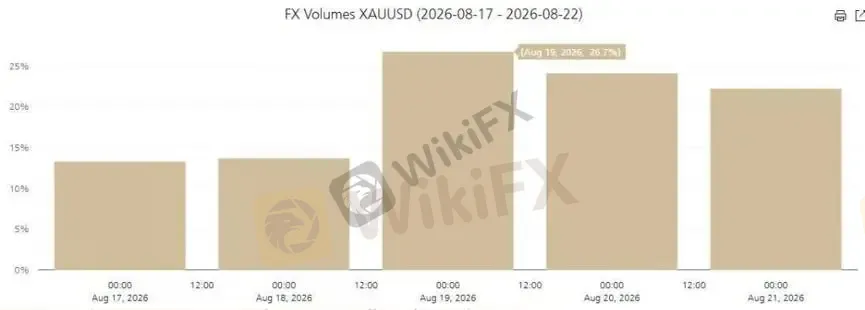
Figure 2: Gold Trading Volume Distribution
UBS sees ETF demand as one of golds strongest current supports. Gold ETF holdings have recovered close to their May 2026 highs, with inflows continuing throughout the rally.
Official-sector demand also remains strong. The Peoples Bank of China increased its gold reserves at the fastest monthly pace since 2023. In Asia, Singapore gold has traded at a premium to the OTC market, while borrowing demand has extended across maturities from one to 18 months.
Options markets are turning increasingly bullish. Three-month implied volatility has risen, while the 25-delta put/call skew has fallen to a five-month low, indicating that calls have become more expensive relative to puts. Prediction markets now imply a greater than 60% probability that gold will reach $5,000 per ounce by year-end, up from around 40% a week earlier.
Speculative buying, CTA short covering, and Treasury-related concerns have helped propel gold above $4,500. However, with net longs already elevated and bullish sentiment building rapidly, the risk of tactical profit-taking is increasing if a negative catalyst emerges.
UBS expects gold to consolidate around current levels following the sharp rally. In the near term, PCE inflation data and Warshs Jackson Hole remarks will be key market tests. Longer term, rising debt pressures, geopolitical risks, and continued official-sector reserve demand remain structural supports for gold.
Risk Disclaimer: The views, analyses, research, prices, and other information above are provided for general market commentary only and do not represent the position of this platform. Readers assume all risks associated with the use of this information and should exercise caution when trading.
Disclaimer:
The views in this article only represent the author's personal views, and do not constitute investment advice on this platform. This platform does not guarantee the accuracy, completeness and timeliness of the information in the article, and will not be liable for any loss caused by the use of or reliance on the information in the article.
WikiFX Broker
Latest News
Why FOMO Hurts Your Trading Decisions (And How to Spot it)
 WikiFX
SaracenMarkets Review 2026: Regulation, High Leverage, and Mixed User Signals
WikiFXFOMO in Forex: Why a Missed Move Feels Like a Real Loss
WikiFXHF Market Review: A CySEC Clone Warning and an Unreachable Website
WikiFXFIX API Forex in 2026: The Broker Integration Questions That Matter After the Connection is Live
WikiFXBRAC EPL Review 2026: A Major Dhaka Stockbroker with a 2.06 WikiFX Score and No Recorded Regulation
WikiFXEMIRAX MARKETS Review: Withdrawal Blocks, Suspended Login Access, and a High-Risk Broker Warning
WikiFXTreasury Buybacks Alter Dollar Liquidity Flows
WikiFXWhat Your Trading Journal Really Reveals About Your Behaviour
WikiFXBangladesh Caps Cash Dollar at Tk126.50 to Calm Kerb Market
WikiFX