

Global Broker Regulation Inquiry App
About WikiFX
English
简体中文
繁體中文
English
Pусский
日本語
ภาษาไทย
Tiếng Việt
Bahasa Indonesia
Español
हिन्दी
Filippiiniläinen
Français
Deutsch
Português
Türkçe
한국어
العربية
اردو


S&P 500 reaches a new record high, and gold rebounds strongly on cool inflation readings in the US


Abstract:Key TakeawaysUS inflation is cooling as July CPI slowed to 3.4% YoY, while core CPI eased to 2.5%, both broadly in line with expectations.September Fed hike expectations fell sharply with markets now
Key Takeaways
US inflation is cooling as July CPI slowed to 3.4% YoY, while core CPI eased to 2.5%, both broadly in line with expectations.
September Fed hike expectations fell sharply with markets now pricing roughly a 35% probability.
US stocks reached fresh highs as lower rate-hike expectations supported risk appetite, with the S&P 500 hitting a new record and technology stocks leading the rally.
Gold broke above $4,400 thanks to softer inflation and lower Fed hike expectations.
Middle East tensions kept oil elevated with Brent rising roughly 5% during the week.
Asian markets staged a powerful rebound with the strongest weekly performance in around two months.
US Inflation Shifts Federal Reserve Expectations
US Stock Markets Rose During the Week
Outlook for Next Week
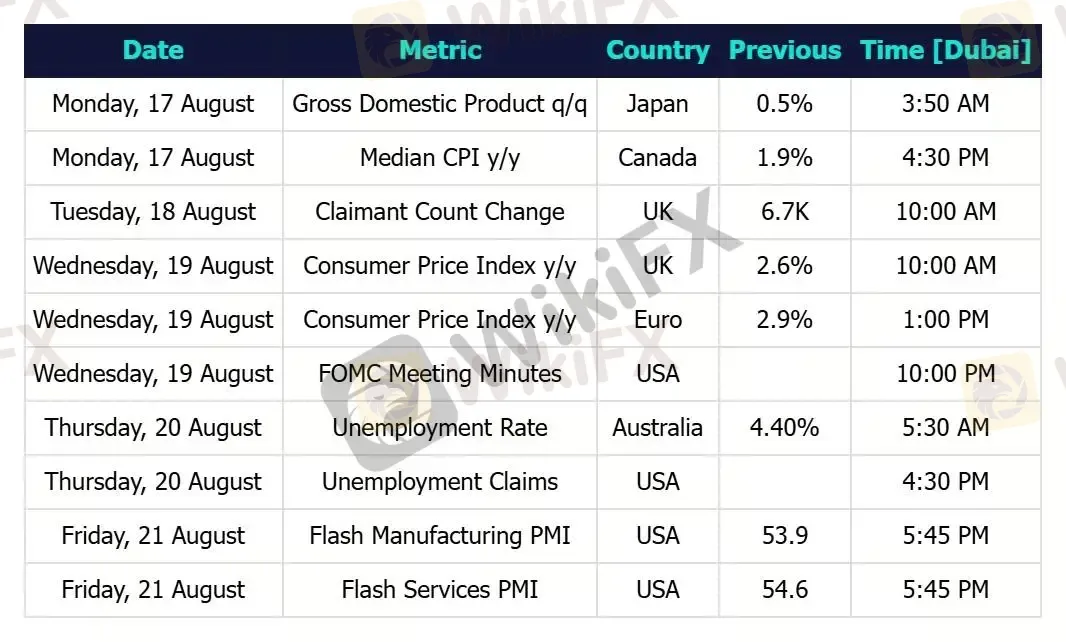
Major Economic Calendar Events for the Upcoming Week
Financial markets had a broadly positive week as softer US inflation data reduced expectations for another Federal Reserve rate hike, supporting equities and gold. At the same time, renewed uncertainty surrounding the US-Iran conflict and the Strait of Hormuz kept oil prices elevated and prevented a more decisive improvement in global risk sentiment. Asian equities were among the strongest performers, extending their rebound from the sharp technology-led selloff seen in late July and early August.
The biggest macroeconomic event of the week was the release of the July US CPI report. Headline inflation slowed to 3.4% year-on-year, from 3.5% in June, matching expectations. Core CPI also came in broadly as expected, rising 2.5% YoY, down from 2.6% previously. While inflation remains above the Feds 2% target, the report provided further evidence that price pressures are not accelerating significantly.
And on Thursday, the July PPI report provided an even more dovish signal. Producer prices were unchanged month-on-month, compared with expectations for a 0.2% increase, while annual PPI inflation slowed sharply to 4.7% from 5.5%. The combination of softer consumer and producer inflation, together with last weeks weak employment report, reduced pressure on the Fed to raise rates in September.
As a result, markets significantly reduced expectations for a September rate hike. The probability fell to around 35% by Friday, compared with roughly 55% a week earlier. The market is therefore increasingly looking toward October or December as the more likely window for any additional tightening.
The softer inflation figures provided another boost to US equities. Lower expectations for interest-rate increases reduced pressure on Treasury yields and supported technology and growth stocks. The S&P 500 reached a fresh record close on Thursday, breaking 7,800, while the Nasdaq reached 30,000 again.
The key takeaway for equities was that cooler inflation created a more favorable combination of economic resilience and less aggressive monetary policy. However, the market remains vulnerable to a renewed rise in oil prices because a prolonged energy shock could push inflation higher again and force the Fed to maintain a tighter policy stance.
The market enters next week with a more constructive risk backdrop, but several important risks remain. The biggest question is whether the combination of softer inflation and weaker labor-market data will be enough to convince the Fed to remain on hold in September. Current pricing suggests that a September hike is becoming increasingly unlikely, but the Fed still has to contend with inflation remaining above target.
For gold, the $4,400 area will remain an important psychological level. A sustained move back above $4,400 could reopen the path toward the $4,450–$4,500 area, while a failure to regain that level could lead to further profit-taking toward $4,350 and potentially lower.
For oil, developments around the Strait of Hormuz will remain the dominant driver. Any progress toward reopening the Strait could trigger a sharp decline in the geopolitical premium, while further attacks, sanctions or a blockade could push crude significantly higher and revive global inflation fears.
For equities, the outlook remains positive as long as inflation continues to cool and AI-related earnings remain strong. However, after the powerful rebound in Asian technology stocks and the S&P 500 reaching another record, valuations and geopolitical risks could encourage some consolidation.
Overall, next week is likely to be driven by the interaction between three forces: softer US inflation and falling Fed-hike expectations, persistent Middle East energy risks, and continued enthusiasm around AI and semiconductor stocks. The biggest threat to the current risk-on environment would be a renewed surge in oil prices, because it could quickly reverse the improvement in inflation expectations that markets celebrated this week.
Disclaimer:
The views in this article only represent the author's personal views, and do not constitute investment advice on this platform. This platform does not guarantee the accuracy, completeness and timeliness of the information in the article, and will not be liable for any loss caused by the use of or reliance on the information in the article.
WikiFX Broker
Latest News
Fizmo Fx Markets Review 2026: Unregulated Status and Withdrawal Complaints
 WikiFX
Singapore Nabs 270 Suspects in RM17 Million Scam Bust
WikiFXRinggit climbs vs US dollar as markets await inflation data
WikiFXTier 1 Liquidity Forex in 2026: What Institutional Really Means for a Broker
WikiFXJust Markets Review: 1.82 Score and No Regulation Despite Positive Reviews
WikiFXUS PPI Cools, but the Core Number Tells a More Complicated Story
WikiFXBX Trade Review: Is a $1 Minimum Deposit Worth the No-Regulation Risk?
WikiFXVestrado Review: A 4.84 Score, an Offshore Base and an FSCA Status Worth Verifying
WikiFXWhy Elections Make Currencies Swing Harder Than You Expect
WikiFXWhy Importers Panic When Dollars Dry Up, and Why You Should Care
WikiFX