

Global Broker Regulation Inquiry App
About WikiFX
English
简体中文
繁體中文
English
Pусский
日本語
ภาษาไทย
Tiếng Việt
Bahasa Indonesia
Español
हिन्दी
Filippiiniläinen
Français
Deutsch
Português
Türkçe
한국어
العربية
اردو


TrendWatch|NVIDIA GTC Unveils New Lineup: RTX Spark Ignites the AIPC Supply Chain


Abstract:On June 1, NVIDIA opened GTC Taipei 2026, bringing together industry leaders including AMD, Intel, Qualcomm and ARM. CEO Jensen Huang declared the arrival of the intelligent‑agent AI era and introduce
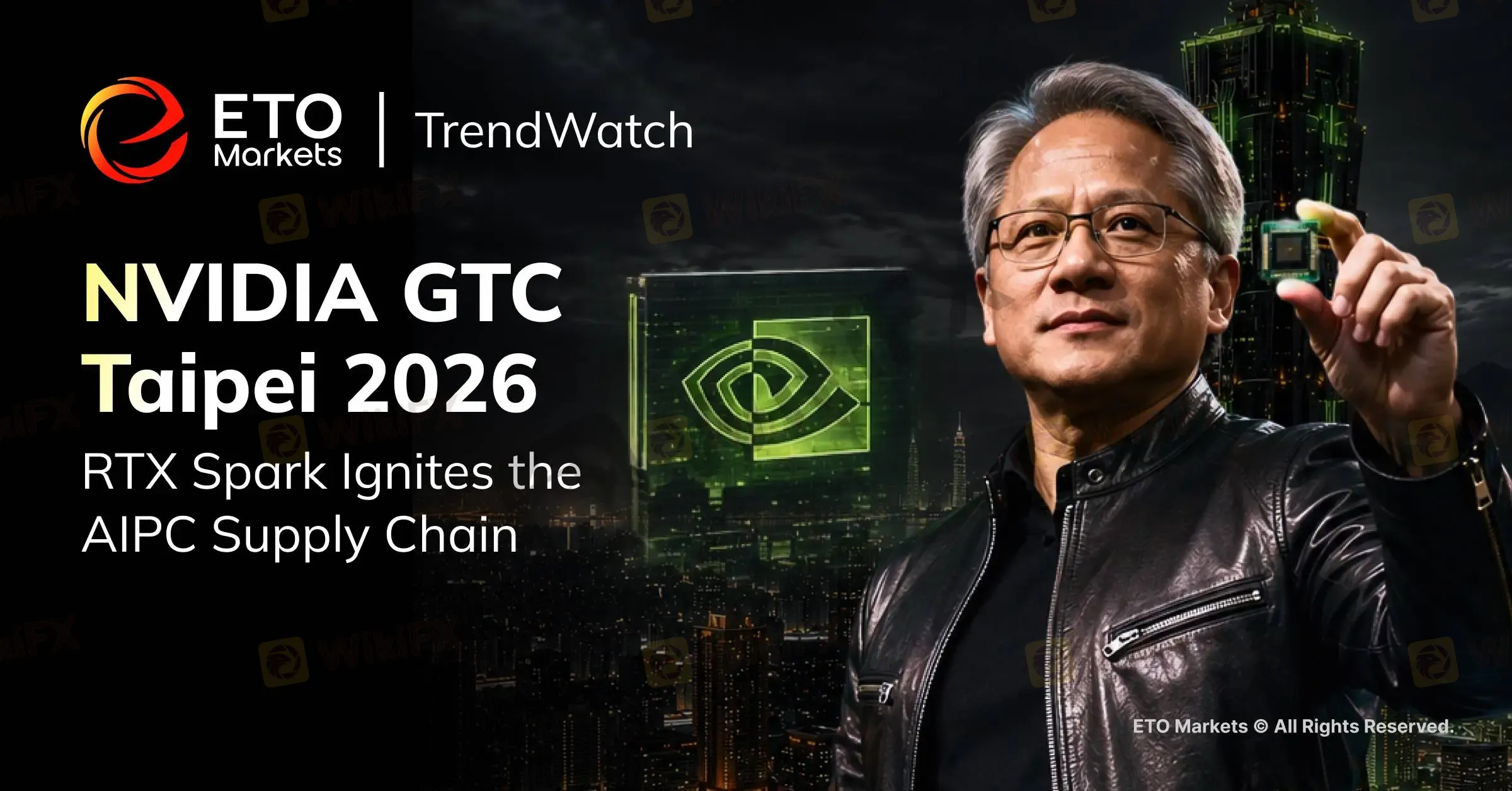
On June 1, NVIDIA opened GTC Taipei 2026, bringing together industry leaders including AMD, Intel, Qualcomm and ARM. CEO Jensen Huang declared the arrival of the intelligent‑agent AI era and introduced a broad range of software, hardware and toolkits designed to shift AI from content generation toward real productivity applications.
RTX Spark: NVIDIA Enters the Windows PC Processor Arena
The most anticipated announcement was RTX Spark, a new superchip designed for Windows AI PCs. NVIDIA describes it as the next‑generation personal AI computer. The first devices will launch this fall from ASUS, Dell, HP, Lenovo, Microsoft Surface and MSI, with Acer and GIGABYTE to follow.
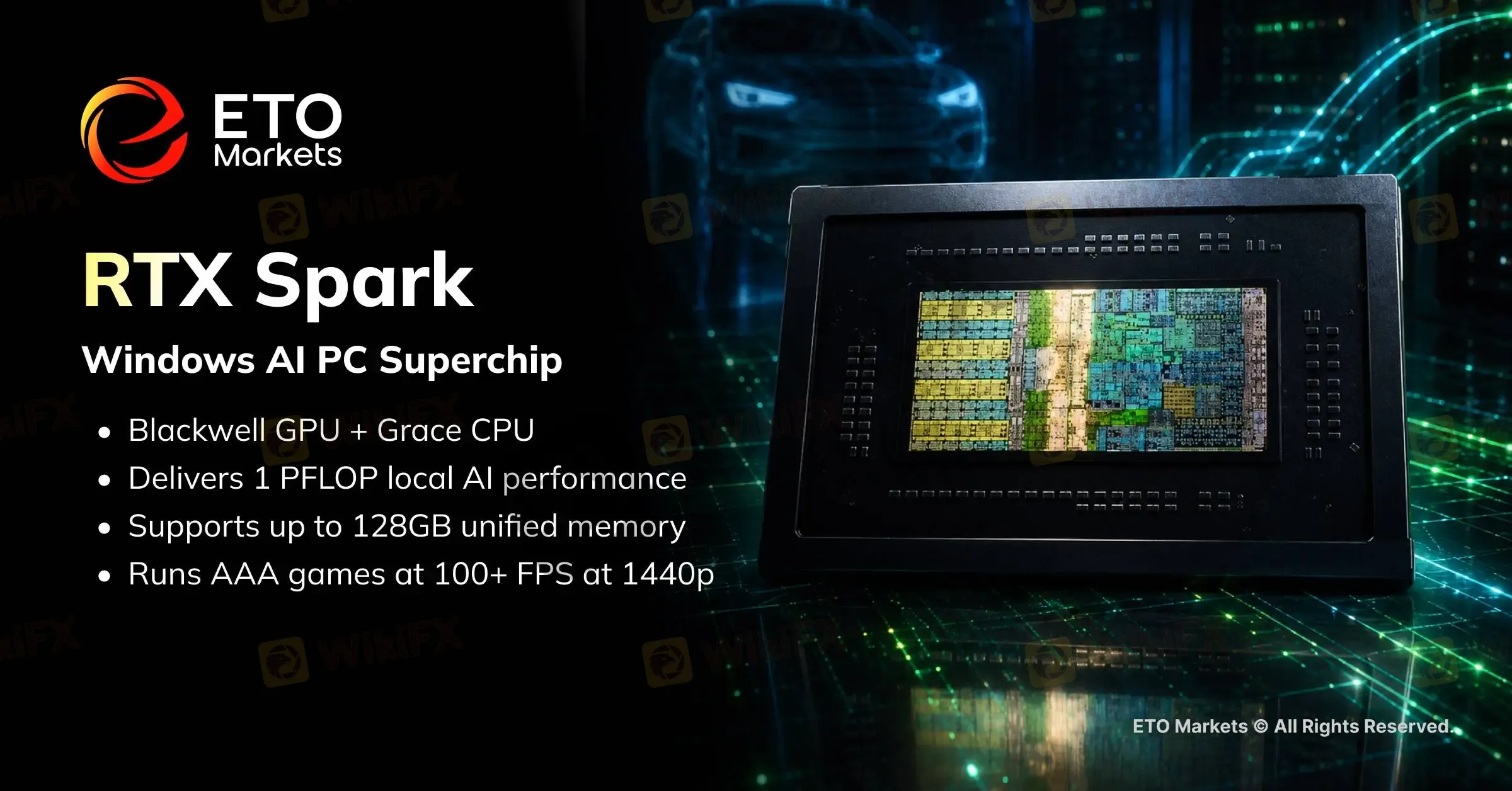
Unlike the traditional CPU plus discrete GPU model, RTX Spark integrates the Blackwell RTX GPU, a 20‑core Grace CPU, CUDA and the RTX ecosystem, along with a native Windows agent runtime environment, into a single local AI superchip.
RTX Spark delivers one petaflop of AI performance and up to 128GB of unified memory. It supports local execution of 120 billion‑parameter models with one‑million‑token context windows, handles 90GB‑plus 3D scenes, enables 12K 4:2:2 video editing and runs AAA games at over 100 frames per second at 1440p.
Vera and Vera Rubin: Rewriting the CPU Role in AI Factories
If RTX Spark redefines the personal computer, Vera redefines the CPU inside AI factories.
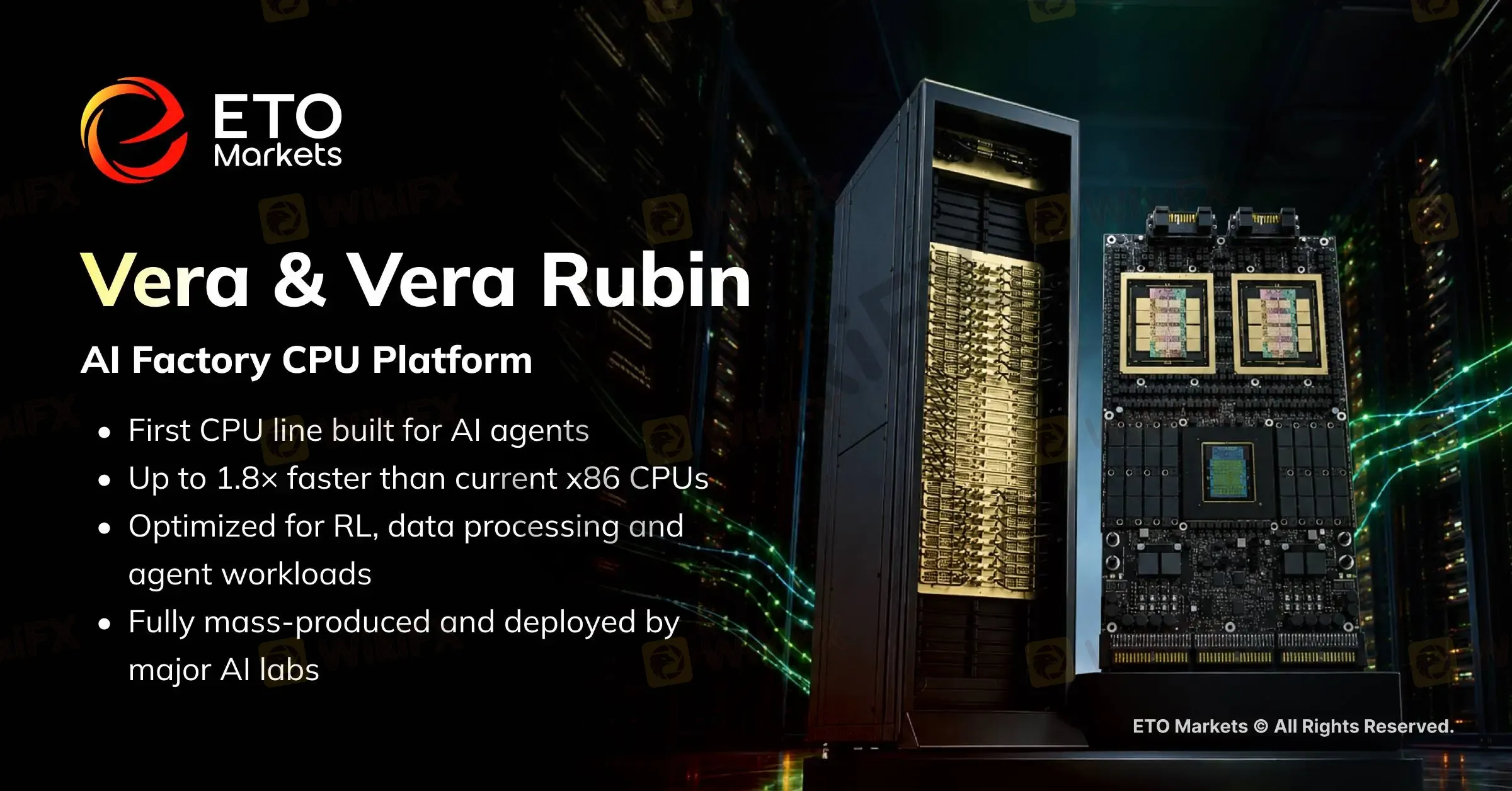
NVIDIA confirmed that Vera has entered full mass production and positioned it as the first CPU built for AI agents. Early adopters include Anthropic, OpenAI, SpaceXAI, CoreWeave and Oracle Cloud Infrastructure.
Huang emphasized that CPUs will no longer play a supporting role to GPUs. In agentic AI, reinforcement learning and data‑processing workloads, Vera can complete tasks up to 1.8 times faster than current x86 CPUs. As Vera scales, NVIDIAs data‑center revenue model could shift from accelerator‑centric to platform‑centric.
DRIVE Hyperion: A Global Robotaxi Standard Platform
In autonomous driving, NVIDIA moved beyond selling automotive‑grade chips and positioned DRIVE Hyperion as a global foundation for Robotaxi‑ready systems.
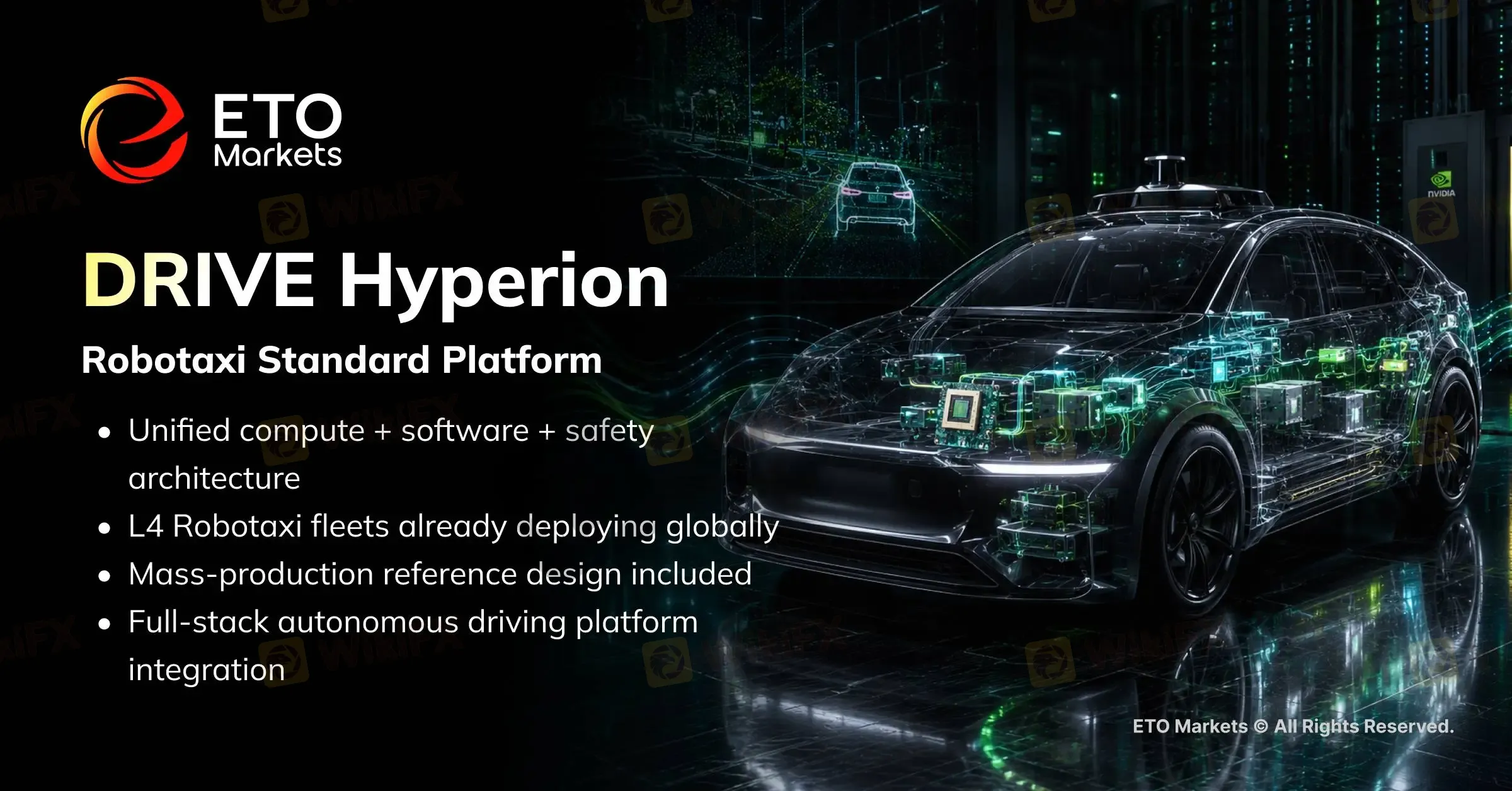
Foxconn is deploying L4 Robotaxi fleets based on the platform, with Kaohsiung among the first rollout cities. Hyperion integrates compute, autonomous‑driving software, safety frameworks and mass‑production reference designs into a unified standard.
This marks a strategic shift in NVIDIAs role. Instead of being viewed primarily as an SoC supplier, NVIDIA is now embedding itself across the full autonomous‑driving development pipeline. The platform that becomes the common base for more Robotaxi programs will capture long‑term gains in software, models and compute demand.
Isaac GR00T: Robotics Moves Beyond Demonstration Prototypes
NVIDIA introduced the Isaac GR00T Reference Humanoid Robot platform.
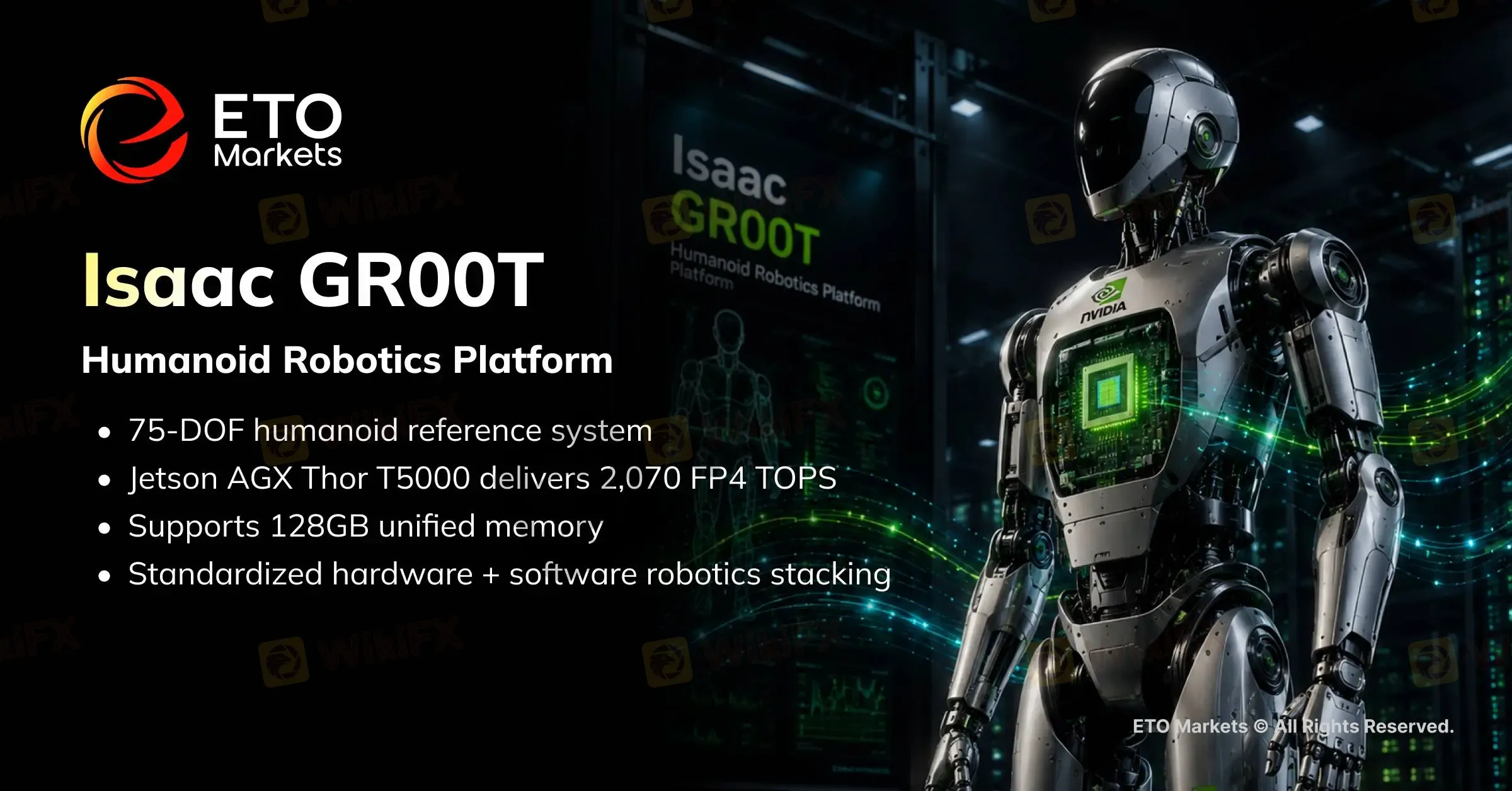
The system integrates the Unitree H2 Plus body, Sharpa five‑finger dexterous hands, the Jetson Thor compute platform and the Isaac GR00T software stack. Early users include Ai2, ETH Zurich, Stanford Robotics Center and UC San Diego, targeting real research and development rather than demonstration‑only use.
The platform significantly lowers the barrier to robotics development. It offers 75 degrees of freedom, while the Jetson AGX Thor T5000 provides 2,070 FP4 TOPS of AI performance and 128GB of unified memory, covering the full workflow from data collection and simulation to evaluation and deployment.
With Isaac GR00T, developers no longer need to assemble hardware and software from scratch. NVIDIAs strategy mirrors the CUDA playbook: build an open platform, attract developers, standardize workflows and let the ecosystem drive hardware adoption.
GTC Taipei 2026: NVIDIA Expands Across the Full AI Stack
The key takeaway from GTC Taipei 2026 is not a single product but NVIDIAs simultaneous push across five major lines: terminals, data centers, AI factories, Robotaxi platforms and robotics.
ETO Markets will continue tracking NVIDIAs progress in AI compute, AI infrastructure and physical AI to help investors identify sustainable growth drivers and allocation opportunities amid accelerating technological cycles and expanding application scenarios.
About Us
ETO Markets is a global financial services provider headquartered in Australia, serving traders in over 120 countries worldwide. Designed for those who value speed, transparency, and capital security, ETO Markets blends advanced trading technology with access to a diverse range of asset classes, including forex, precious metal, energies, indices, stocks, cryptocurrency.
Disclaimer
The information contained herein is for general reference only and does not constitute investment advice, a solicitation, or an offer to buy or sell any financial products.
ETO Markets does not guarantee the accuracy, completeness, or timeliness of the information and shall not be liable for any losses incurred from reliance on such content.
Disclaimer:
The views in this article only represent the author's personal views, and do not constitute investment advice on this platform. This platform does not guarantee the accuracy, completeness and timeliness of the information in the article, and will not be liable for any loss caused by the use of or reliance on the information in the article.
WikiFX Broker
Latest News
Singapore tightens monetary policy in surprise move as rising oil prices rekindle inflation risk
 WikiFX
SPREDIX MARKETS Review: What Traders Should Know Before Depositing
WikiFXBXB Review – Zero Regulation, Dead Website: What Traders Need to Know
WikiFXHFM Review: No Regulatory Licences and a 1.83 Score , Is Your Deposit Safe?
WikiFXIs Your Withdrawal Plan Killing Your Compounding Gains?
WikiFXHFMARKETS TRADE Review: Zero Regulation and a Central Bank Warning
WikiFXWinvest Review: What Traders Should Know Before Depositing
WikiFXTrade Nation Review: What Traders Should Know Before Depositing
WikiFXFXPesa Review: Is Your Deposit Safe?
WikiFXXM Royal Scam Drains RM119,599 From Malaysian Housewife
WikiFX