

Global Broker Regulation Inquiry App
About WikiFX
English
简体中文
繁體中文
English
Pусский
日本語
ภาษาไทย
Tiếng Việt
Bahasa Indonesia
Español
हिन्दी
Filippiiniläinen
Français
Deutsch
Português
Türkçe
한국어
العربية
اردو


Why Sunk Costs Trap Traders in Losing Positions

WikiFX
|


Abstract:The sunk cost fallacy is a psychological trap that makes beginner investors keep adding money to losing trades just because they have already invested in them. This happens because humans naturally hate realizing losses and want to justify their original decisions. To protect your capital, you must learn to ignore past expenses and make trading choices based entirely on future market realities.
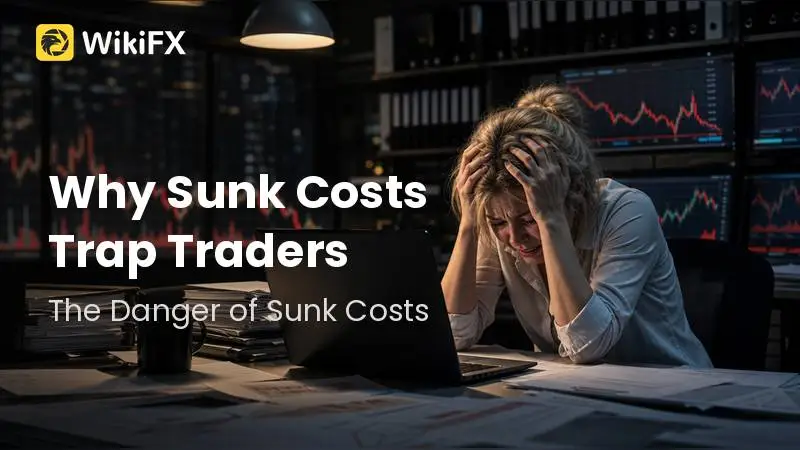
You enter a currency trade and the market immediately moves against you. Instead of accepting the small loss, you deposit more funds and open another position in the same direction, hoping the market will turn around. You are throwing good money after bad money. In trading, this mental trap is known as the sunk cost fallacy.

The Danger of Sunk Costs
A sunk cost is any money, time, or effort that has already been spent and cannot be recovered. Rational decision-making dictates that these past costs should not influence your future choices.
In a business context, if a company invests millions developing a product but new market data shows the item will not sell, a rational manager cuts the program. Continuing to spend money just to justify the past investment usually causes heavier losses.
In Forex trading, your floating loss and the margin tied up in a bad trade are sunk costs. The fallacy happens when you keep a losing position open—or worse, add to it—just because you have already committed capital. You end up treating your trading account like the famous Concorde jet project, where governments kept funding a clearly unprofitable plane purely because they had already poured billions into it.
Why Beginners Refuse to Cut Losses
Behavioral economics explains exactly why walking away from a bad trade is so difficult. It comes down to three main psychological biases.
First, humans suffer from loss aversion. We feel the pain of a loss much more intensely than the joy of a gain. Closing a losing trade makes the loss permanent and real. Keeping the position open allows you to hold onto a false belief that the market will reverse, causing you to dig your heels in deeper as the drawdown increases.
Second, commitment bias stops you from changing your mind. Once you analyze a chart and click the buy button, you are psychologically wired to stick with that original plan. Admitting you were wrong triggers discomfort. To soothe yourself, you ignore new bearish price trends and try to justify your first decision by adding heavier positions.
Third, the endowment effect makes you overvalue what you already own. Once you execute a trade, that position feels more valuable to you than its actual worth. Walking away feels like an unnatural sacrifice.
How to Break the Habit
Avoiding the sunk cost trap requires active awareness and a shift in how you view your trades. You can sidestep this mental block by using a few practical methods.
Focus on future returns over past investments. If you are stuck in a bad trade, ask yourself one simple question: “If I had no open positions right now, would I buy this currency pair at its current price?” If the answer is no, close the trade immediately. Do not hold a position just because you are already in it.
Set rigid limits before you enter. You must decide your exit point before you commit capital. In Forex, this means placing a hard stop-loss the moment you open a trade. Setting your maximum risk beforehand prevents you from making emotional choices when the screen turns red.
Seek an unclouded perspective. When you are emotionally tethered to a losing trade, your judgment fails. Step away from the charts to get an outside view. Switch to a higher timeframe to see the actual trend, rather than the noise on a five-minute chart.
This same logic applies to the trading tools you use. Sometimes, beginners suffer heavy slippage or costly execution delays but refuse to leave their broker because they are used to the platform or have already spent months trading there. That is another sunk cost. You can look up your broker's regulatory status and operating background on the WikiFX app to see if they are actually worth your loyalty. If your current platform has unresolved red flags, the smartest move is to take your remaining capital and walk away.

Disclaimer:
The views in this article only represent the author's personal views, and do not constitute investment advice on this platform. This platform does not guarantee the accuracy, completeness and timeliness of the information in the article, and will not be liable for any loss caused by the use of or reliance on the information in the article.
WikiFX Broker
Latest News
US Dollar Price Forecast: Fed Hike Bets Fade, DXY Tests 102.18 as EUR/USD, GBP/USD Slip
WikiFXIndias Finance Minister says easy exits and excess liquidity fuel equity market's underperformance
WikiFXGlobal Markets Forecast: French Bond Yields Surge as Oil Retreats
WikiFXLeading the Transparency Movement, The Trust Dialogue with Vatee
WikiFXMeloni calls emergency meeting after violent clashes in Milan
WikiFXBOJ Interest Rate Forecast: December Hike in Focus Ahead of Japan CPI
WikiFXIndias finance minister says market liquidity makes it easier for investors to exit
WikiFXTrump's 60-day waiver lands. India's Textile Exporters Say They Already Moved on
WikiFXWikiFX Invite & Earn Event Goes Live on Oct 21, Choose Between 100 Telegram Stars or 6-Month Premium
WikiFXRBI Sells Dollars to Slow Rupee Slide as Reserves Drop $60 Billion in Six Weeks
WikiFX