Abstract:When your capital is at risk, trust isn't just a feeling - it's something you can measure. For traders thinking about using the broker Evest, one question is impossible to avoid: Is Evest a trusted partner for your investments, or does it put your investments at serious risk? The answer to this important question, "Is Evest Safe or Scam?", isn't found in the company's ads. You find it by comparing what the broker officially says with the real, often worrying experiences of actual users.
This review won't rely on guessing. Instead, we'll take a deep look at the broker's legal status and, more importantly, the number and types of real Evest complaints. Our research is based on public information, mainly from the worldwide broker research platform, WikiFX, to show the truth about Evest's reputation.
A Key Question
When your capital is at risk, trust isn't just a feeling - it's something you can measure. For traders thinking about using the broker Evest, one question is impossible to avoid: Is Evest a trusted partner for your investments, or does it put your investments at serious risk? The answer to this important question, “Is Evest Safe or Scam?”, isn't found in the company's ads. You find it by comparing what the broker officially says with the real, often worrying experiences of actual users.
This review won't rely on guessing. Instead, we'll take a deep look at the broker's legal status and, more importantly, the number and types of real Evest complaints. Our research is based on public information, mainly from the worldwide broker research platform, WikiFX, to show the truth about Evest's reputation.
The Warning Sign
The first red flag for any potential investor doesn't appear in just one review, but in a clear pattern. Many users are asking, “Is Evest Safe or Scam?” specifically because of the large number of negative reviews found online. Our analysis is based on this public information, including a total of eight user complaints filed on WikiFX as of early 2025.
This isn't a small problem. The first sign of trouble appears in Evest's overall rating. On platforms such as WikiFX, Evest has a score of 5.24 out of 10. Most importantly, the platform clearly states that “The WikiFX Score of this broker is reduced because of too many complaints!” This is crucial information that serves as an immediate warning. We encourage you to check this information yourself on Evest's WikiFX page before moving forward. It's the starting point for understanding the risks involved.
Understanding Evest's Regulation
A broker's regulatory status is the foundation of whether it's legitimate. However, not all regulations are the same. Evest operates with two different licenses, which need careful examination. Understanding the difference between its onshore and offshore protection is crucial for any trader checking the real-world risk. One license provides some confidence, while the other creates significant concern.
The South African License (FSCA)
· Regulator: Financial Sector Conduct Authority (FSCA)
· License Type: Forex Trading License (EP)
· Status: Regulated
· What this means: Evest holds a legitimate license from the FSCA, South Africa's main financial markets regulator. This provides a basic level of credibility, as the broker must follow specific rules and standards of conduct to keep this status. This is a positive factor, suggesting the company operates within a recognized legal framework in at least one location.
The Vanuatu License (VFSC)
· Regulator: Vanuatu Financial Services Commission (VFSC)
· License Type: Forex Trading License (EP)
· Status: Offshore Regulated
· What this means: This is where a major concern arises. The VFSC is an offshore regulator. While technically a licensed status, offshore regulation is widely understood within the industry to offer much weaker investor protection, oversight, and legal options compared to top-tier regulators in places such as the UK, Australia, or the EU. Brokers often use offshore licenses to offer higher leverage and operate under less strict rules, which directly translates to high potential risk for traders. If a dispute arises with a broker entity operating under a VFSC license, a trader's ability to get their funds back can be severely limited.
What Users Are Saying
While regulatory status provides a framework, the true test of a broker's honesty is the shared experience of its users. The marketing may promise smooth trading and dedicated support, but user complaints reveal the operational reality. We have conducted a detailed analysis of the eight complaints filed against Evest on WikiFX. These are not minor complaints about platform slowness or spread costs; they are serious allegations that form clear, troubling patterns.
Instead of a simple list, we have organized these first-hand accounts into repeated, systematic issues. This approach provides a much deeper analysis of the potential risks traders face.
Pattern 1: Aggressive Sales Tactics
A consistent theme across multiple complaints is the alleged use of high-pressure tactics by account managers. This behavior appears to be focused on one goal: forcing clients to deposit more funds, often with little regard for their financial well-being.
Summary of Allegations:
· Account managers are reported to constantly encourage users to deposit more, even after initial investments.
· The excuse for these requests is often to “take advantage of market movements,” creating a false sense of urgency.
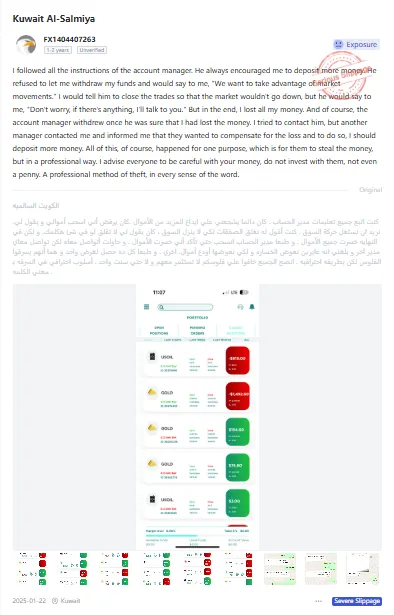
· In one of the most alarming accounts, a user reported that managers went to extreme lengths, telling them to “sell your car, sell your gold” to fund their trading account. This level of pressure is a hallmark of predatory financial operations, not responsible brokerage services.
Pattern 2: Severe Withdrawal Issues
The ability to withdraw your funds is the most basic function of a legitimate broker. Any problems in this process is a major red flag. For Evest, user complaints paint a picture of significant and, at times, complete blocking of withdrawals.
Summary of Allegations:
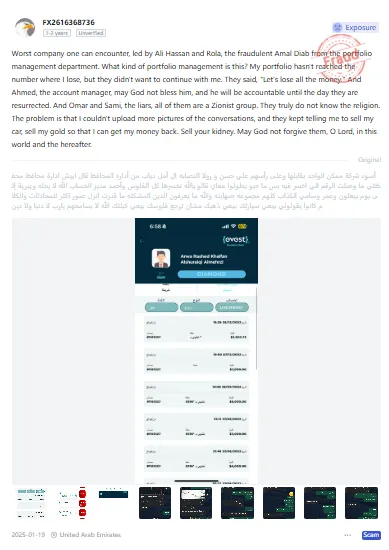
· Multiple users claim that their account managers directly refused to process withdrawal requests, effectively holding their money hostage.
· One user's feedback was direct and serious, stating that once you deposit, “be assured your money is gone for good.”
· This pattern of delaying, complicating, or outright blocking access to funds is one of the most serious accusations that can be made against a financial institution. It suggests a potential breakdown in the responsibility owed to the client.
Pattern 3: Alleged Deliberate Losses
Perhaps the most disturbing pattern involves allegations that account managers are not just unhelpful but are actively involved in creating losses for clients. These accounts describe a systematic process of deception and fund depletion.
Summary of Allegations:
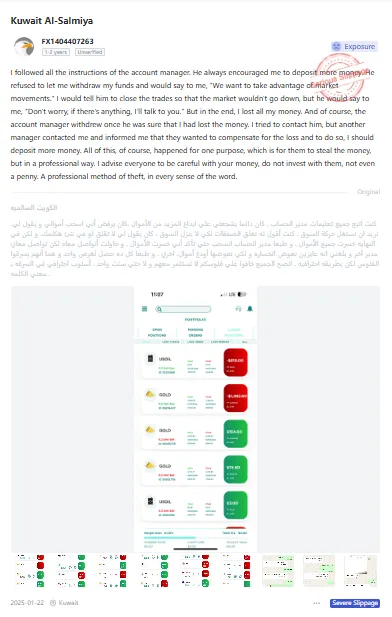
· A user reported that they “followed all the instructions of the account manager,” only to lose their entire investment.
· Tellingly, this same user noted that the account manager “withdrew” (disappeared) as soon as the account was wiped out, stopping all communication.
· In a tactic that strongly signals a scam operation, the user was then contacted by a *new* manager. This new manager offered to “compensate for the loss” on the condition that the user deposited *more* money. This is a classic recovery room scam tactic.
Pattern 4: Direct Fraud Accusations
The language used by complainants is not unclear. Frustrated and having lost significant funds, multiple users have moved beyond describing poor service and have made direct accusations of criminal behavior.
Summary of Allegations:
· Several users explicitly label the company as “scammers and fraudsters” and a “fraudulent company.”
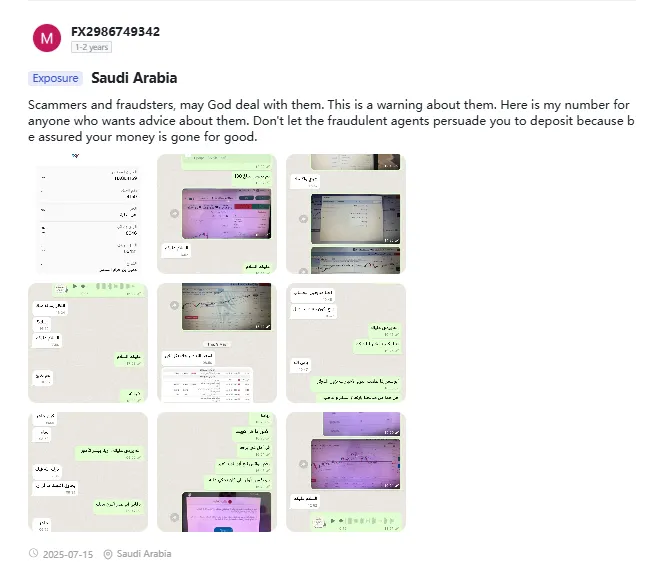
· These are not minor complaints; they are serious accusations of financial misconduct that allege a deliberate intent to defraud. We have organized them for clarity, but the raw, emotional details are available for public review. We strongly advise you to read these [first-hand accounts directly on Evest's WikiFX exposure page to understand the full context and severity of these risks.
Evest's Trading Conditions
Beyond user complaints, a broker's trading environment, including its fees and platform technology, can significantly impact a trader's profitability and experience. An objective look at Evest's cost structure and platform limitations reveals several points that may contribute to user dissatisfaction. These are not necessarily red flags of a scam, but they are practical disadvantages traders must consider.
Evest Fee Structure
Non-trading fees can quietly reduce an account's balance, especially for inactive or infrequent traders. Evest's fee schedule contains several notable charges.
The $75 inactivity fee, in particular, is aggressive compared to industry standards and can quickly penalize traders who take a break from the markets.
Account Tiers and Deposits
Evest structures its offerings across four main account tiers: Silver, Gold, Platinum, and Diamond. The barrier to entry is relatively high. The most basic Silver account requires a minimum deposit of $250. While not extremely expensive, this is higher than the $50-$100 minimums offered by many well-regarded brokers, making it less accessible for beginners or those wishing to test the platform with a small amount of capital. Higher tiers require substantial investments, starting from $5,000 for Gold and reaching $50,000 for a Diamond account.
Platform Limitations
In today's market, the MetaTrader 4 (MT4) and MetaTrader 5 (MT5) platforms are the undisputed industry standard. They are known for their reliability, advanced charting tools, and vast ecosystem of automated trading strategies (Expert Advisors, or EAs).
Evest does not offer MT4 or MT5 support. Instead, it relies on its own proprietary trading app. While a proprietary platform can be user-friendly, this limitation is a significant disadvantage for several reasons:
· Experienced traders lose access to the powerful tools and custom indicators they are familiar with.
· The ability to use or develop EAs for automated trading is completely removed.
· Traders moving from another broker face a learning curve and cannot easily transfer their existing trading setup.
This lack of support for industry-standard platforms can be a major deal-breaker for anyone beyond a novice trader.
The Verdict
To answer the question, “Is Evest Safe or Scam?”, we must weigh all the evidence presented. An informed decision requires balancing the broker's formal regulatory status against the overwhelming weight of real-world user experiences.
Weighing the Evidence
On the one hand, there are a few neutral or positive points:
· Evest holds a legitimate license from a reputable regulator, the FSCA in South Africa.
· The company has been in operation for 5-10 years, indicating some longevity.
· There is at least one positive user review on record among the many negative ones.
On the other hand, the evidence against the broker is substantial and severe:
· It simultaneously operates under a weak, offshore license from the VFSC in Vanuatu, a common tactic for high-risk brokers.
· Its WikiFX score is low, with the platform explicitly stating this is a direct result of the high volume of user complaints.
· There is a significant and consistent pattern of severe, detailed complaints alleging aggressive sales tactics, systematic withdrawal blocking, deliberate loss generation, and outright fraud.
· The fee structure includes a high inactivity fee, and the platform offering is subpar, lacking industry-standard MT4/MT5 support.
A High-Risk Proposition
While Evest is not an outright unregulated entity due to its FSCA license, the combination of red flags paints a clear picture. The sheer volume and extreme severity of the Evest complaints create a risk profile that is unacceptably high for the vast majority of traders. The patterns described by users—pressure to sell personal assets, blocking withdrawals, and disappearing after accounts are emptied—are classic indicators associated with predatory, rather than professional, brokerage behavior.
Therefore, the answer to “Is Evest Safe or Scam?” leans heavily towards it being an extremely high-risk platform. The evidence suggests that while it maintains an appearance of legitimacy through one license, its operational reality, as reported by numerous users, aligns with that of a high-risk operation. It should be approached with extreme caution, if at all.
Your Ultimate Protection
This investigation into Evest highlights a critical lesson for every investor: doing your research is not optional. The forex market is filled with opportunities, but it is also full of risks, and not all of them are market-related. Your first and most important line of defense is the research you conduct before you ever deposit a single dollar.
Empowering yourself with information is the only way to navigate this landscape safely. The patterns seen with Evest are not unique, but they are often identifiable if you know where to look.
The Pre-Deposit Checklist
Before you commit funds to any broker, you must adopt a non-negotiable pre-deposit checklist. This simple process can save you from immense financial loss and stress.
· Never trust a broker's marketing alone. Always verify its claims independently.
· User reviews are a powerful leading indicator of a broker's true behavior. A few negative reviews are normal; a pattern of severe complaints about withdrawals or pressure tactics is a major red flag.
· Regulatory status is crucial, but you must understand the difference. A license from a top-tier regulator (like those in the UK, Australia, or Cyprus) means far more than a license from an offshore jurisdiction such as Vanuatu or St. Vincent and the Grenadines.
The forex market is filled with risks, but you can arm yourself with information. Before you ever consider depositing with a broker—whether it is Evest or any other—make it a mandatory rule to check its full profile on a verification platform. Go to WikiFX, enter the broker's name, and scrutinize everything: its regulatory details, full list of user complaints, and official risk warnings. This single step can be the most important one you take in protecting your investment.
Download the WikiFX app now.