

Global Broker Regulation Inquiry App
About WikiFX
English
简体中文
繁體中文
English
Pусский
日本語
ภาษาไทย
Tiếng Việt
Bahasa Indonesia
Español
हिन्दी
Filippiiniläinen
Français
Deutsch
Português
Türkçe
한국어
العربية
Trump Signals Disappointment with NATO and Indo-Pacific Allies as Escort Coalition Fails
Abstract:[Figure 1: Trump and NATO Illustration]President Trump has formally expressed disappointment with NATO and key Indo-Pacific allies, stating that the United States will “act independently” and hinting
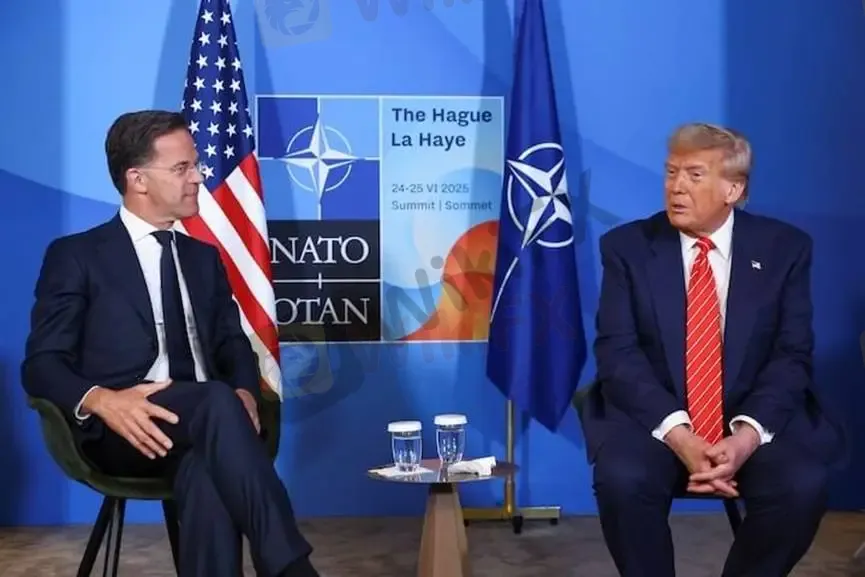
[Figure 1: Trump and NATO Illustration]
President Trump has formally expressed disappointment with NATO and key Indo-Pacific allies, stating that the United States will “act independently” and hinting at a potential withdrawal from NATO. At the same time, Iran confirmed the death of senior official Ali Larijani, subsequently initiating an “accelerated strike phase,” which has pushed global crude oil prices above $100 per barrel for four consecutive sessions.
Trumps latest remarks suggest that the U.S.–Iran conflict is evolving into a broader “reset” of the existing alliance framework:
“We don‘t need anyone’s help”: In response to refusals from France, Germany, Italy, as well as Australia, Japan, and South Korea to participate militarily, Trump stated that the U.S. no longer seeks allied support, warning that he holds the authority to withdraw from NATO without congressional approval.
NATO withdrawal signal: While noting there is no immediate plan, Trump expressed “extreme disappointment” with NATO allies and has placed the possibility of withdrawal on the table as political leverage.
Internal divisions: Kent, Director of the U.S. National Counterterrorism Center, resigned in protest over Israel‘s role in triggering the U.S.–Iran conflict, highlighting growing fractures within Washington over the war’s objectives and costs.
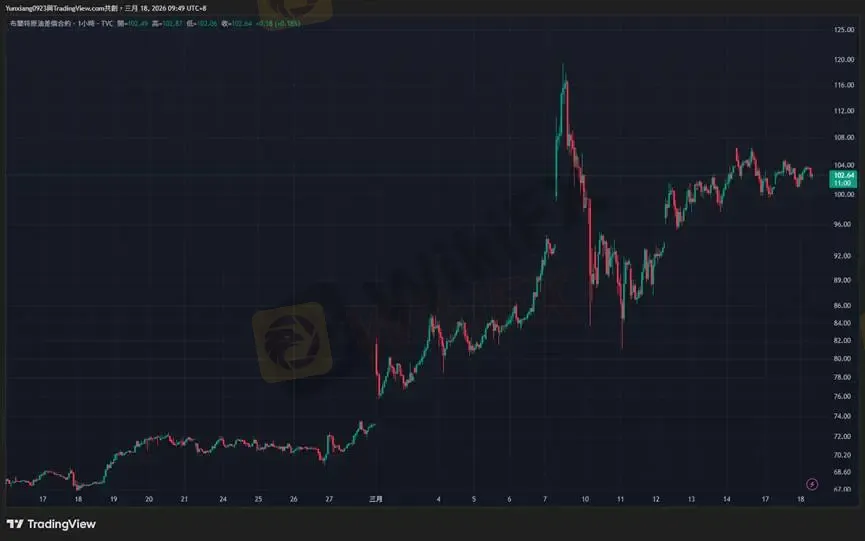
[Figure 2: Brent Crude Oil H1 Chart Analysis]
For the first time, tangible data has emerged revealing significant damage to core U.S. military capabilities, exposing a severe logistical strain. Officials confirmed that a fire aboard the USS Gerald R. Ford aircraft carrier burned for over 30 hours before being extinguished. Although caused by a laundry room dryer, the incident destroyed more than 600 berths, forcing many sailors to sleep on the floor aboard the worlds most advanced nuclear-powered carrier.
Due to the ongoing conflict, the carrier‘s deployment has been extended through May, with operational fatigue and infrastructure damage significantly undermining the U.S. military’s sustained intervention capacity.
As Iran intensifies strikes on Middle Eastern energy infrastructure, oil markets have reacted sharply:
Brent crude hits a three-year high: Prices have closed above $100 for four consecutive sessions. While Trump claimed maritime routes would reopen “soon,” markets are increasingly focused on Irans parliamentary stance that strait navigation rules may never return to pre-war conditions.
Supply disruption: Saudi Arabia and the UAE have suffered their largest drone attacks to date, delaying repairs and creating a global supply shortfall of approximately 10 million barrels per day, which is unlikely to be resolved in the near term.
Analysts Perspective
[Figure 3: Gold H1 Chart Analysis]
Key support: 5000
A break below could extend downside momentum toward 4980–4950
Resistance levels: 5030 and 5100
A sustained move above 5030 may trigger a rebound toward 5100
Risk Disclaimer
Developments as of March 18 suggest this is no longer solely a U.S.–Iran conflict, but a potential inflection point for the post-war alliance system. While U.S. forces continue high-intensity operations under strained conditions, Iran—following the loss of senior leadership—has escalated into a phase of accelerated retaliation.
The spring of 2026 may mark the brink of a broader structural break in the global order.
Trumps threat to withdraw from NATO is likely to trigger heightened volatility across European and Indo-Pacific defense sectors, accelerating capital flows into sovereign defense leaders. Markets are no longer pricing in an optimistic 4–6 week resolution, but are instead shifting toward scenarios involving multi-year conflict and a restructuring of global energy transit rules.
The strength of gold and the U.S. dollar is increasingly tied to concerns over declining U.S. global leadership, reinforcing a more defensive asset allocation framework.
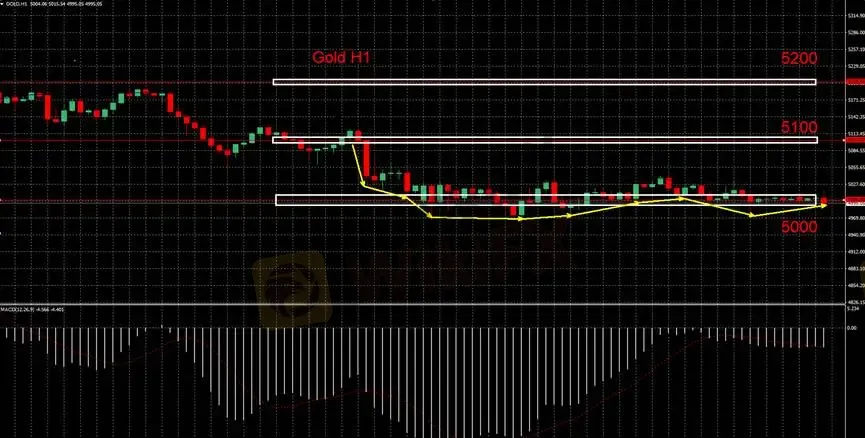
Gold on the H1 timeframe remains in a low-range consolidation phase. After breaking below the 5100 level, prices have failed to establish new lows and are oscillating within the 5000–5030 range, forming a short-term box pattern.
The broader trend remains a post-downtrend consolidation, with no clear reversal signal at this stage.
Until price decisively breaks above 5100, the overall bias remains range-bound with a bearish tilt.
The above views, analysis, research, price levels, and other information are provided for general market commentary only and do not represent the position of this platform. All readers should bear their own investment risks and exercise caution when making trading decisions.
Disclaimer:
The views in this article only represent the author's personal views, and do not constitute investment advice on this platform. This platform does not guarantee the accuracy, completeness and timeliness of the information in the article, and will not be liable for any loss caused by the use of or reliance on the information in the article.
WikiFX Broker
Latest News
ALPEX TRADING Review 2026: Is this Forex Broker Legit or a Scam?
 WikiFX
Swissquote Review 2026: Regulation, Account Delays, and Trader Complaints
WikiFXMalaysians Arrested in Singapore for Collecting Cash on Behalf of Transnational Scammers
WikiFXCore inflation rate hit 3.2% in March as first-quarter growth disappointed at 2%
WikiFXAssetsFX Safety Review: Understanding the Warning Signs and User Concerns
WikiFXTop 5 Reasons Why Rupee Slips Below 95 Twice in 2026
WikiFXWikiFX Wishes You a Happy Labour Day
WikiFXInside the Fed: Powell vows he won't be a 'shadow chair,' but a Warsh clash will be tough to avoid
WikiFXDbinvesting Exposed: Inside the Shocking Fund Scam Allegations Traders Can’t Ignore
WikiFXeToro Review 2026: Regulatory Lawsuits, Clone Scams, and Withdrawal Complaints
WikiFXCurrency Calculator
USD

CNY
Current Rate:0
Enter amount
USD
Redeemable Amount
CNY
Calculate 