

Broker Globale Piattaforma di Verifica Regolamentare
WikiFX
Italiano
简体中文
繁體中文
English
Pусский
日本語
ภาษาไทย
Tiếng Việt
Bahasa Indonesia
Español
हिन्दी
Filippiiniläinen
Français
Deutsch
Português
Türkçe
한국어
العربية
اردو

FXTRADING Financial Focus (Asia-Pacific 04/16)Yellen Sees Energy Inflation Fed May Cut
Sommario:Against a backdrop of an increasingly complex global environment, former U.S. Treasury Secretary Janet Yellen offered a relatively measured assessment of the policy outlook. She noted that the impact
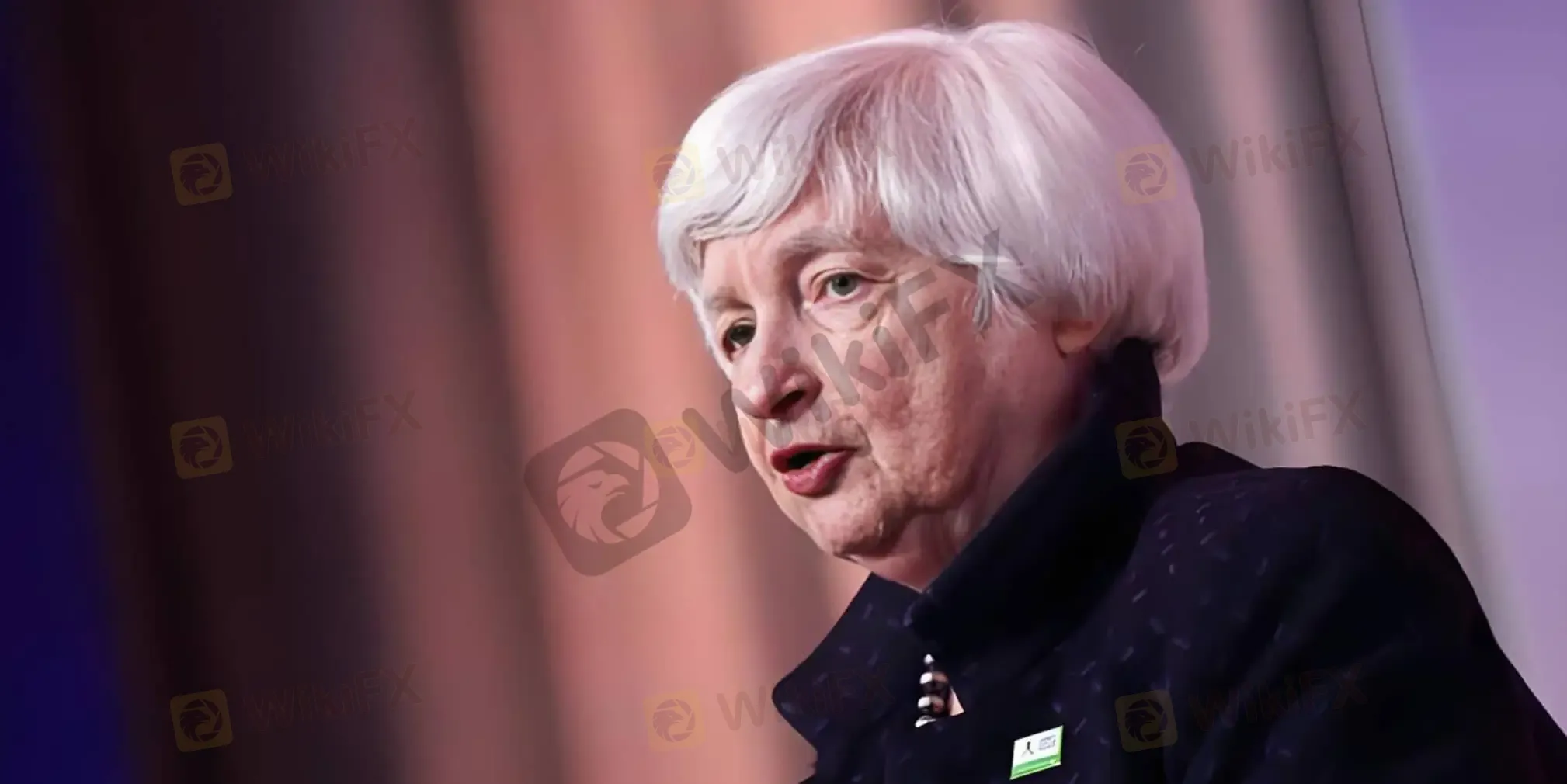
Against a backdrop of an increasingly complex global environment, former U.S. Treasury Secretary Janet Yellen offered a relatively measured assessment of the policy outlook. She noted that the impact of tensions in the Middle East is being transmitted to the global economy through energy prices, pushing inflation pressures higher, but this does not mean policy flexibility has been fully constrained. The Federal Reserve may still deliver one rate cut later this year.
She made these remarks at the HSBC Global Investment Summit. From her comments, it is clear that inflation expectations have edged higher, but remain within a range that can still be monitored. She emphasized that from a policymakers perspective, when facing price increases driven by supply-side factors, the Fed is unlikely to act hastily. Instead, it will adjust its pace in response to incoming data. In other words, policy is not locked in by a single factor and still retains a degree of flexibility.
Looking more closely at inflation, the current round of pressure is not driven by demand, but is a typical case of cost-push inflation. The ongoing Iran conflict over recent weeks has caused noticeable volatility in energy markets, with crude oil prices rising by more than 30% in a short period. This has directly increased costs across transportation, manufacturing, and household consumption. The defining feature of this shock is its rapid transmission and its ability to compound across multiple sectors, making it difficult to fully absorb in the short term.
These changes are already visible in the data. In the latest U.S. inflation readings, gasoline and diesel prices have risen particularly sharply, driving a notable monthly increase in headline CPI. On the surface, inflation appears to be reaccelerating, but a breakdown of the components shows that the pass-through to the services sector has not yet fully materialized. This is one reason policymakers remain cautious when assessing the underlying trend.
However, market reactions have been more immediate. As energy prices continue to fluctuate, investors have significantly revised their expectations for the future path of inflation. Earlier in the year, markets were pricing in two rate cuts, but those expectations have gradually been scaled back, and at times the possibility of easing this year has even been ruled out entirely. This shift reflects a repricing of uncertainty rather than a definitive change in economic fundamentals.
Beyond policy, Yellen also highlighted a more practical concern: the growing influence of political factors on the monetary policy environment. The U.S. president has recently voiced repeated dissatisfaction with Federal Reserve decisions and has sought to promote a more aggressive rate-cutting path through personnel changes. At the same time, scrutiny of the Fed‘s internal affairs has intensified, which she noted is relatively uncommon and could place pressure on the institution’s independence.
From a longer-term perspective, she also pointed to evolving global relationships. In particular, she emphasized that the United States maintains extensive trade and investment ties with East Asia, which are especially important under current conditions. Despite periodic external frictions, most economic linkages remain fundamentally stable, providing a buffer for global growth. From FXTRADINGs perspective, this round of energy-driven supply shock is likely to keep the global economy operating under a high-cost environment for some time. The balance between inflation and growth is becoming increasingly fragile. Policymakers must prevent inflation expectations from becoming unanchored while avoiding excessive tightening that could suppress demand, leaving policy space significantly constrained. Going forward, the key variables to watch are whether energy prices remain elevated and whether cost pressures spread more broadly across the economy. If such transmission deepens, global uncertainty is likely to rise further.

Disclaimer:
Le opinioni di questo articolo rappresentano solo le opinioni personali dell’autore e non costituiscono consulenza in materia di investimenti per questa piattaforma. La piattaforma non garantisce l’accuratezza, la completezza e la tempestività delle informazioni relative all’articolo, né è responsabile delle perdite causate dall’uso o dall’affidamento delle informazioni relative all’articolo.
WikiFX Trader
FXCM
Sotto supervisione
FxPro
Sotto supervisione
STARTRADER
Sotto supervisione
HFM
Sotto supervisione
vantage
Sotto supervisione
EBC FINANCIAL GROUP
Sotto supervisione
FXCM
Sotto supervisione
FxPro
Sotto supervisione
STARTRADER
Sotto supervisione
HFM
Sotto supervisione
vantage
Sotto supervisione
EBC FINANCIAL GROUP
Sotto supervisione
WikiFX Trader
FXCM
Sotto supervisione
FxPro
Sotto supervisione
STARTRADER
Sotto supervisione
HFM
Sotto supervisione
vantage
Sotto supervisione
EBC FINANCIAL GROUP
Sotto supervisione
FXCM
Sotto supervisione
FxPro
Sotto supervisione
STARTRADER
Sotto supervisione
HFM
Sotto supervisione
vantage
Sotto supervisione
EBC FINANCIAL GROUP
Sotto supervisione
Rate Calc
USD

CNY
Tasso di cambio attuale:0
inserisci l'importo
USD
A disposizione
CNY
Calcolare 