全球交易商監管查詢APP
什麼是WikiFX

今天
- 11
- 月
- 15
- 日
聲音提醒
桌面通知
11月13日
16:59:24
16:59:24
India Trade Gap Higher Than Expected, Imports Hit Record India's merchandise trade deficit widened to $39.88 billion in October 2026, significantly exceeding economists' expectations of $32.25 billion and increasing from $30.21 billion in September. Imports climbed to a record $89.35 billion, compared with $74.61 billion in September and $76.06 billion in October 2025, more than offsetting the improvement in exports and driving the wider trade gap. Meanwhile, merchandise exports rose to $49.47 billion, up from $44.4 billion in the previous month and $34.38 billion a year earlier. However, India recorded a services trade surplus of $19.79 billion, providing a partial offset to the merchandise deficit.
16:59:09
16:59:09
Bund Yields Climb to Two-Week High Germany’s 10-year Bund yield rose towards 3.4%, reaching its highest level since late October, as investors increased bets on further European Central Bank interest rate hikes, while a rebound in equity markets this week reduced demand for safe-haven assets. ECB euro short-term rate (€STR) forwards now indicate that markets expect the deposit rate to rise from its current 2.5% to 3.25% by late 2027, up from 3% priced in last week. They also point to a rate of 2.74% by December 2026. Meanwhile, stronger-than-expected US inflation data released on Tuesday pushed Treasury yields higher and reinforced expectations of further Federal Reserve tightening. Markets are now fully pricing in a rate hike by December, with the possibility of a larger 50-basis-point increase also being considered. Adding to inflationary concerns, oil prices rebounded from more than two-month lows after US President Donald Trump said on Thursday that Washington did not need a deal with Iran.
16:58:49
16:58:49
DAX Falls on Friday Frankfurt's DAX 40 edged down 0.3% to trade below 26,700 on Friday, as profit booking emerged after a four-day rally that sent the index to record highs. Meanwhile, market sentiment remained cautious amid rising oil prices and bond yields, which fuelled inflation concerns and expectations of tighter monetary policy, offsetting optimism over strong corporate earnings. Attention also remained focused on Nvidia and the wider semiconductor industry, following CEO Jensen Huang's resignation.
16:53:05
16:53:05
Poland Inflation Confirmed at 3.5% in October The annual inflation rate in Poland eased to 3.5% in October 2026 from 4.1% in the previous month, confirming preliminary estimates. Costs moderated in several categories, including alcoholic beverages and tobacco (6.6% vs. 6.9% in September), transport (10.4% vs. 7.9%), recreation, sports and culture (4.0% vs. 5.5%), restaurants and accommodation services (4.0% vs. 4.1%), and education (4.1% vs. 4.5%). At the same time, deflation remained unchanged for clothing and footwear (-3.7%), while it deepened for furnishings, household equipment and routine household maintenance (-0.6% vs. -0.5%) and eased for food and non-alcoholic beverages (-0.1% vs. -0.4%). Meanwhile, prices continued to rise for housing and utilities (5.7% vs. 5.1%), health (4.7% vs. 4.6%), information and communication (3.9% vs. 3.5%), and personal hygiene, social protection, and other goods and services (2.9% vs. 2.4%). On a monthly basis, consumer prices fell by 0.4%, reversing a 0.7% gain in the previous month.
16:52:48
16:52:48
Hong Kong Confirms Q3 GDP Growth at 5.2% Hong Kong’s economy expanded 5.2% year-on-year in the third quarter of 2026, in line with preliminary estimates and accelerating from a downwardly revised 4.2% growth in the previous quarter. Government spending rose 1.7% after stalling in Q2, while gross domestic fixed capital formation more than doubled its growth rate to 7.5% from 3.7%. In addition, household consumption remained stable at 2.9%. On the external front, exports of both goods (30.2% vs 28.9%) and services (4.3% vs 3.2%) accelerated, while imports of goods (29.9% vs 29.3%) and services (5.8% vs 3.1%) also recorded solid growth. On a seasonally adjusted quarterly basis, GDP rose by 1.9% in Q3, confirming preliminary estimates and recovering from an upwardly revised 1.7% contraction in Q2. Looking ahead, Hong Kong’s growth momentum is expected to remain firm, supported by robust global investment in AI, which should continue to underpin merchandise exports.
16:50:17
16:50:17
Macau GDP Growth Slowest in 1½ Years Macau’s economy expanded by 0.1% year-on-year in the third quarter of 2026, confirming preliminary estimates and easing from an upwardly revised 0.5% growth in the previous period. This marked the weakest economic expansion since a contraction in the first quarter of 2025, as household consumption growth slowed sharply (0.7% vs. 2.5% in Q2), while government spending declined (-1.5% vs. 3.5%). Net trade also weighed on GDP, as exports rose by just 0.4%, partly dragged down by a decline in gaming services exports (-4.7%), while imports climbed by 4.6%. On the other hand, growth accelerated in gross fixed capital formation (17.3% vs. 10.0%), amid higher investment in both the private (+14.9%) and government (+22.1%) sectors. For the first three quarters of the year, Macau’s GDP expanded by 2.9%, as private consumption expenditure grew by 2.7% and gross fixed capital formation rose by 4.6%. Meanwhile, government final consumption expenditure decreased by 0.2%.
16:43:56
16:43:56
US Producer Inflation Expected to Moderate in October US producer prices are expected to rise 0.4% month-over-month in October 2026, easing from a sharp 1.3% increase in September, which marked the steepest monthly gain since March 2022, following the outbreak of the war in Ukraine, and the second-largest increase on record. The anticipated slowdown would signal a moderation in producer-level inflation, largely reflecting easing energy price pressures. Core PPI, which excludes food and energy, is forecast to increase 0.3% month-over-month, down from 0.7% in September. On an annual basis, however, headline producer inflation is expected to accelerate to 6.6%, its highest level since November 2022, while core PPI inflation is projected to remain unchanged at 5%, its highest reading since early 2023.
16:37:35
16:37:35
Poland Economy Slows More than Expected in Q3 Poland’s economy expanded by 3.5% year-on-year in the third quarter of 2026, slowing from an upwardly revised 4.1% growth in the second quarter, preliminary estimates showed. The reading was below the expected 3.7% and marked the weakest expansion since the second quarter of 2025, likely due to softer household consumption, as higher fuel prices weighed on consumers’ purchasing power. On a seasonally adjusted quarterly basis, GDP rose 0.8%, following an upwardly revised 1.1% increase in the previous period.
16:35:01
16:35:01
FTSE 100 Edges Down on Friday, Set for Weekly Gain The FTSE 100 traded flat to lower on Friday, weighed down by losses in mining and defence stocks. Antofagasta and Anglo American fell more than 1.5%, while Glencore declined about 1% and Rio Tinto was down 0.6%. Gold producers Fresnillo and Endeavour also lost more than 1%, as gold and silver hovered near one-year lows and copper prices slipped to four-month lows. Defence and aerospace stocks weakened, with Rolls-Royce down nearly 2%, while BAE Systems and Babcock each fell over 1%. In contrast, oil majors Shell and BP gained more than 1%, supported by a rebound in crude prices amid renewed uncertainty over US-Iran relations following President Donald Trump's comments that Washington could forgo a deal with Tehran. Aviva shares rose 2% after the insurer reaffirmed its three-year targets and reported stronger inflows into its wealth business. Despite Friday's subdued performance, the FTSE 100 remained up more than 1.5% for the week.
16:33:24
16:33:24
Slovakia Inflation Hits Lowest Since 2024 Slovakia's annual inflation rate edged down to 3.0% in October 2026, following a 3.1% increase in each of the previous two months and coming in slightly below market expectations of 3.1%. This marked the lowest level since December 2024, largely as price growth in transport slowed (7.3% vs 9.1%) amid government measures introducing discounts on rail and bus fares. Inflation also eased for education (3.3% vs 4.4%), alcoholic beverages, tobacco and narcotics (1.8% vs 2.0%), and furnishings and household maintenance (1.2% vs 1.4%). Meanwhile, inflation accelerated in clothing and footwear (1.1% vs 0.7%) and restaurants and hotels (4.5% vs 4.4%), while remaining unchanged in housing and utilities (7.8%) and information and communication (2.8%). Deflation in food and non-alcoholic beverages also eased to 2.7% from 3.2%. On a monthly basis, consumer prices were unchanged after a 0.2% gain in September. Core inflation, which excludes regulated prices, rose to 1.8%.
16:30:03
16:30:03
Crypto Updates: Ether Depreciates by 4.18% Top crypto losers are Ether (-4.18%), Binance (-4.02%) and Bitcoin (-3.81%).
16:29:16
16:29:16
European Stocks Edge Lower on Friday European equity markets traded lower Friday, as rising oil prices and bond yields fueled inflation concerns and heightened fears of further interest rate hikes, while continued resilience in corporate earnings helped limit losses. The STOXX 50 fell 0.4% to 6,380 points, while the STOXX 600 slipped 0.3%, although both remained on track for solid weekly gains. Investors also continued to assess the latest developments surrounding Nvidia and the broader semiconductor sector, following reports of CEO Jensen Huang's resignation, while a fresh batch of corporate earnings provided additional market direction. Richemont tumbled 7% despite reporting strong quarterly sales, as higher gold prices weighed on margins. Generali dropped 2% after Goldman Sachs downgraded European insurers to "underweight", although the company reported higher nine-month results. For the week, the STOXX 50 was set to gain 3.3%, while the STOXX 600 was heading for a 2% advance, having reached a record high on Thursday.
16:21:33
16:21:33
Spain Inflation Rate Unrevised at 4.9% in October The annual inflation rate in Spain was confirmed at 4.9% in October 2026, unchanged from September at its highest level since February 2023. Upward pressure came primarily from prices of recreation & culture (4.1% vs 3.6% in September), due to package holidays, and housing & utilities (7.6% vs 7.2%), on account of gas. Prices of transportation remained elevated but eased somewhat (10.3% vs 10.5%). Meanwhile, core inflation, excluding unprocessed food and energy products, stood at 3.1%, the highest level since March 2024, unchanged from September. Compared to the previous month, the CPI increased 0.6%, after a 0.3% rise in September, in line with earlier estimates. The EU-harmonised CPI rose 4.9% on the year and 0.5% on the month, below 5% and 0.6% in the previous month, both matching preliminary figures.
16:13:26
16:13:26
Slovakia GDP Growth Softest in Nearly 4 Years Slovakia’s economy expanded 0.3% year-on-year in the third quarter of 2026, slowing from 0.7% growth in the previous quarter, according to preliminary estimates. This marked the weakest pace of expansion in 15 quarters, since the first quarter of 2023. Domestic demand remained the main driver of growth, supported primarily by higher household consumption and increased investment. On a seasonally adjusted quarterly basis, the economy growth eased to 0.1%, moderating from 0.2% increase in the previous quarter.
16:10:02
16:10:02
Agricultural Commodities Updates: Rice Rises by 1.80% Top commodity gainers are Rice (1.80%), Wheat (1.74%) and Wool (1.41%).
 2026-11-15 00:00
美聯儲傑斐遜講話
預期 --前值 --
2026-11-14 18:00 貝克休斯鑽機總數
預期 --前值 604
2026-11-14 18:00 貝克休斯石油鑽機數量
預期 --前值 463
NOZAX交易爭議頻傳!多位投資人出入金失敗,平台客服無回應,詐騙風險遽增
2026-11-13 09:44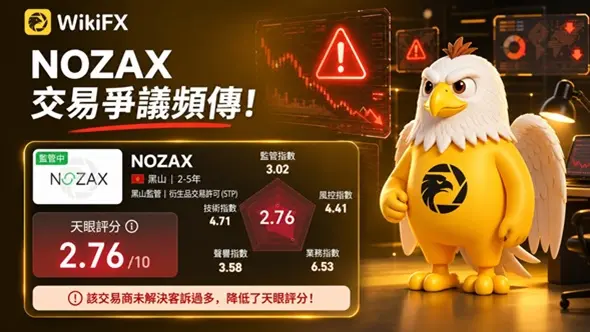
2026 WikiFX天眼獎首輪大眾評選正式啟動!數百位候選精英集結
2026-11-13 17:09
GTCFX取得阿聯酋牌照,獲准經紀OTC衍生品與即期外匯
2026-11-13 11:54
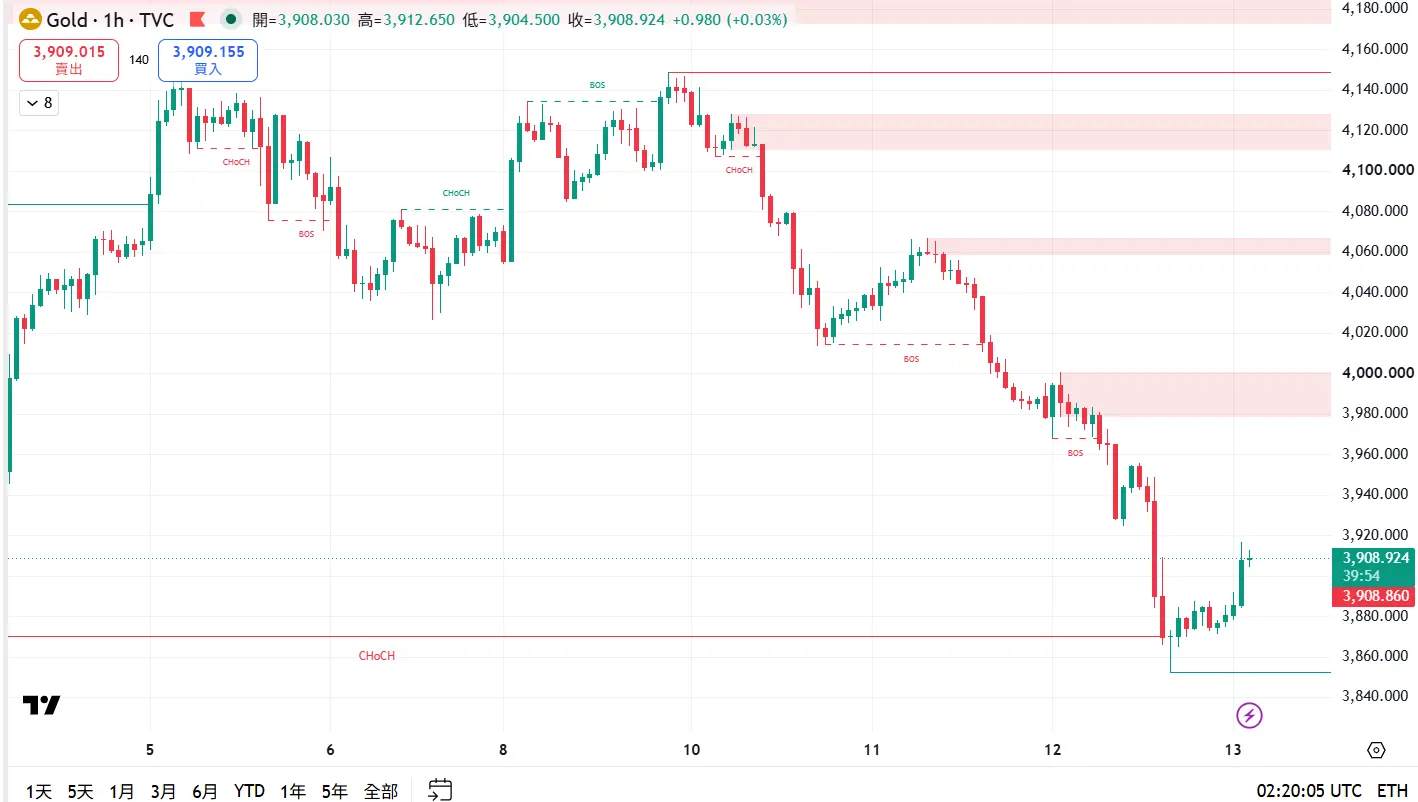
黃金跌破 3,900!急殺後反彈至 3,886,今晚 PPI 能扭轉走勢嗎?
2026-11-13 10:16