基礎資訊
註冊地區  美國
美國
美國 經營年限
5-10年
公司全稱
Topstep LLC
聯繫電話
+18884071611
公司地址
Chicago Board of Trade 141 West Jackson Boulevard Suite 4240 Chicago, Illinois 60604


天眼評分
 美國 | 5-10年 |
https://www.topstep.com/
官方網址
評分指數
影響力
AAA
影響力指數 NO.1
 美國 9.31
  外匯監管
外匯監管 暫無外匯交易類牌照,請注意風險!
美國  WikiResearch topstep.com 美國
 | Topstep 評論摘要 | |
| 成立年份 | 2012 |
| 註冊國家/地區 | 美國 |
| 監管 | 無監管 |
| 市場工具 | CME股票期貨、外匯期貨、農產品期貨、能源期貨、金屬、利率期貨 |
| 模擬帳戶 | ✅ |
| 槓桿 | / |
| 點差 | / |
| 交易平台 | TopstepX™、NinjaTrader、Quantower、Tradovate、TradingView、T4 by CTS、R|Trader Pro (Rithmic)、ATAS – Order Flow Trading Platform、MotiveWave、VolFix、Bookmap、Investor/RT by Linn Software、Jigsaw Daytradr、MultiCharts、Sierra Chart 和 Trade Navigator。 |
| 最低存款 | / |
| 客戶支援 | 電話:1-888-407-1611 |
| 電郵:support@topstep.com | |
Topstep 是一家位於美國的專營交易公司,通過通過模擬評估(交易組合)後,為期貨交易者提供交易公司資本的機會。交易者可以交易包括CME股票期貨、外匯期貨、農產品期貨、能源期貨、金屬和利率期貨在內的期貨產品。該平台入門成本低,支援多個專業級交易平台,但缺乏監管。
| 優點 | 缺點 |
| 多樣化的交易工具 | 無監管 |
| 模擬帳戶 | 缺乏透明度 |
| 支援超過十多個高級交易平台 |
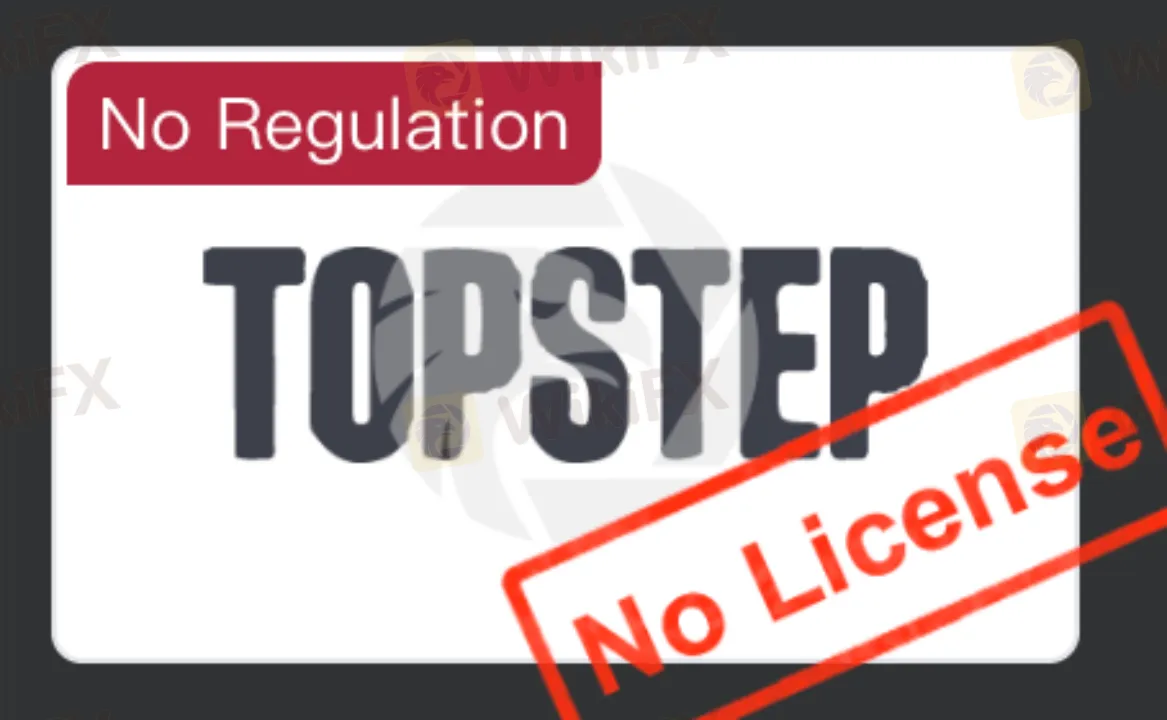
Topstep 不是一家合法的經紀商。它在美國註冊,但目前沒有來自美國或任何國際金融機構的有效監管許可證。知名的監管機構如FCA(英國)、ASIC(澳大利亞)和NFA(美國)均不監管Topstep。
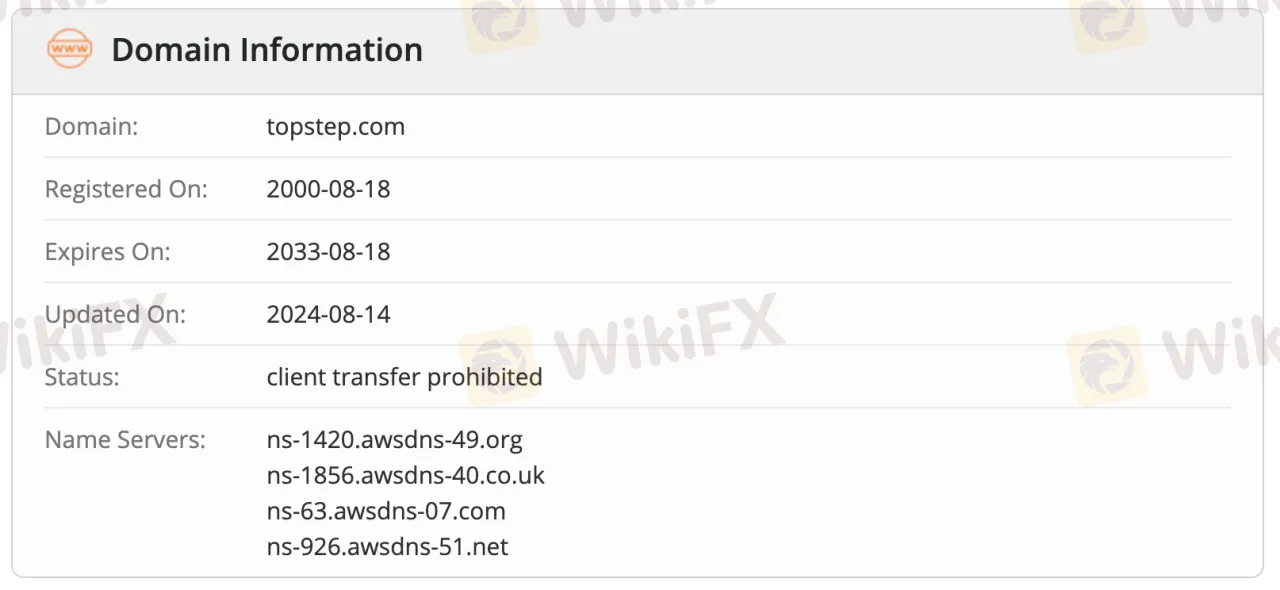
域名topstep.com於2000年8月18日註冊,並設定在2033年8月18日到期。該域名處於“客戶轉移禁止”的鎖定狀態,防止其轉移到另一個註冊商,確保一定程度的管理安全性。
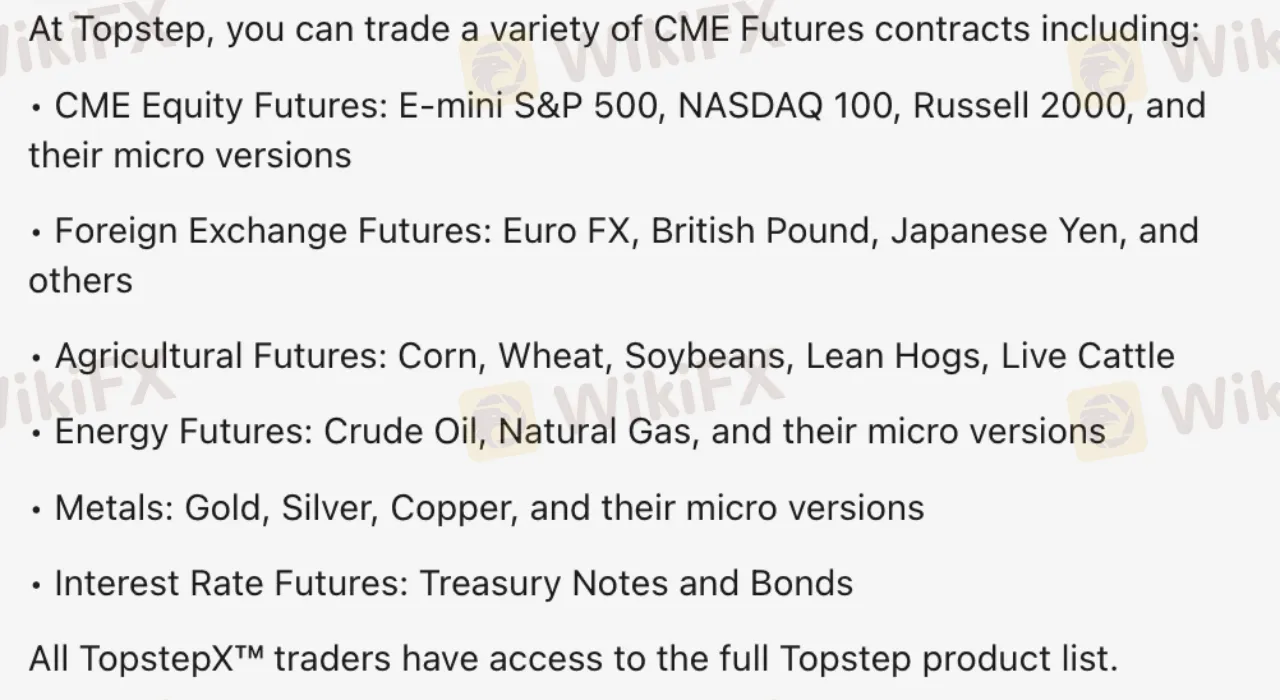
Topstep 僅提供期貨合約交易,不提供現貨交易。交易者可以交易期貨產品,包括 CME 股票期貨、外匯期貨、農產品期貨、能源期貨、金屬、利率期貨。
| 可交易工具 | 支援 |
| CME 股票期貨 | ✔ |
| 外匯期貨 | ✔ |
| 農產品期貨 | ✔ |
| 能源期貨 | ✔ |
| 金屬 | ✔ |
| 利率期貨 | ✔ |
| 指數 | ❌ |
| 股票 | ❌ |
| 加密貨幣 | ❌ |
| 債券 | ❌ |
| 期權 | ❌ |
| ETF | ❌ |
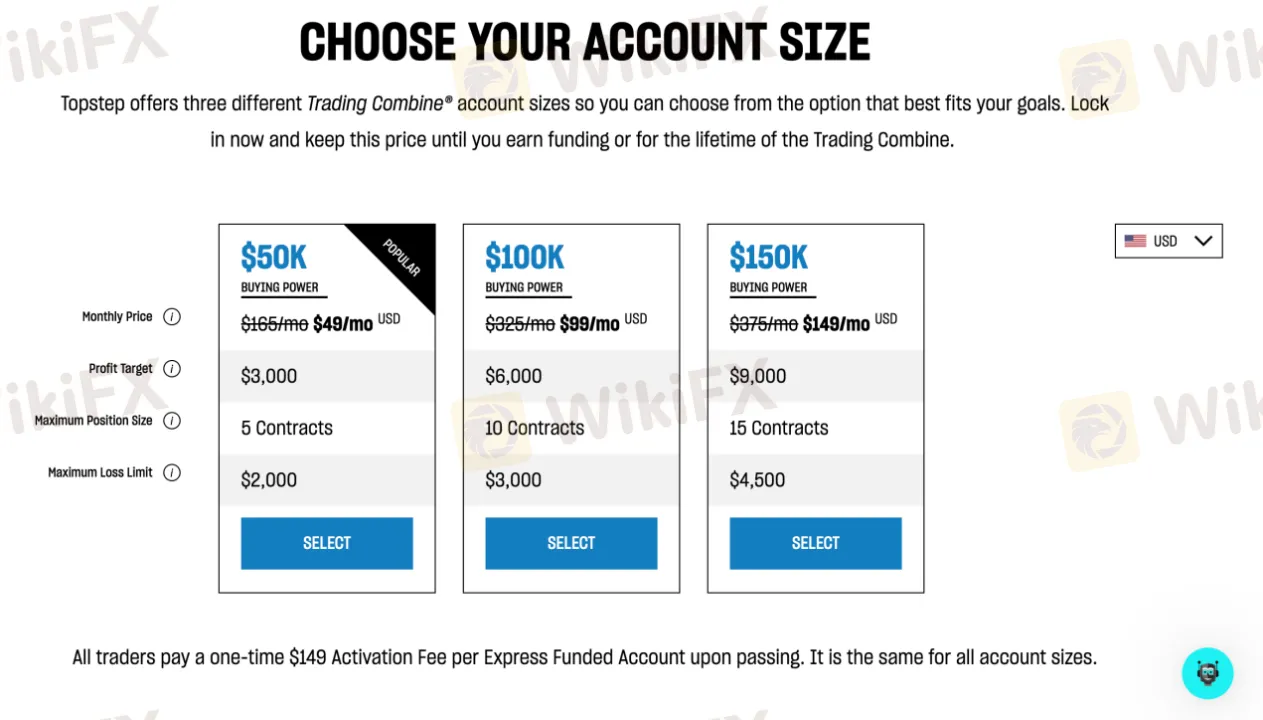
Topstep 不提供像大多數經紀商那樣的傳統實盤帳戶。相反,它提供三個層次的評估帳戶(Trading Combine®):$50K、$100K 和 $150K 購買力帳戶。這些是模擬帳戶,用於評估交易者在提供真實資金之前的表現。一旦交易者通過評估階段,他們就可以獲得進入快速資金帳戶的權限。
| 帳戶類型 | 實盤交易 | 模擬交易 | 最適合 |
| $50K 組合 | ❌ | ✔ | 初學者或低風險交易者 |
| $100K 組合 | ❌ | ✔ | 中級交易者 |
| $150K 組合 | ❌ | ✔ | 熟悉風險的經驗豐富交易者 |
| 快速資金帳戶 | ✔ | ❌ | 通過評估的交易者 |
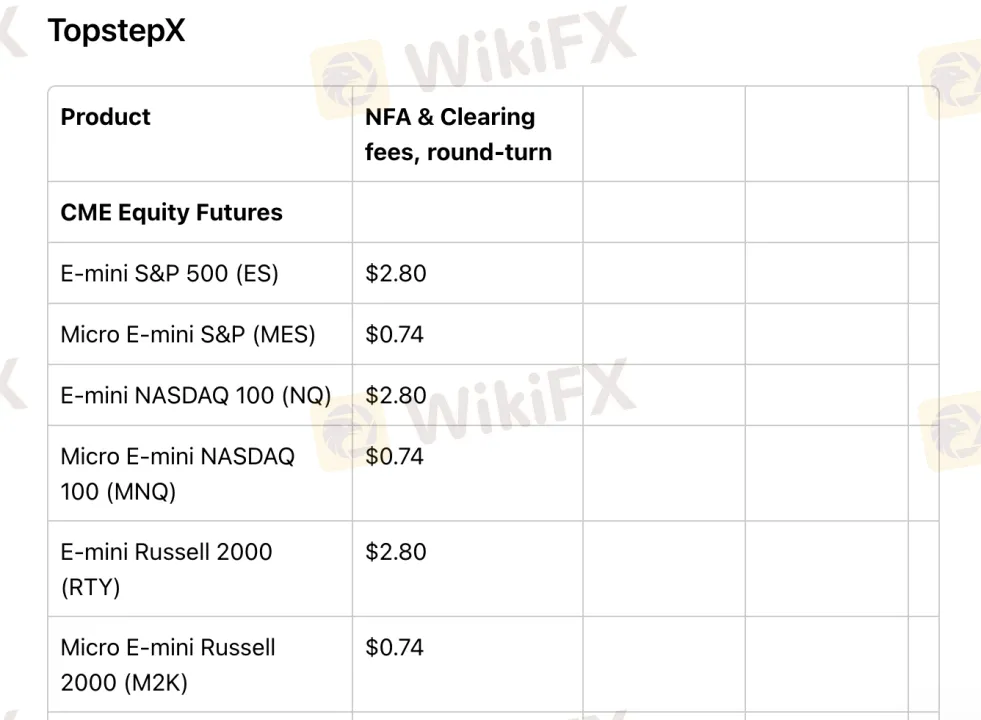
| 交易產品 | NFA 及結算費用(全程) |
| E-mini S&P 500 (ES) | $2.80 |
| Micro E-mini S&P (MES) | $0.74 |
| E-mini NASDAQ 100 (NQ) | $2.80 |
| Micro E-mini NASDAQ 100 (MNQ) | $0.74 |
Topstep的交易費用與行業標準相比屬於低至中等水平,尤其在使用其自家平台TopstepX時。
掉期利率
Topstep 不收取掉期利率或隔夜過夜費用,因為所有交易必須在正常交易時間內進行。不允許擺盪交易,須每日平倉。

非交易費用
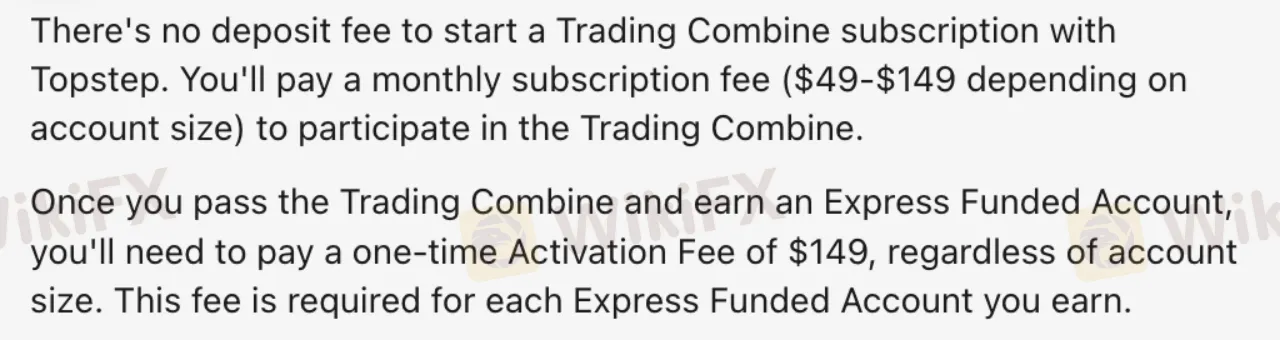
| 非交易費用 | 詳情 |
| 存款費 | ❌ |
| 提款費 | ❌ |
| 閒置費 | 未提及 |
| 交易平台 | 支援 | 可用設備 | 適合對象 |
| TopstepX | ✔ | 手機, Mac | 初學者至中級者 |
| NinjaTrader | ✔ | 桌面 | 經驗豐富者 |
| Quantower | ✔ | 桌面 | 經驗豐富者 |
| Tradovate | ✔ | 手機 | 友好的初學者 |
| TradingView | ✔ | Mac | 以圖表為重點的交易者 |
| T4 | ✔ | 手機 | 基本期貨交易者 |
| R|Trader Pro | ✔ | 手機 | 專業交易者 |
| ATAS OrderFlow Trading | ✔ | 桌面 | 流量交易者 |
| MotiveWave | ✔ | 手機, Mac | 技術分析師 |
| VolFix | ✔ | 手機, Mac | 量化交易者 |
| Bookmap | ✔ | Mac | 高級視覺化 |
| Investor/RT | ✔ | – | 專業分析師 |
| Jigsaw Daytradr | ✔ | – | 快速交易者 |
| MultiCharts | ✔ | – | 量化交易者 |
| Sierra Chart | ✔ | – | 自訂策略用戶 |
| Trade Navigator | ✔ | – | 圖表專業人士 |
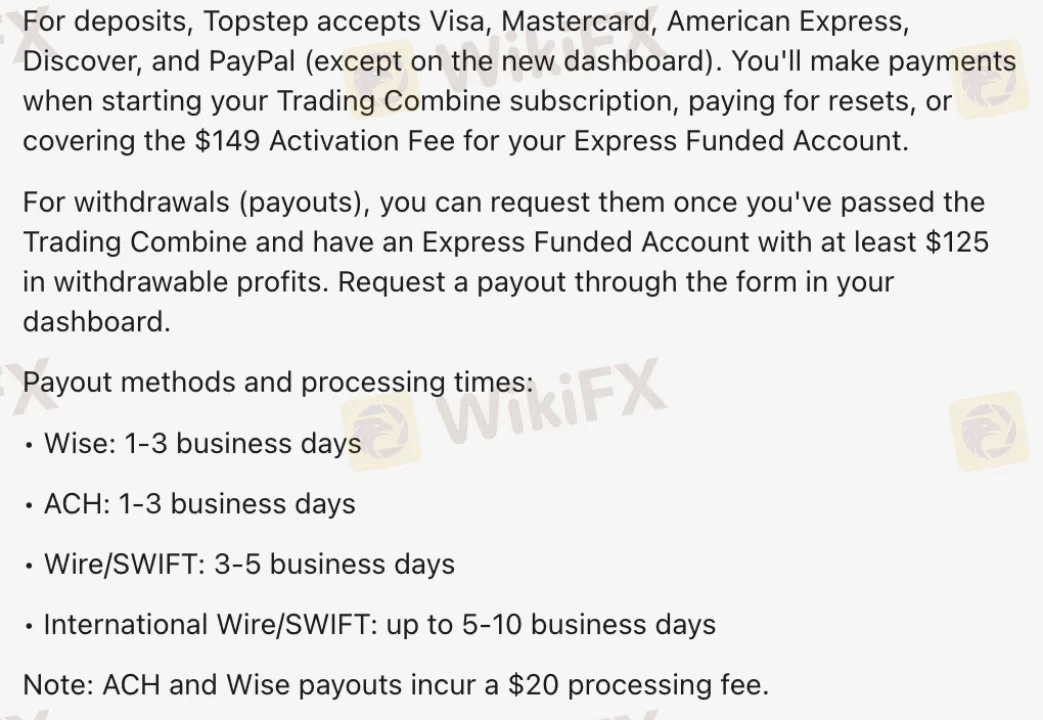
Topstep 不收取存款費。但是,有些提款方式會收取費用。最低提款金額為$125。
| 存款選項 | 存款費用 | 存款時間 |
| Visa | ❌ | 即時 |
| Mastercard | ||
| American Express | ||
| Discover | ||
| PayPal (old dashboard only) |
| 提款選項 | 最低提款金額 | 提款費用 | 提款時間 |
| Wise | $125 | $20 | 1–3 個工作天 |
| ACH | |||
| Wire/SWIFT | 未提及 | 3–5 個工作天 | |
| International Wire/SWIFT | 5–10 個工作天 |

最近由於美國FED展現鷹派態度,全球股市表現不佳,不少人紛紛決定投入外匯市場來避險。前幾天外匯天眼收到一位用戶來信,想了解網友推薦的投資平台Topstep是否安全,下面是我們針對該平台搜尋與查證的結果。



From my experience with Topstep, I’ve found their platform offering to be both extensive and distinctly tailored for futures traders. Topstep supports a variety of advanced trading platforms, catering to different trader profiles—from beginners to professionals. The array includes TopstepX, NinjaTrader, Quantower, Tradovate, TradingView, T4, R|Trader Pro, ATAS Order Flow, MotiveWave, VolFix, Bookmap, Investor/RT, Jigsaw Daytradr, MultiCharts, Sierra Chart, and Trade Navigator. These platforms are recognized in the futures trading space for their sophisticated analytics, order execution, and charting tools. However, it’s important to clarify that Topstep does not support MetaTrader 4 (MT4), MetaTrader 5 (MT5), or cTrader. That’s a significant consideration, especially for those coming from the forex or CFD world where MT4 and MT5 are industry standards. The absence of these platforms underscores Topstep’s focus on listed futures contracts rather than spot forex, and their emphasis on professional-grade, futures-oriented platforms. For me, the variety available was useful, but I had to adapt to interfaces that were different from the more common MT4/MT5 environment. This aspect might require a learning curve for traders used to MetaTrader or cTrader, and in my view, it’s a factor to weigh carefully before committing to their ecosystem.

From my perspective as an independent trader, the primary risk I see with Topstep is that it operates without any recognized regulatory oversight. Despite its long presence in the market and U.S. registration, Topstep does not hold licenses from major authorities like the NFA, ASIC, or FCA. For me, this lack of regulation immediately raises questions about recourse if something goes wrong, ranging from disputes over payouts to platform malfunctions or changes in terms. In my career, I’ve found regulatory protections to be crucial for trader confidence, especially when actual funds are at stake. Another concern is Topstep’s proprietary model; rather than traditional live accounts, traders must pass a simulated evaluation. While this can be beneficial for some, it means that the pathway to accessing funded capital is tightly controlled and subject to the firm's shifting rules and evaluation criteria. There’s always a risk the company could adjust requirements or fees in ways that disadvantage traders. Transparency is also cited as lacking. I’m always cautious when I can’t independently verify how my data, results, or even the rules of engagement are managed—especially if I have no regulatory agency to appeal to for clarity. In short, the absence of regulation, limited transparency, and the proprietary nature of Topstep’s evaluation structure are the most significant downsides in my view. For traders considering Topstep, it’s vital to proceed conservatively, understand all program terms in detail, and never risk funds you can’t afford to lose.

From my own perspective as an independent trader who prioritizes risk management and transparency, Topstep offers a mixed set of benefits and limitations when it comes to trading instruments and fees. The broker focuses exclusively on futures contracts; currently, it supports CME equity futures, forex futures, agricultural futures, energy futures, metals, and interest rate futures. I find this range is reasonably comprehensive for futures traders but may feel restrictive for those accustomed to spot forex, stocks, options, or crypto trading—none of which are available here. In terms of fee structure, one feature I do appreciate is the clear breakdown of transaction costs for popular futures products, such as the E-mini and Micro E-mini contracts. For someone like me, who is keenly aware of how quickly fees can erode profits in an active setting, the low to moderate round-turn fees—especially when using Topstep’s own platform—are competitive in the proprietary trading industry. Additionally, not having to worry about swap rates or overnight rollover fees is a plus, as swing trading isn’t permitted and all positions must be closed before the end of session. This clarity reduces hidden costs associated with holding trades overnight. However, I remain cautious due to the absence of regulatory oversight and limited transparency in some of their policies. For traders pursuing opportunities in listed futures markets—especially those comfortable with daily trading discipline—Topstep’s focused offering and fee model may fit, but careful due diligence remains essential.

As someone who's traded across a variety of platforms, I pay close attention to whether brokers and prop firms offer realistic demo experiences. In Topstep's case, they do provide access to a demo account, but not in the traditional sense most brokers do. Their core offering is the "Trading Combine," which is a simulated trading environment designed specifically to evaluate your trading performance. This demo-like account isn't a free practice tool; rather, it's a paid evaluation you must pass to potentially access firm capital. There’s no explicit mention of a traditional, unrestricted demo account available for complimentary, indefinite use. The Trading Combine itself, for all intents and purposes, is limited by the fee structure and by specific rules and objectives that must be met, which makes it quite different from an open-ended demo. Topstep’s evaluation periods are not endless—they’re structured and results-driven, and your access to the simulated account ends when either you pass, fail, or exhaust your paid evaluation period. In my view, this means that while a form of demo trading is provided, it comes with significant restrictions and should not be interpreted as a free, unlimited practice account for casual experimentation. For me, the lack of a standard, non-expiring demo account is something to keep in mind if your priority is risk-free practice rather than aiming for a funded account through their challenge.