Abstrak:Understanding the basics of long or short forex trading is essential for any beginning trader. Taking a long or short position boils down to whether a trader believes that one currency will appreciate (up) or depreciate (fall) relative to another currency.
Understanding the basics of long or short forex trading is essential for any beginning trader. Taking a long or short position boils down to whether a trader believes that one currency will appreciate (up) or depreciate (fall) relative to another currency. Simply put, if a trader believes a currency will appreciate, they will go long the underlying currency and if the trader expects the currency to fall, they will short the underlying currency.
Read on to learn more about long and short forex trading positions and when to use them.
 talaan ng nilalaman
WHAT IS A POSITION IN FOREX TRADING?
A currency position is the amount of currency owned by an individual or entity that is then exposed to movements in the currency against other currencies. The position can be short or long. A currency position has three characteristics:
The underlying currency pair
The direction (long or short)
The size
Traders can take positions in different currency pairs. If they expect the price of the coin to increase, they could go long. The size of the position you take depends on your account's capital and margin requirements. Traders need to use the right leverage.
DailyFX features IG Client Sentiment for a comprehensive look at the positions traders is taking in the forex market.
WHAT DOES IT MEAN TO HAVE A LONG OR SHORT POSITION IN FOREX?
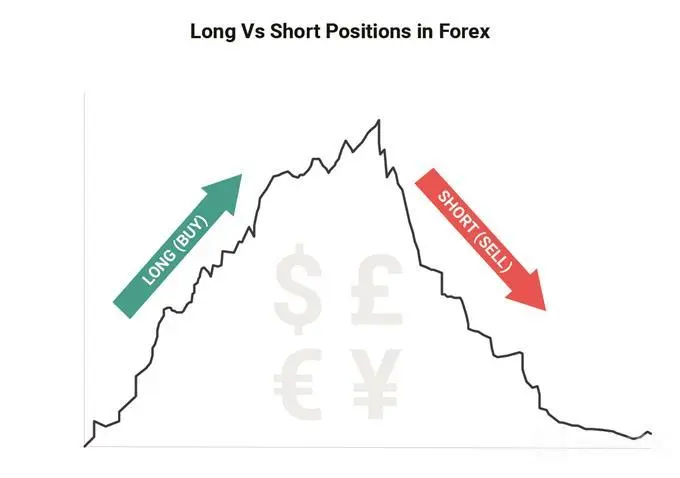
Going long or short in forex means betting that a currency pair will rise or fall in value. Going long or short is the most fundamental aspect of engaging in the markets. When a trader goes long, he or she will hold a positive investment balance in an asset in hopes that the asset will appreciate. If he or she is short, he or she will have a negative investment balance in hopes that the asset will depreciate so that it can be bought back at a lower price in the future.
WHAT IS A LONG POSITION AND WHEN TO TRADE IT?
A lengthy role is an accomplished alternate in which the trader expects the underlying device to realize. For instance, whilst a dealer executes a purchase order, they maintain a protracted role withinside the underlying device they sold i.e. USD/JPY. Here they may be looking ahead to the United States Dollar to realize towards the Japanese Yen.
For instance, a trader who has sold masses of USD/JPY has a protracted role of masses in USD/JPY. The underlying is the USD/JPY, the course is lengthy, and the dimensions are masses.
Learn greater approximately foreign exchange costs with our manual to studying foreign money pairs.
Traders search for purchase indicators to go into lengthy positions. Indicators are utilized by investors to search for purchases and promote indicators to go into the marketplace.
An instance of a purchase sign is whilst foreign money falls to a stage of assist. The chart under USD/JPY depreciates to 110.274 however is supported at that stage a couple of times. This stage of 110.274 will become an assistant stage and gives investors a purchase sign for whilst the charge dips to that stage.
A benefit of the foreign exchange marketplace is that it trades absolutely 24/5. Some investors favor to alternate all through the essential buying and selling classes just like the New York consultation, London consultation, and once in a while the Sydney and Tokyo consultation due to the fact there may be greater liquidity.
WHAT IS A SHORT POSITION AND WHEN SHOULD IT BE TRADED?
A short position is essentially the opposite of a long position. When traders enter a short position, they expect the price of the underlying currency to depreciate (decrease). Shorting a currency means selling the underlying currency in the hope that its price will fall in the future, allowing the trader to buy back the same currency at a later date but a lower price. The difference between the highest selling price and the lowest buying price is the profit. To give a practical example, when a trader shorts USD/JPY, he sells USD to buy JPY.
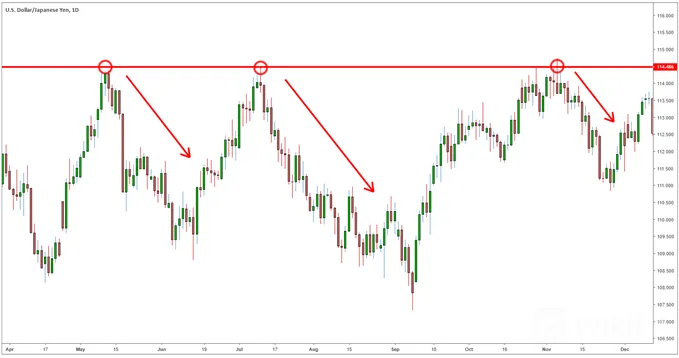
Traders look for sell signals to enter short positions. A common sell signal is when the price of the underlying currency hits the resistance level. A resistance level is a price level that the underlying asset has struggled to breakthrough. In the chart below, USD/JPY is rising at 114.486 and struggling for further appreciation. This level will become a resistance level and will offer traders a sell signal if the price reaches 114.486.
Some traders prefer to only trade during large trading sessions, although if an opportunity arises, traders can execute their trade virtually any time the forex market is open.