

عالمی بروکر ریگولیشن چیک کرنے والا ایپ
WikiFX
اردو
简体中文
繁體中文
English
Pусский
日本語
ภาษาไทย
Tiếng Việt
Bahasa Indonesia
Español
हिन्दी
Filippiiniläinen
Français
Deutsch
Português
Türkçe
한국어
العربية
اردو


Rupee Nears 95.15 as RBI Cushions Oil Pressure: What India FX Traders Should Watch Now

WikiFX
|


خلاصہ۔:India's rupee is expected to open near 95.14-95.16 per US dollar after closing at 95.2075 on Friday, while Brent crude was quoted at $84.50 and RBI market presence supported the currency. This report separates a reported market intervention from a fixed exchange-rate target, explains why oil, US employment data and Federal Reserve expectations matter, and gives a practical risk checklist for forex trading India. It also explains why volatility is not a reason to trust unverified online forex trading platforms.
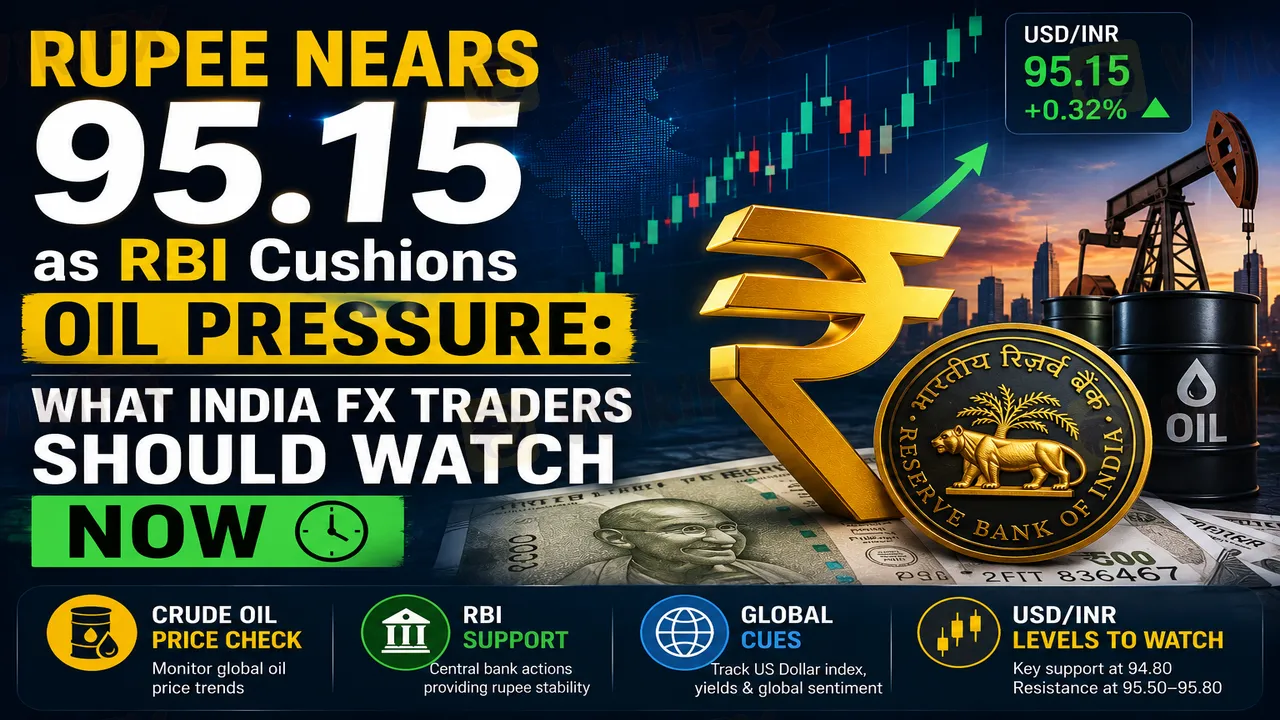
The rupee opens the week with three forces pulling at once: oil, the Federal Reserve, and the Reserve Bank of India. The headline number matters, but the better story is the tension behind it. A currency can recover while its main risks remain alive. That is precisely why a calmer opening should not be mistaken for a risk-free market.
 فہرست
فہرستKey Points
Today's market set-up: Reuters reported that the rupee was expected to open around 95.14-95.16 per US dollar after settling at 95.2075 on Friday. The report placed Brent crude at $84.50 on Monday and said continued RBI market presence had supported the currency's recovery.
The important distinction: A reported central-bank presence is not proof of a fixed exchange-rate target. It may reduce disorderly volatility, but it does not remove the risks from oil, dollar demand, capital flows, or upcoming US data.
What Changed Ahead of Monday's Open?
A Reuters report published by The HinduBusinessLine said the rupee was likely to edge higher at the open. It cited a 95.14-95.16 expected range, after a Friday close at 95.2075. The same report said the currency had been in recovery mode for two weeks, with regular RBI intervention helping to cushion pressure from oil-price uncertainty.
The figure should be treated as an expected opening range quoted by traders, not as a guaranteed quote or official RBI fixing. In a separate current market report, The Times of India also linked rupee pressure to crude prices and Middle East disruption. The two reports point to the same live tension: crude can raise the demand for dollars even when global rate expectations offer the rupee some relief.
| Data point | What the report says | Why a trader should care |
| Friday close | 95.2075 per US dollar | This is the reference point for the expected Monday opening. |
| Expected opening | 95.14-95.16 per US dollar | A narrower, stronger range still depends on actual liquidity and headlines. |
| Brent crude | $84.50 on Monday | Oil can increase import-related dollar demand and worsen risk sentiment. |
| US employment | July payrolls reportedly fell 23,000 | Softer data changed market pricing for the next Fed meeting. |
| Fed pricing | 44% probability of a September hike in the report | Probabilities shift; they are not policy decisions. |
The Three-way Tug of War: Oil, the Fed, and RBI
Oil is the most immediate local pressure point in this story. The Reuters report said Brent had fallen from a recent $100 high but remained volatile at $84.50, while uncertainty around reopening the Strait of Hormuz continued. For an oil-sensitive currency, a lower oil price can provide breathing room. It does not erase the possibility of another supply or shipping shock.
The second force is the US interest-rate outlook. Reuters said investors reduced their bets on a September Fed rate hike after US employers unexpectedly shed 23,000 jobs in July. The Bureau of Labor Statistics schedule confirms the July Employment Situation was released on 7 August. The market interpretation may move again when inflation, wage, or revised employment data arrive. A single payroll release is evidence, not a permanent trend.
The third force is RBI market presence. Reuters described intervention at Friday's open and said the central bank's continued presence supported the currency. That phrasing deserves care. It reports observed market activity and trader interpretation. It does not establish an official promise to defend one particular USD/INR level.
Key Takeaways: The rupee's short-term relief is plausible because oil is below its recent high and Fed-hike pricing softened. The relief remains conditional because oil logistics and policy expectations can change quickly. The useful question is not whether RBI can 'guarantee' a level; it is which risk is now becoming dominant.
Why 'RBI Support' does Not Mean a Fixed Target
Central banks can act in currency markets for many reasons, including smoothing volatile moves, managing liquidity, or supporting orderly market conditions. An intervention report alone does not tell readers the exact volume, policy objective, or future action. It should never be converted into a certainty such as 'the rupee cannot weaken beyond this point.'
For retail readers, this distinction reduces a common mistake: treating a central-bank narrative as a trading signal. In forex trading India, the tradable price also depends on liquidity, platform spreads, leverage, counterparty rules, and timing. The macro headline is an input to risk assessment. It is not an entry instruction.
It also matters for businesses. An importer with a dollar invoice, an exporter receiving dollars, and an institutional investor holding bonds do not carry the same risk. Importers watch a higher USD/INR as a cost. Exporters may see higher rupee receipts, but can still face imported input costs. Institutions may react to yield, global risk, and liquidity at the same time.
| Reader | Main Exposure | A More Disciplined Response |
| Importer | Higher rupee cost for a dollar payment | Map payment dates, bank spreads, and permissible hedging options. |
| Exporter | Rupee value of dollar receipts | Match receipts with foreign-currency obligations before assuming a benefit. |
| Institutional investor | Oil, yields, liquidity, policy signals | Separate a one-day move from portfolio and duration risk. |
| Retail trader | Volatility, leverage, execution quality | Define downside first and avoid treating a policy headline as certainty. |
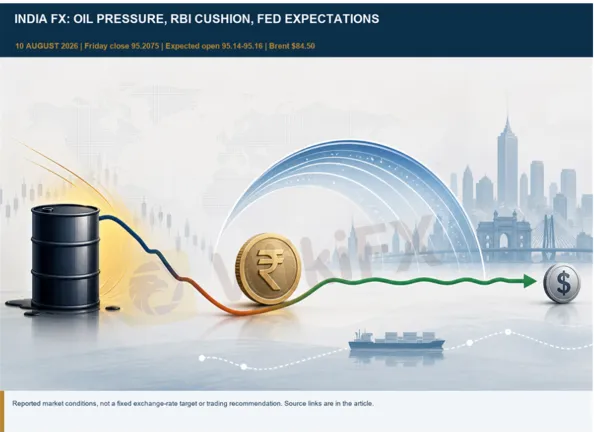
Figure 1. The rupee's path is shaped by oil, dollar sentiment, and policy response. A cushion lowers volatility; it does not remove the underlying risks.
A Practical Market Checklist for the Next Session
Start with oil rather than a single USD/INR chart. The current story specifically depends on whether crude remains below its recent peak and whether shipping access improves. A fresh oil spike can reverse an otherwise supportive dollar move. Then watch the US rate narrative. A lower perceived chance of a Fed hike can weaken the dollar, but that logic can be undone by later inflation data.
Next, compare the actual opening and closing levels with the quoted expected range. If price quickly trades outside that range, the market may be repricing a new factor. Finally, read RBI-related reporting precisely. 'Support' and 'intervention' describe conditions reported by market participants. They should not be exaggerated into a policy guarantee.
Common misconception: 'The RBI is in the market, so USD/INR can only fall.' That statement is too strong. Market support can limit disorderly moves, while oil shocks, dollar demand, and global risk still change the balance of buyers and sellers.
Volatility is Not an Excuse to Use an Unverified Platform
Fast currency news often pushes readers toward searches for online forex trading platforms, trading platforms forex, or a forex trading platform online. Speed does not reduce verification requirements. RBI's forex FAQ sets out the rules for residents and authorised persons. It should be read before treating a foreign app, social-media group, or offshore website as a permitted route for forex activity.
An alert-list search is only one check. RBI's Alert List warns that it is not exhaustive. A platform's absence from the list is not proof of authorisation. Readers should also check the positive list of RBI-authorised electronic trading platforms, the legal entity, the payment beneficiary, and the applicable product rules.
This is where forex scams, forex scam list, and how to spot a forex scammer searches can mislead. Search results may contain copied reviews, paid articles, or unverified social posts. SEBI's fake-trading-app warning highlights familiar red flags: unrealistic returns, app links outside official stores, and pressure to transfer money. A professional dashboard is not evidence that trades or withdrawals are real.
Safety box: Never transfer money to a personal or unrelated beneficiary because a chat group says it is temporary. Do not pay a tax, release, verification, or insurance charge to unlock a withdrawal. If fraud is suspected, contact the bank promptly and report through the official National Cyber Crime Reporting Portal.
RBI has also issued guidance to banks on accounts used for unauthorised forex transactions. The relevant RBI circular describes the risks around local collection accounts. If money has already been sent, retain the beneficiary details, transaction references, app link, chats, and screenshots. The National Cyber Crime Reporting Portal is the appropriate official reporting route; fast reporting may help tracing, but it does not guarantee recovery.
A Short Scenario for Exporters and Importers
Illustrative scenario - not a real company: A small importer has a US$50,000 invoice due in ten days. A stronger rupee at the open may lower the estimated cost, but the final amount will depend on the bank rate, spread, payment date, and later volatility. The business should manage the payment exposure. It should not turn an operational need into a leveraged bet.
The same discipline applies to an exporter. A weaker rupee can improve the rupee value of receipts, yet freight, energy, or imported components may also become more expensive. This is why a well-written macro article should not label either direction simply 'good' or 'bad'. The effect depends on the reader's cash flows and time horizon.
Final View: Look Past the Opening Range
The 95.14-95.16 opening expectation is useful because it frames the first market test of the week. It is not the conclusion. Oil, the Strait of Hormuz, US data, Fed expectations, dollar demand, and RBI presence all remain part of the story. A better reader does not ask a single headline to predict the whole week. They track what has changed, what has not, and what would invalidate the current view.
Editorial note: This article is for education and information. Reported intervention and trader expectations are not official exchange-rate targets. Market prices can change after publication. Nothing here is investment, legal, or trading advice.
Download the WikiFX app for the latest forex updates.

Knowledge pays at WikiFX.Every time you share a WikiFX article, you'll receive 50 Reward Points. Grow your rewards with every share and unlock exclusive gifts in the WikiFX Points Mall. Start earning today!

Interesting Articles for You




ڈس کلیمر:
یہ مضمون صرف مصنف کی ذاتی رائے پر مبنی ہے، یہ پلیٹ فارم کی سرمایہ کاری کی مشورہ نہیں ہے۔ پلیٹ فارم مضمون کی معلومات کی درستگی، مکملیت اور بروقت ہونے کی کوئی ضمانت نہیں دیتا، اور مضمون کی معلومات پر اعتماد یا استعمال سے ہونے والے کسی بھی نقصان کی ذمہ داری قبول نہیں کرتا۔
