

عالمی بروکر ریگولیشن چیک کرنے والا ایپ
WikiFX
اردو
简体中文
繁體中文
English
Pусский
日本語
ภาษาไทย
Tiếng Việt
Bahasa Indonesia
Español
हिन्दी
Filippiiniläinen
Français
Deutsch
Português
Türkçe
한국어
العربية
اردو


U.S.-Iran Talks Clash as Oil and Manufacturing Data Drive Market Focus


خلاصہ۔:[Figure 1: U.S. and Iran Illustration]After Iran denied that it was engaged in negotiations with the United States, President Donald Trump accused Tehran of speaking out of both sides of its mouth, in
After Iran denied that it was engaged in negotiations with the United States, President Donald Trump accused Tehran of "speaking out of both sides of its mouth," insisting that talks were indeed underway. He also expressed confidence that the Strait of Hormuz could reopen as early as Tuesday.
Trump stated that the latest dialogue was initiated at Iran's request and described it as Tehran's "last opportunity" to secure a favorable agreement. According to him, negotiations would proceed in two phases: first, reopening the Strait of Hormuz, followed by discussions on Iran's nuclear program. He emphasized that the United States would never allow Iran to impose transit fees on vessels passing through the strategic waterway.
Trump further warned that if Iran failed to reach an agreement or chose not to "fully surrender," the Strait would remain closed. He also urged global oil producers to "lower oil prices now."
Iran, however, maintained that its discussions regarding the Strait of Hormuz are being conducted exclusively with Oman and reiterated that it would not permit the United States to establish shipping routes through the Strait that bypass Iranian oversight. Arab media reported that Tehran had rejected a new U.S. proposal concerning the Strait, while U.S. media indicated that no new round of U.S.-Iran negotiations has been formally scheduled.
Separately, the U.S. Department of the Treasury is expected to leave its current Treasury issuance guidance unchanged, continuing to rely primarily on short-term Treasury bills to meet financing needs while avoiding upward pressure on longer-term yields. Although widening fiscal deficits and the growing share of short-term debt have raised concerns about fiscal sustainability, political considerations ahead of the upcoming midterm elections appear to be taking precedence. Market participants generally expect future issuance adjustments to be concentrated at the front end of the yield curve.
Meanwhile, Federal Reserve Vice Chair John Williams reiterated that current interest rates remain "well positioned" to support the ongoing disinflation process. He expects inflation to ease further during the second half of this year and continue moderating into next year. Williams also emphasized that he is paying "very close attention" to incoming core inflation data over the coming months.
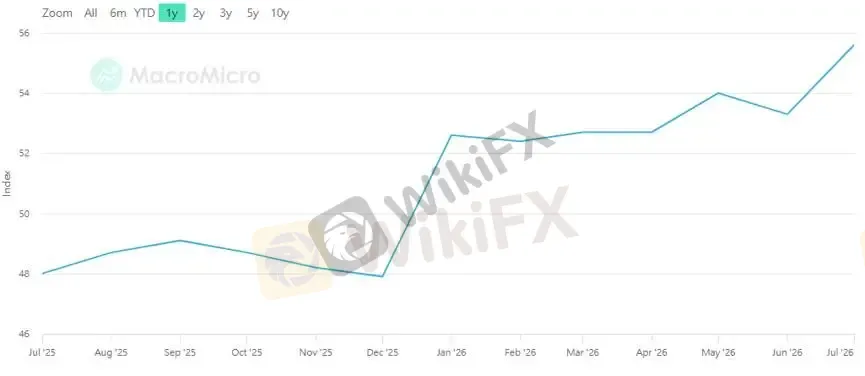
On the economic front, the U.S. ISM Manufacturing PMI unexpectedly climbed to 55.6 in July, marking its highest level since May 2022 and extending the sector's expansion streak to seven consecutive months. Production, new orders, and employment all strengthened significantly. In contrast, the S&P Global Manufacturing PMI remained near a three-month low during the same period, highlighting a notable divergence between the two surveys.
The conflicting signals surrounding U.S.-Iran negotiations underscore the persistent lack of trust between both sides. While President Trump continues to project optimism regarding diplomatic progress, Iran's repeated denials leave the outlook for reopening the Strait of Hormuz highly uncertain. As a result, oil prices are likely to remain sensitive to any tangible developments regarding maritime traffic through the Strait.
At the same time, stronger-than-expected U.S. manufacturing data reinforces the narrative of economic resilience, while the Federal Reserve's confidence that inflation will continue to moderate provides policymakers with additional flexibility in the months ahead.
Looking forward, geopolitical risk premiums and incoming macroeconomic data are expected to remain the primary drivers of short-term market volatility. Over the medium to long term, global energy markets are unlikely to achieve lasting stability unless Washington and Tehran reach an enforceable agreement that ensures uninterrupted navigation through the Strait of Hormuz.
For investors, the current environment remains defined by the coexistence of diplomatic uncertainty and resilient economic fundamentals. Closely monitoring negotiation developments, shipping conditions in the Strait, and upcoming economic data releases will be essential in assessing future market direction.
Risk Disclosure
The opinions, analyses, research, price information, and other content provided above are intended solely as general market commentary and do not constitute the official views or recommendations of this platform. They should not be interpreted as investment advice. Readers are solely responsible for their own investment decisions and assume all associated risks. Please trade prudently.
ڈس کلیمر:
یہ مضمون صرف مصنف کی ذاتی رائے پر مبنی ہے، یہ پلیٹ فارم کی سرمایہ کاری کی مشورہ نہیں ہے۔ پلیٹ فارم مضمون کی معلومات کی درستگی، مکملیت اور بروقت ہونے کی کوئی ضمانت نہیں دیتا، اور مضمون کی معلومات پر اعتماد یا استعمال سے ہونے والے کسی بھی نقصان کی ذمہ داری قبول نہیں کرتا۔
