

عالمی بروکر ریگولیشن چیک کرنے والا ایپ
WikiFX
اردو
简体中文
繁體中文
English
Pусский
日本語
ภาษาไทย
Tiếng Việt
Bahasa Indonesia
Español
हिन्दी
Filippiiniläinen
Français
Deutsch
Português
Türkçe
한국어
العربية
اردو


FXTF Review: Regulation, Platform Access, and Mixed Trader Feedback

WikiFX
|


خلاصہ۔:FXTF has a strong visible safety profile in the available WikiFX data, with a WikiFX Score of 8.38 and regulation by Japan's Financial Services Agency. The main cautions are mixed exposure reports, limited disclosed trading-condition data, platform security gaps such as no two-step login or biometric login, and some serious scam-style complaints that should be verified before depositing.
Executive Summary (TL;DR): FXTF is a Japan-based Forex broker established in 2007 and shown on WikiFX as regulated by Japan's Financial Services Agency, with a current WikiFX Score of 8.38. That is a stronger profile than many offshore brokers, but you should still pay attention to the exposure reports, account-access security details, and the limits of the available trading-condition data.
In this review, the key question is not whether FXTF has any regulatory footprint; the available data says it does. The more practical question is whether the full risk picture fits your own tolerance before you find a broker , open an account, and move real money.
FXTF, also listed with the website https://www.fxtrade.co.jp/, is described as a Japanese broker founded in 2007. WikiFX gives it a score of 8.38 and an influence rank of B, with influence mainly distributed across the United Kingdom, Japan, and the United States. A score is a live data point, not a permanent guarantee, but it gives a useful starting point for checking this broker against regulation, platform quality, customer feedback, and complaint patterns.
 فہرست
فہرستRegulation and Safety
The strongest safety detail in the available file is FXTF's regulatory status. WikiFX lists FXTF as regulated by Japan's Financial Services Agency, shown as Japan FSA, with the organization name Goldenway Japan Co., Ltd. The regulation number provided is Kanto Local Finance Bureau Director-General (Financial Instruments Business Operator) No. 258. The status annotation is translated as “regulated.”
That regulation status matters. A broker operating under the Japan FSA is not the same risk category as an entity with no named regulator or only unclear offshore oversight. For you as a trader, formal regulation usually means the broker is expected to follow local conduct, reporting, and operational rules. It does not remove trading risk, and it does not prove every customer experience will be smooth, but it does give you a clearer authority to check than an unregulated site would.
The available data also states that FXTF is headquartered in Japan and has been operating since 2007. Longevity is not a safety guarantee, yet it is relevant because a broker with a longer operating history and a named regulator gives you more to verify. Before depositing, match the official website, company name, and regulation number carefully. This is especially important because some exposure reports describe possible fake-platform or impersonation-style activity, which may not be the same as dealing through the official FXTF site.
WikiFX Score and Risk Signals
FXTF's WikiFX Score is listed as 8.38, with an overall influence ranking of B. The platform also notes an average influence index of 6.08 and search-source distribution led by Google, followed by Yahoo, Bing, Yahoo Japan, Syndicated sources, and others.
Those are useful signals, but the risk notes should not be ignored. The listed disadvantages include “multiple exposure reports,” lack of biometric authentication in the trading software, and customer service that answers most inquiries but may involve longer waiting times. In plain English: the profile is not a simple red-flag case, but it is also not a reason to skip verification.
A sensible approach is to treat the score as one checkpoint. Then confirm the legal website, regulator information, platform download source, and customer-support channel before sending funds.
Platform and Account Access
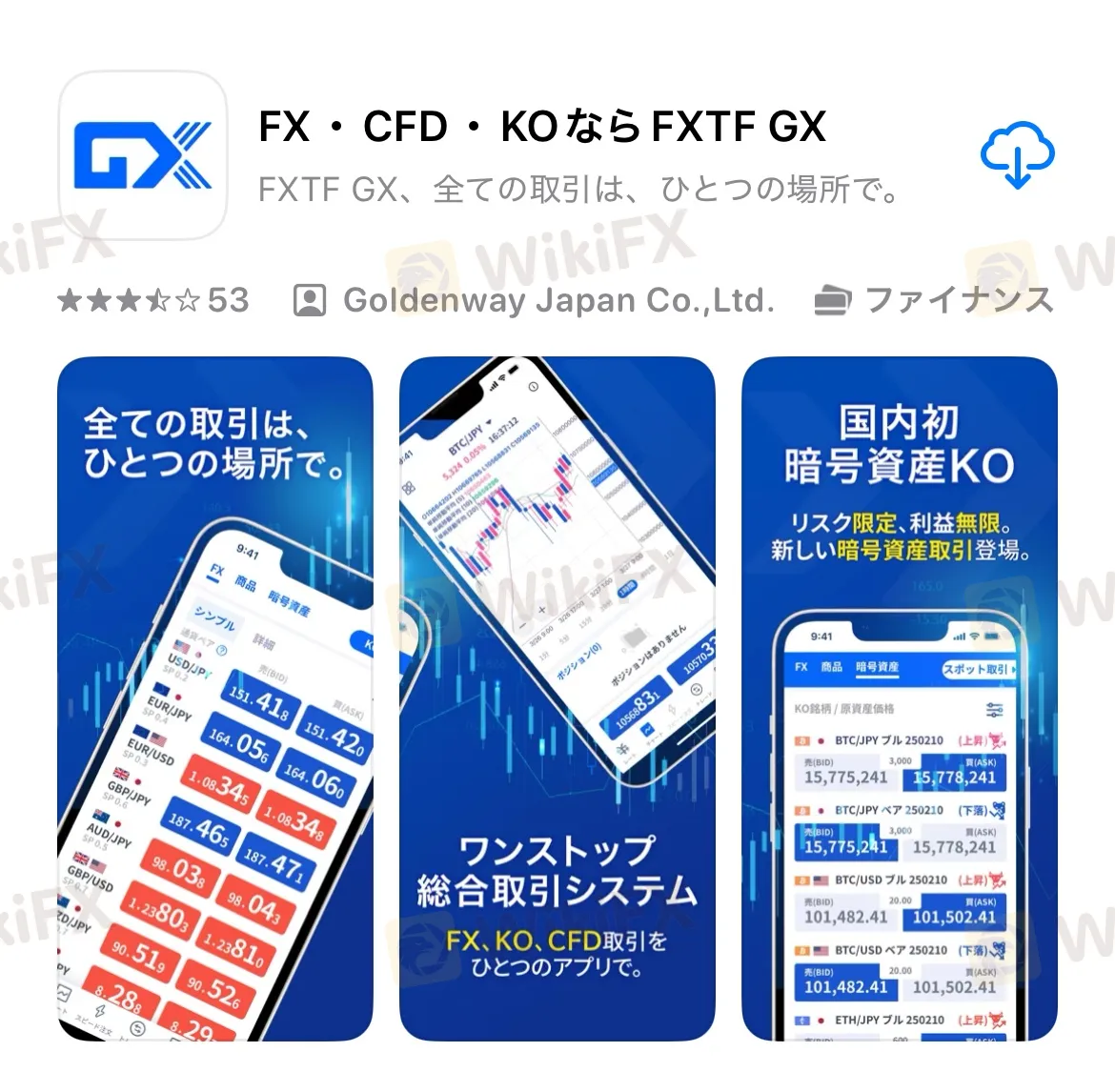
FXTF uses proprietary software and MT4. The review data says the platform supports mobile and web access, including Android, iOS, and Web. Downloads listed include “FX, CFD, KOならFXTF GX” on Google Play and the Apple App Store, plus “FXTF FX” through a web platform link. The experience is described as average.
MT4 is a familiar platform for many Forex traders, and the source notes that it is highly customizable, available in multiple languages, has good search functions, and provides clear fee reports. That is a practical advantage if you already rely on MT4 chart analysis.
The account-access side deserves a closer look. The software review states that it lacks two-step login and biometric authentication for safer login protection. That does not mean there are known login failures. It simply means the available account-security features appear less robust than platforms that provide two-factor authentication or biometric access. For your own safety, use only the official website or official app-store links, avoid entering credentials through messages or third-party links, and be cautious if anyone on social media asks you to download a “special” trading app.
Trading Conditions and User Experience
The formal trade-environment fields in the source do not provide detailed spread, leverage, commission, swap, or execution statistics. That limits how far this review can go on exact Forex trading costs.
However, the exposure comments include several user observations. One Japanese user said FXTF had stable execution, almost no slippage, convenient scalping use, easy tools, comfortable MT4 chart analysis, and relatively narrow spreads.
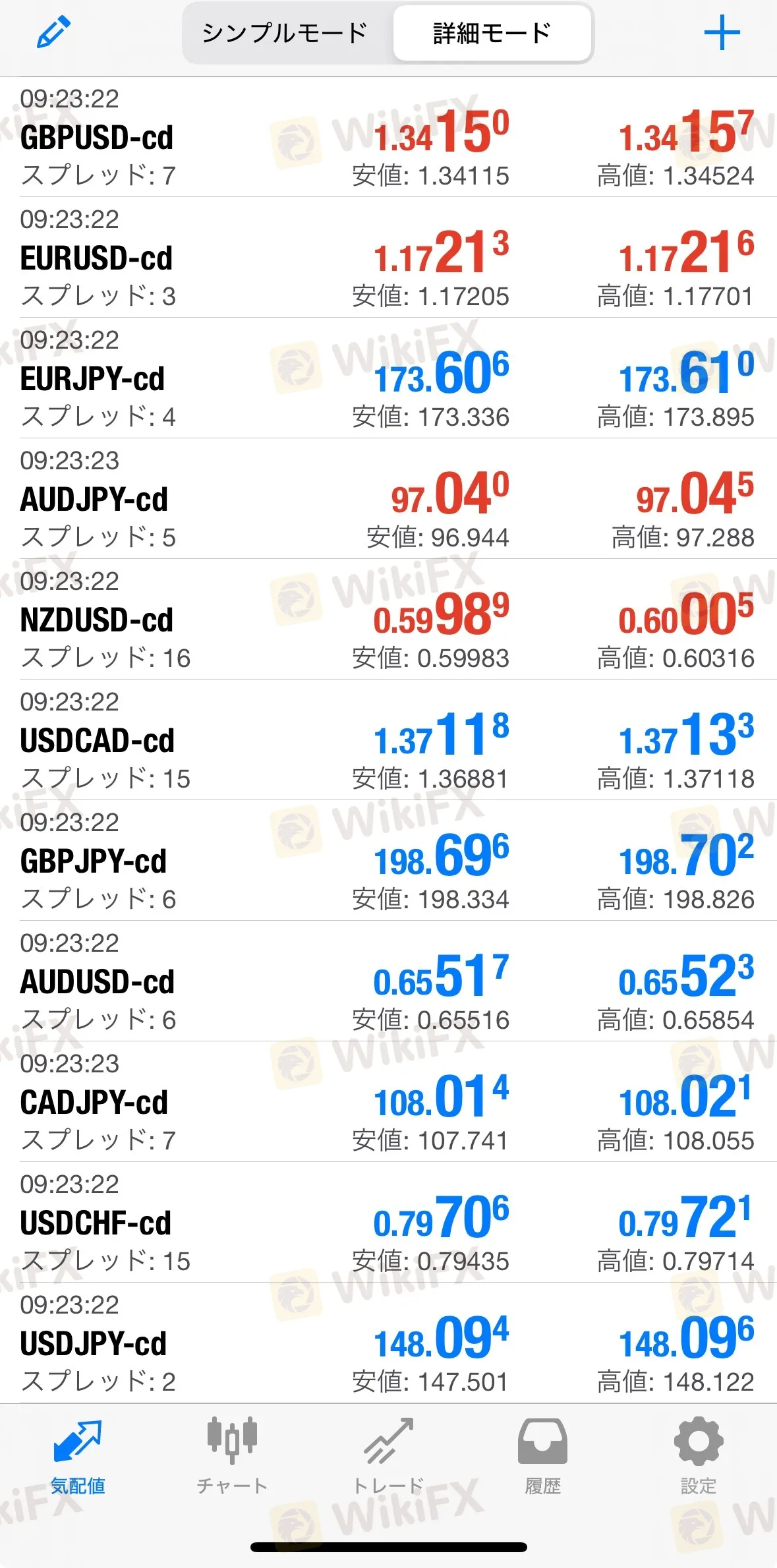
Another Japanese user said spreads had become narrower than in the past and withdrawals were smooth.
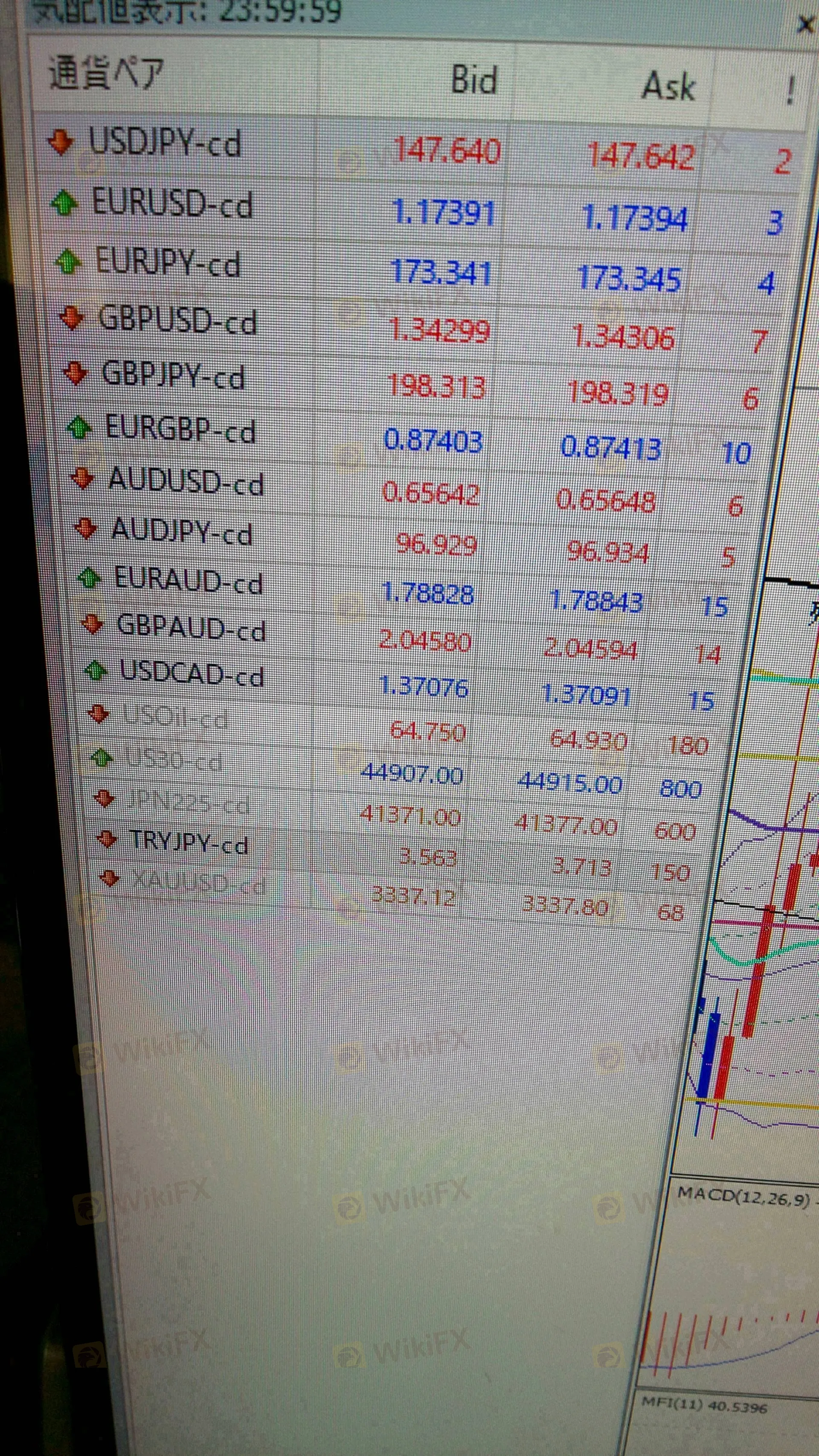
A third Japanese comment said basic quality was not a problem and that spreads, slippage, and delays had not been a concern, but added that only one MT4 account could be created and that strict domestic leverage regulation made profit generation harder.
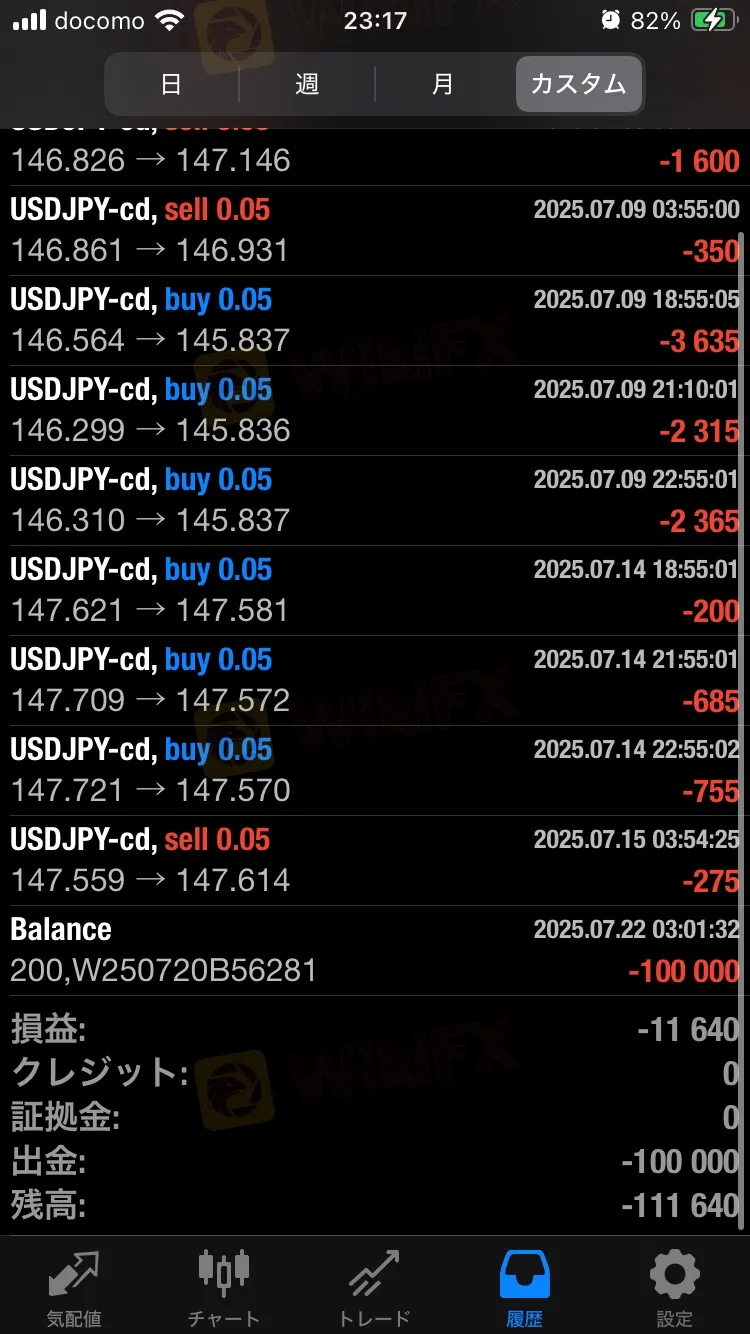
These are user reports, not independently measured execution data. Still, they give a picture of why some traders rate FXTF positively: MT4 access, perceived narrow spreads, smooth withdrawals in some cases, and usable tools. At the same time, because the source does not provide official max leverage or full cost tables, you should verify live pricing and account rules directly before trading.
Trader Complaints and Exposure Cases
The cases are mixed. Several are positive: users from Japan mentioned stable execution, easy-to-use tools, narrow spreads, smooth withdrawals, and a dedicated app that made trading easier.
An English-language case from Spain said the broker had only one payment method, but funding and withdrawal speed were “lightning fast.” A user from Pakistan praised support, and a Nigerian user called FXTF a trusted broker for low-fee currency-pair trading with good customer service.
But two Korean-language exposure reports are serious. One report alleged that the platform was a scam, saying the user could not withdraw money and was repeatedly asked to pay fees or other charges to get funds released. It also warned about being introduced to foreign exchange trading through someone met on social media, including alleged impersonation of a well-known influencer and a Japanese person who built trust over time. The case included multiple uploaded images as supporting material.
Another Korean report described a romance-scam pattern: the user said a Japanese woman introduced a fake broker, asked for fees, deposits, and other costs before withdrawal, allegedly used stolen Instagram photos and a forged ID, and directed the user to download a strange platform. The report also said images of the person and forged ID were uploaded.
These complaints should be read carefully. They may indicate impersonation or fake-platform risk connected to someone misusing a broker name, rather than proving that the regulated Japanese entity itself operated the alleged scam. Either way, the practical lesson is the same: never follow deposit instructions from a social-media acquaintance, never pay extra “unlock” fees for withdrawals without formal verification, and always confirm you are using FXTF's official domain and official app links.
Customer Service and Operating Details
FXTF customer service is described as supporting Japanese, with contact through X, phone, email, Instagram, and YouTube. The phone number listed is +81 0120-445-435, and the email address is support@fxtrade.co.jp. The source says users can receive most relevant answers, but waiting times may be long.
For non-Japanese speakers, this matters. The service footprint appears mainly Japanese, so if you need English or multilingual support, check availability before opening an account.
Final Verdict: Should I open an account?
FXTF looks stronger than many high-risk brokers in the available WikiFX data because it has a current WikiFX Score of 8.38, a named Japan FSA regulation record, a long operating history since 2007, and MT4 plus proprietary platform access. Positive user comments also mention execution, spreads, app usability, and withdrawals.
The caution is that the data also contains multiple exposure reports, including scam-style allegations involving social media, withdrawal barriers, extra fee demands, and a strange downloaded platform. The source also lacks full formal detail on spreads, leverage, commissions, and complete account conditions, so you should verify those directly.
If you consider FXTF, use only the official website and official app channels, confirm the Japan FSA registration details, and be especially careful with any third party who contacts you through social media. Status changes daily. Before depositing, check the WikiFX App for the latest real-time certificate.

ڈس کلیمر:
یہ مضمون صرف مصنف کی ذاتی رائے پر مبنی ہے، یہ پلیٹ فارم کی سرمایہ کاری کی مشورہ نہیں ہے۔ پلیٹ فارم مضمون کی معلومات کی درستگی، مکملیت اور بروقت ہونے کی کوئی ضمانت نہیں دیتا، اور مضمون کی معلومات پر اعتماد یا استعمال سے ہونے والے کسی بھی نقصان کی ذمہ داری قبول نہیں کرتا۔
